reflection

Epstein — and the Silence That Made It Possible

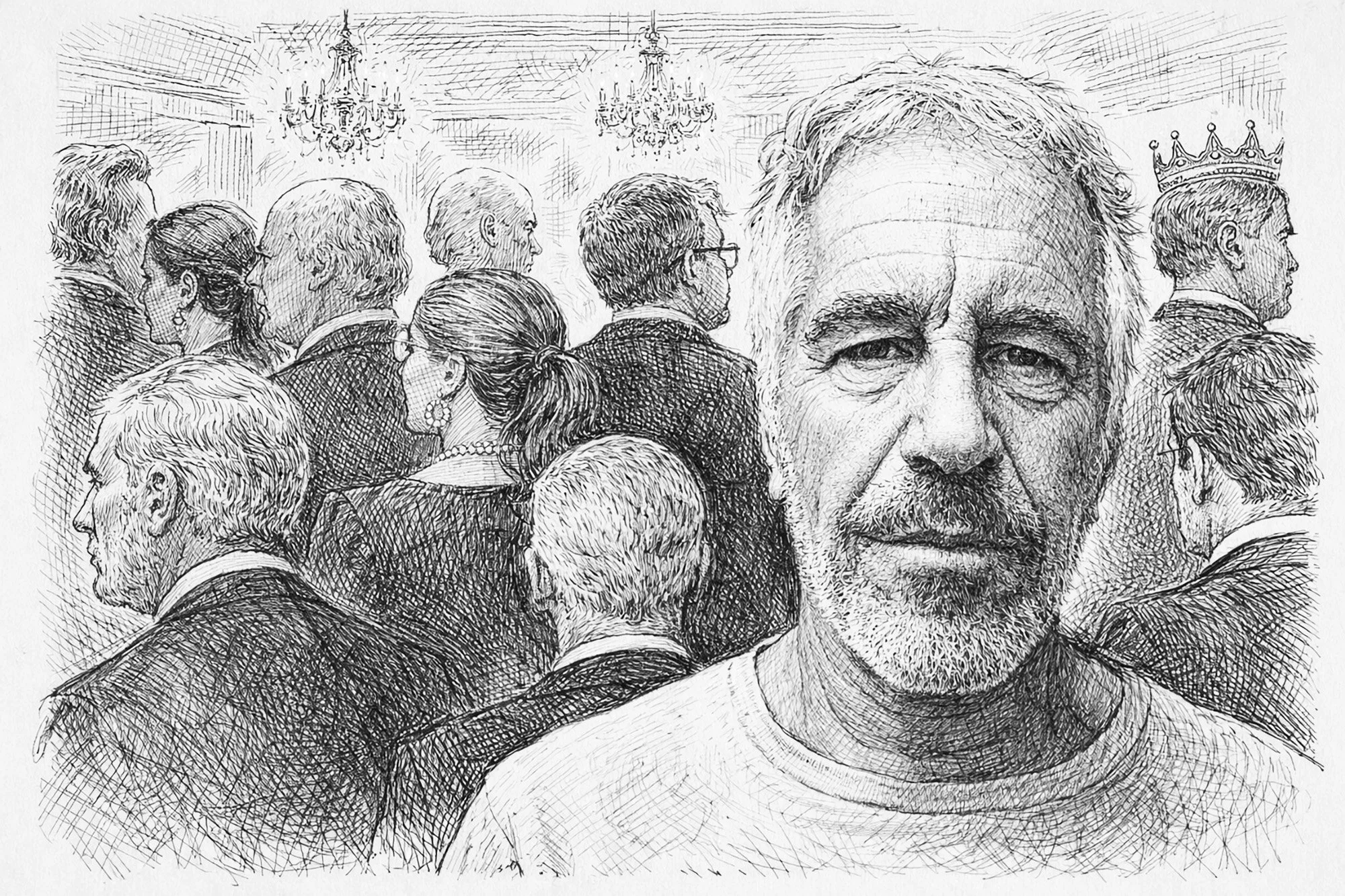
Image created with AI

The story of Jeffrey Epstein is, first and foremost, a story of abuse. Young women were manipulated, exploited and harmed, and that fact should remain at the centre; nothing in what follows diminishes it.

What continues to linger, however, is not only how this could happen, but how it was able to continue for so long — in plain sight, in the presence of people and institutions that should have known better. It is tempting to frame this as a series of failures: failures of judgement, of oversight, of justice. Those failures were real, but the explanation remains incomplete, because it suggests that, had a few individuals acted differently, the outcome would have changed.

What the Epstein case reveals is something more uncomfortable: not just that people failed, but that the environment in which they operated made those failures easier, more likely — and, for a long time, less costly than acting.

The Network

Epstein did not build a conventional empire. He was not a celebrated innovator or a clearly successful financier. Yet he moved with ease among billionaires, politicians, academics and royalty. He hosted, introduced, connected. He was present in rooms where reputations were shaped and opportunities were created.

That presence — more than any asset he owned — was the source of his power.

He positioned himself at the intersection of worlds that rarely meet directly. He connected financiers to politicians, academics to donors, business leaders to social circles they could not easily enter on their own. He understood what each group needed and what the other could offer.

And, at times, he offered something far darker.

Young women — often very young — were drawn in with promises of opportunity: a modelling career, financial support, a pathway into a world that appeared closed to them. What began, in some cases, as access or assistance could shift into dependency and control. The abuse that followed did not exist outside the network; it was, in part, enabled by it.

Because Epstein did not operate alone. He operated within a web of relationships that gave him legitimacy, and that legitimacy allowed him to continue. It softened suspicion, created doubt, and made disengagement more complicated than it should have been.

To walk away from Epstein was not only a moral act. It could mean stepping away from access, from influence, from opportunity. And so, in many cases, people did not leave. Not necessarily because they approved, but because the cost of disengagement was real.

This is not a justification.
It is a description of how such systems sustain themselves.

The Broker

To understand Epstein’s position, it helps to focus less on who he was and more on what he did.

He functioned as a broker.

A broker does not need to be the most powerful person in the room. He only needs to stand between those who are. He identifies gaps — between industries, between social circles, between spheres of influence — and positions himself as the link that makes exchange possible.

Epstein did this with unusual effectiveness. By connecting people who lacked either the time, the trust, the resources, or the access to meet directly, he created value. And once someone creates value within a network, tolerance tends to follow.

This helps explain why reputational damage does not always lead to exclusion. Even after his conviction in 2008, some relationships did not disappear; they adapted. They became quieter, more cautious, but they did not always end. Within a dense network, reputation is rarely judged on its own. It is filtered through relationships, softened by proximity, and sometimes overridden by usefulness.

No conspiracy is required for this to happen. It is enough that individuals, each acting in their own interest, choose not to sever ties that still benefit them.

The broker thrives in precisely this space — where clarity gives way to ambiguity, and where connections matter more than conclusions.

A Pattern Older Than the Present

Seen in this light, the structure surrounding Epstein is not new.

In ancient Rome, political life revolved around patronage. Wealthy patrons offered protection and opportunity; clients offered loyalty in return. Formal rules existed, but outcomes were shaped by relationships.

In Renaissance Florence, families like the Medici built influence not through titles alone, but by connecting finance, politics and religion. Their strength lay in occupying the spaces between these worlds.

In 18th-century Paris, salons functioned as informal centres of power. They were not official institutions, yet they shaped reputations, alliances and ideas. Access mattered as much as authority.

And at the court of Louis XIV, proximity itself became a form of influence. To be present was to count; to be excluded was to fade.

Across these contexts, the pattern is consistent: power is embedded in networks, and those networks tend to stabilise themselves. What has changed is not the logic, but the scale. Today’s networks are global, faster and more opaque — but they still rely on the same mechanisms: trust, reciprocity, access, and, when necessary, silence.

Epstein did not invent this system.
He moved within it — and, for a time, benefited from it.

The Mirror

It is tempting to see this as a story about distant elites — a world of private jets and exclusive circles, far removed from everyday life.

But the mechanisms that sustained Epstein’s network are not confined to that world. They exist, in quieter and more benign forms, much closer to home. We all operate within circles of trust. We introduce people to one another, favour those we know, and hesitate to confront individuals who are well connected, respected or useful. In doing so, we constantly balance principles against relationships, often without fully recognising it.

At a small scale, these behaviours are not only harmless, they are essential. A society cannot function without networks of trust. Cooperation depends on them. Economic exchange depends on them. Even ordinary social life depends on them.

From an evolutionary perspective, this is not accidental. Human beings evolved in small groups where survival depended on cooperation, reciprocity and reputation. The instinct to maintain relationships, to protect alliances, and to avoid exclusion is deeply embedded. It is what allows groups to function — and individuals to belong.

But these same mechanisms, when scaled up and embedded in systems of power, create a tension that cannot be resolved once and for all. The trust that binds groups together can also shield them from scrutiny, while loyalty can discourage dissent and the desire to belong can outweigh the impulse to confront.

The conclusion is uncomfortable: societies depend on networks of trust, yet those same networks can protect themselves at the expense of accountability. That tension cannot be removed — only contained — and if it is ignored, the pattern will return.

Further Reading

  • Julie K. Brown — Perversion of Justice

  • Anand Giridharadas — Winners Take All

  • C. Wright Mills — The Power Elite

  • Mary Beard — SPQR

  • Norbert Elias — The Court Society

  • Antoine Lilti — The World of the Salons

  • Robert Trivers — The Evolution of Reciprocal Altruism

  • Joseph Henrich — The Secret of Our Success

  • Miami Herald investigative series on Epstein

  • New York Times reporting on Epstein

Who Speaks for “Us”?

Populism and the loss of shared context

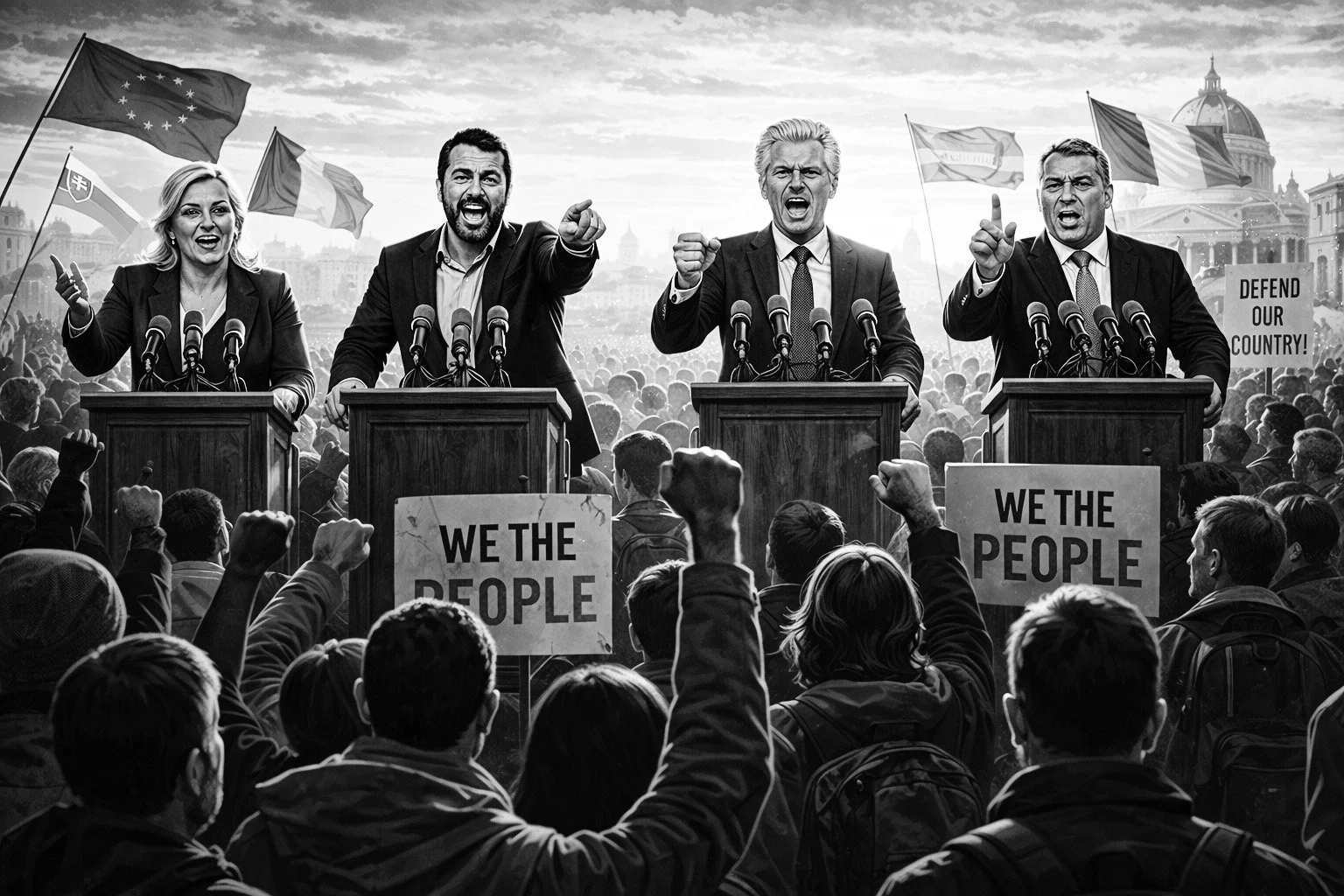
Image generated with ChatGPT.

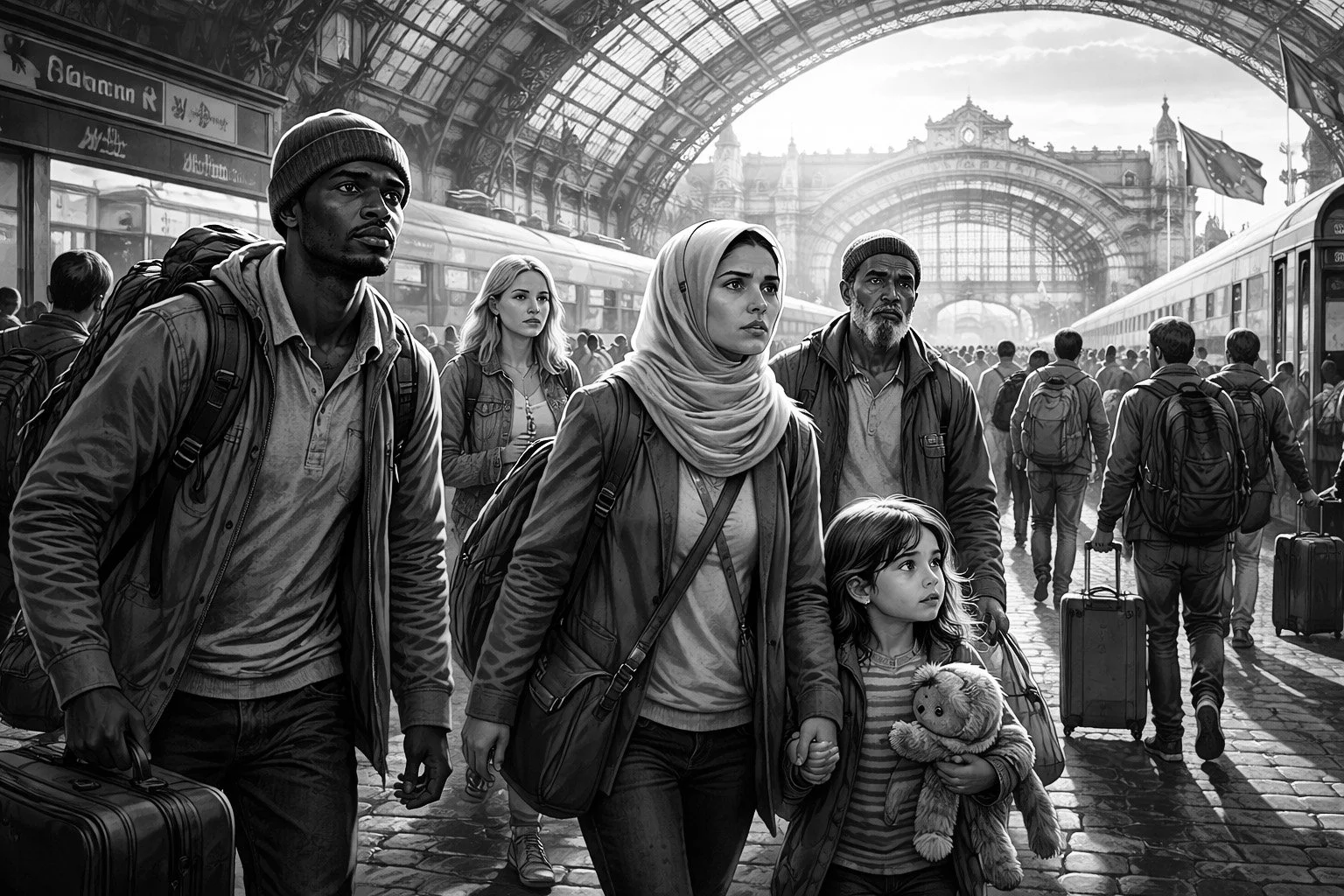
Many people today recognise the same uneasy feeling, even if they describe it in different ways. Decisions are made that shape their lives, yet those decisions seem to come from somewhere else — distant, abstract, impersonal. Not openly hostile, but unfamiliar. As if politics no longer passes through the world they know.

This sense of distance is fertile ground for populism.

Populism is often treated as a political problem: a style of rhetoric, a threat to democracy, a rejection of facts. But it can also be understood differently. Seen through a cultural lens, populism looks less like a doctrine and more like a reaction — a response to the feeling that public life has lost its connection to everyday experience.

At the heart of populism lies a simple question: Who speaks for “us”?
Not who governs most competently, or who follows the rules best, but who feels recognisable. Who understands how life is lived. Who belongs.

Modern democracies rely heavily on rules, procedures and institutions. This is necessary. Complex societies cannot function without clear laws, formal decision-making and expert knowledge. But over time, this way of governing can become distant. Politics begins to speak in the language of policy papers, statistics and legal frameworks — a language that makes sense, yet feels strangely empty.

When legitimacy has to be explained, rather than felt, trust becomes fragile.

Populist leaders thrive in this space. They do not primarily offer better solutions, but a different kind of connection. They speak in simpler terms, draw clear lines, and personalise responsibility. They name enemies and allies. In doing so, they restore a sense of context — even if that context is simplified or exclusionary.

Migration often intensifies these dynamics.

Migration is not only the movement of people; it is the movement of ways of life, habits and expectations. For many, this creates a vague sense of loss: familiar rhythms change, unspoken rules no longer seem shared. Populist narratives turn that unease into a story. Migrants become symbols — not only of change, but of the fear that no one is safeguarding what once felt self-evident.

This also helps explain why facts alone rarely weaken populism. Statistics and policy arguments address questions of efficiency and legality. Populism speaks to something else: recognition, dignity, and the feeling of being seen. When people feel unheard, being corrected does little to restore trust.

None of this means that populism offers good answers. It often simplifies, divides and excludes. But dismissing it as ignorance or manipulation misses the deeper issue. Populism is a signal that shared context is eroding.

The real challenge, then, is not how to silence populism, but how to rebuild forms of politics that reconnect rules with lived experience, and institutions with everyday life.

Who speaks for “us” remains an open question. Ignoring it will not make it disappear — it will only ensure that others answer it more loudly.

How the War in Iran Will Change What We Eat

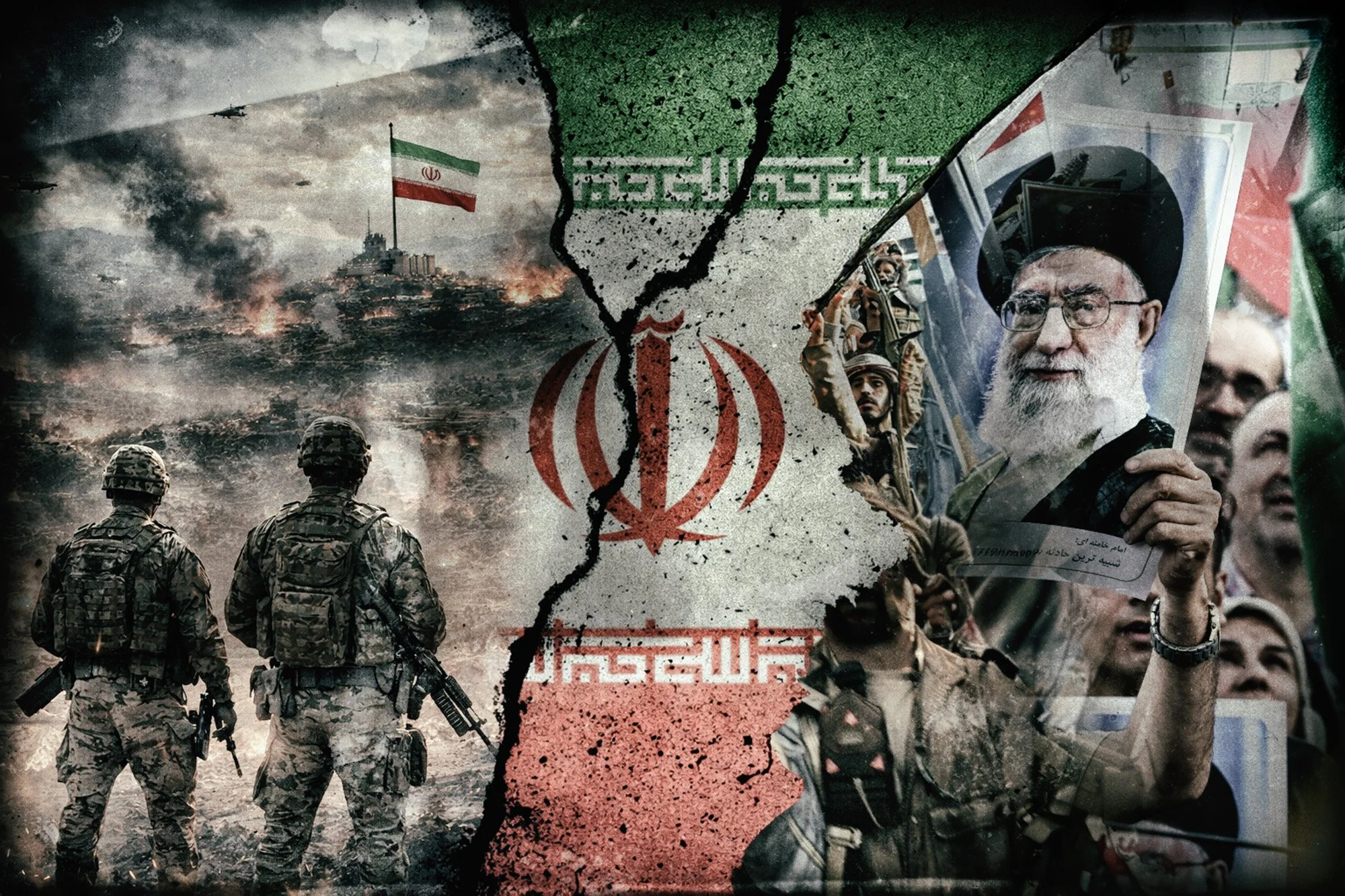
A farmer asking himself: what now? (Image generated with AI.)

For many Europeans, food still feels predictable. You go to the supermarket, and everything is there. Prices have gone up in recent years, but the system still seems to work.

That sense of stability is now under pressure.

Not because of something happening in European fields, but because of what is happening far away — in the Strait of Hormuz, the narrow passage between Iran and the Arabian Peninsula. Military tension, blocked shipping routes, and rising insurance risks are disrupting one of the world’s most important trade corridors. As a result, energy prices are climbing, fertiliser supplies are tightening, and transport costs are rising — all at the same time.

What begins there does not stay there.

A system under strain

The Strait of Hormuz is best known for oil, but it is just as critical for natural gas and fertiliser. When that transport route is disrupted, the effects spread quickly. Energy becomes more expensive, fertiliser becomes less available, and moving goods becomes more costly.

These are not separate problems. They reinforce each other — and together they shape the cost and availability of food.

Energy hits the plate first

The impact is already visible across Europe. In the Netherlands, some fishing boats are staying in port because diesel costs have risen to the point where going out to sea is no longer viable. When boats stay in harbour, fish disappears from the market — just as grey shrimp have largely disappeared in recent years when costs became too high.

In Spain, tomatoes that supply much of Northern Europe are becoming more expensive because transport costs have increased sharply. Supermarkets in Germany and Belgium are already adjusting prices to reflect these higher costs, and consumers are noticing.

The pattern is simple: when energy becomes expensive, food follows. And this comes on top of several years of rising food prices, which have already stretched household budgets across Europe.

Fertiliser hits the plate second

At the same time, fertiliser is becoming less available. This is less visible, but just as important.

Modern agriculture depends on fertiliser to maintain yields. When supply tightens, farmers have to make difficult decisions. They may use less fertiliser, switch to crops that require less input, or reduce production altogether.

These decisions happen months before harvest, but their consequences are long-lasting. Lower fertiliser use leads to lower yields, which means less food entering the system later in the year. And because agriculture follows fixed seasonal cycles, a missed opportunity cannot be recovered.

Europe has to adapt

Europe is deeply connected to this system. It depends on imported energy, imported fertiliser, and long supply chains that link producers and consumers across borders. When all three come under pressure at once, the effects begin to accumulate.

Food becomes more expensive, some products become less available, and choices narrow. This is not a sudden shock, but a gradual tightening of the system.

Diets will have to adapt — not by choice, but by necessity.

A harder reality

For a long time, Europe has lived with the assumption that food is always available, that no matter what happens elsewhere, the shelves will remain full.

The war in Iran shows how fragile that assumption is. Food depends on energy, on fertiliser, and on stable global trade routes. When those are disrupted, the effects travel far — and they reach into everyday life.

What is changing is not just the price of food. It is something more fundamental: the quiet return of a reality Europe once knew well — that what we eat is shaped by forces far beyond our control, and that those forces can shift faster than we expect.

Hannah Arendt, AI and Social Media: The Risks of a World That Thinks for Us

A portrait of Hannah Arendt created with AI.

Hannah Arendt (1906 - 1975) is often seen as a thinker of the past, shaped by the rise of totalitarian regimes in 20th-century Europe, especially Nazi Germany. But her work is not just about that time. It is about something more basic: what happens when people stop thinking for themselves.

One of her most striking ideas came from watching the trial of Adolf Eichmann. She expected to see a monster. Instead, she saw an ordinary man who followed rules and spoke in clichés. He did not really think about what he was doing. That led her to a simple but troubling insight: great harm can come from people who do not think.

This idea feels very relevant today. The world around us makes thinking easier to avoid. Social media rewards quick reactions instead of careful reflection. Algorithms show us what we already agree with. AI tools give us fast, clear answers. None of this forces us to stop thinking—but it does make it easier not to.

Arendt also believed that this kind of situation often grows out of loneliness. When people feel disconnected from others and from the world around them, they look for simple explanations and guidance. In the past, political ideologies filled that gap. Today, digital platforms and AI sometimes play a similar role. They offer connection, but often in a way that stays on the surface and does not challenge us.

This links to a question that is becoming more important: what do we lose when technology does more for us? AI can help us work faster and find answers quickly. But if we start relying on it for judgment, interpretation, or even conversation, we may slowly lose the habit of thinking things through ourselves.

Arendt also warned that the real danger is not just lies, but confusion about what is true. In today’s digital world, information is filtered and repeated in ways that can make almost anything seem believable. AI adds to this by producing answers that sound convincing, even when they are not fully reliable. Something can feel right without actually being true.

This creates a problem. The world may seem clear and coherent, but it becomes harder to question or check what we see.

We are not living under totalitarian rule. But some of the conditions Arendt described are still present: people feeling disconnected, a weaker sense of shared reality, and a growing reliance on systems that guide our thinking.

Arendt did not offer simple solutions. Instead, she stressed something more basic. Thinking is not just a skill—it is a responsibility. It takes time, effort, and a willingness to pause and reflect.

In a world where technology makes everything faster and easier, that responsibility becomes more important.

The real question is not what AI and social media can do for us. It is whether we continue to think for ourselves.

From the Marquis de Sade to Jeffrey Epstein

Power, Desire, and the Abuse of Freedom


An AI portrait of Jeffrey Epstein and Marquis de Sade.

In the late eighteenth century, Europe was in upheaval. Monarchies were collapsing, revolutions were spreading, and Enlightenment thinkers were promoting reason, equality, and human dignity. It was in this charged atmosphere that the Marquis de Sade lived and wrote.

De Sade was not just a controversial thinker. He was repeatedly accused—and in several cases convicted—of serious abuse of vulnerable people, including coercion, violence, and the exploitation of young women and prostitutes. His writings did not merely describe cruelty; they celebrated it, presenting domination and suffering as legitimate forms of pleasure.

Even in an age that was questioning authority and tradition, this crossed a line. He spent long periods in prison. Society, however inconsistently, recognized that what he represented was not freedom, but a radical denial of human dignity.

Power Without Accountability

More than two centuries later, Jeffrey Epstein operated in a world of global elites—private jets, luxury properties, and access to political and scientific influence.

Epstein was not a theorist. His actions are documented in court cases and testimonies. He:

  • recruited, abused and traficked underage girls, often through a network of intermediaries

  • paid victims, normalizing exploitation as a transaction

  • maintained properties where abuse took place over extended periods

  • cultivated relationships with powerful individuals, some of whom continued to associate with him even after his conviction in 2008

This was not hidden in the shadows alone. Warning signs were visible. Yet access, status, and influence allowed him to continue for years.

The Same Logic, Different Language

What links de Sade and Epstein is not just what they did, but how their actions reflect a deeper mindset.

De Sade argued openly that:

  • moral limits are artificial

  • the strong have the right to dominate

  • empathy is weakness

Epstein never wrote this down, but his behavior followed the same logic. The systematic nature of his actions—organizing, paying, and repeating abuse—points to more than impulse. It suggests a belief that others exist to be used.

In both cases, human beings were reduced to objects:
for pleasure, for control, or for experimentation.

Epstein’s reported interest in genetic “improvement” adds another layer. It echoes older, dangerous ideas that some people are superior and entitled to shape the future of others.

A Necessary Judgment

It is tempting to respond to stories like these with cynicism—to say that all elites are corrupt, that morality is a façade, that nothing really changes.

But that reaction risks blurring something essential: not everything is the same, and not everything is acceptable.

What de Sade described and what Epstein practiced are not controversial lifestyles or boundary-pushing ideas. They are clear violations of human dignity:

  • coercion

  • exploitation of the vulnerable

  • abuse of power

De Sade was imprisoned because his actions and ideas were recognized as dangerous. Epstein was eventually arrested and exposed because, despite failures, there were still institutions and individuals willing to act.

That is the line that matters.

Freedom does not include the right to harm others.
Power does not justify exploitation.
Intelligence does not excuse abuse.

The comparison between these two men should not lead to fascination, but to clarity. Across centuries, the pattern is the same—and so must be the response: firm rejection.

Further Reading

  • Marquis de Sade – Justine

  • Neil Schaeffer – The Marquis de Sade: A Life

  • Julie K. Brown – Perversion of Justice: The Jeffrey Epstein Story

Can the U.S. and Israel Win a War with Iran — Or Has Winning Become Impossible?

At the start of the war, the language was familiar: targets destroyed, capabilities reduced, pressure increasing. It is the language of progress — and ultimately, of victory.

But very quickly, a more difficult question emerges: what would “winning” actually look like?

Is it destroying Iran’s military capacity, stopping its nuclear ambitions, forcing regime change, or simply restoring deterrence? These are not the same objectives. Some are military, others political, and some may not be achievable at all. When goals diverge, even success on the battlefield can fail to produce a clear outcome.

More striking still is that the strategic rationale itself remains unclear. This is not just a hard war to win — it is a war whose end state is difficult to define.

Why Military Success Is No Longer Enough

For much of modern history, war followed a simple logic: defeat the enemy’s army, and political results would follow. That logic still matters, but it no longer works on its own.

Vietnam, Afghanistan, and Ukraine all show the same pattern: military superiority does not guarantee a lasting political outcome. Power can dominate the battlefield without shaping the result.

There is also a more practical constraint. Modern warfare depends on complex, expensive systems — missiles, interceptors, air defense — that cannot be produced quickly or in unlimited quantities. Stockpiles are limited, and production capacity is slow to expand.

A war can be started quickly. Sustaining it is much harder.

A War of Endurance, Not Decision

In this conflict, the asymmetry is clear. The United States and Israel need visible results. Iran may only need to endure.

At the same time, the war extends beyond the battlefield into a wider system of constraints:

  • Energy markets, where disruption affects global oil and gas flows

  • Regional stability, where escalation spreads beyond a single front

  • Military supply chains, where limited production constrains the pace of war

  • Domestic support, where public opinion limits how long governments can continue

These pressures reinforce each other. Rising costs, strained supply chains, and political fatigue make prolonged conflict increasingly difficult to sustain.

The burden is not evenly shared. The United States itself faces limited direct risk, but its allies depend heavily on scarce and expensive defensive systems. The ability to continue the war may depend less on offensive success than on whether these partners can hold out.

At the same time, the economic impact spreads far beyond the region — through oil, gas, shipping, and even fertilizer markets — often hitting the most vulnerable countries hardest.

Together, these pressures define what economic resilience now means in practice: the ability to absorb shocks, sustain pressure, and continue functioning under disruption.

In this kind of conflict, time works differently. The stronger side seeks a quick result. The weaker side benefits from delay. The longer the war lasts, the less likely a decisive outcome becomes.

Ending Without Losing Face

If objectives are unclear, resources constrained, and outcomes shaped by forces beyond direct control, then the question is no longer how to win, but how to end the war.

That is a harder problem. Ending such a conflict requires a way out that allows all sides to step back without appearing to lose. These exits are political, negotiated, and often ambiguous.

The longer the war continues, the harder this becomes. Costs rise, positions harden, and expectations can make compromise politically untenable. At the same time, the complexity of the conflict makes it increasingly difficult for any one actor to control its trajectory.

The real question, then, is not whether the United States and Israel can win this war, but whether their leaders are willing and able to shift from a logic of victory to a logic of termination.

If they are not, the war may continue not because it can be won, but because it has become too difficult to end.

Further Reading

  • Rupert Smith — The Utility of Force

  • Donald Stoker — Why Nations Lose Wars

  • Hew Strachan (ed.) — The Changing Character of War

  • Adam Tooze — lectures on war and the global economy (On YouTube)

Rastapopoulos and the Business of Influence

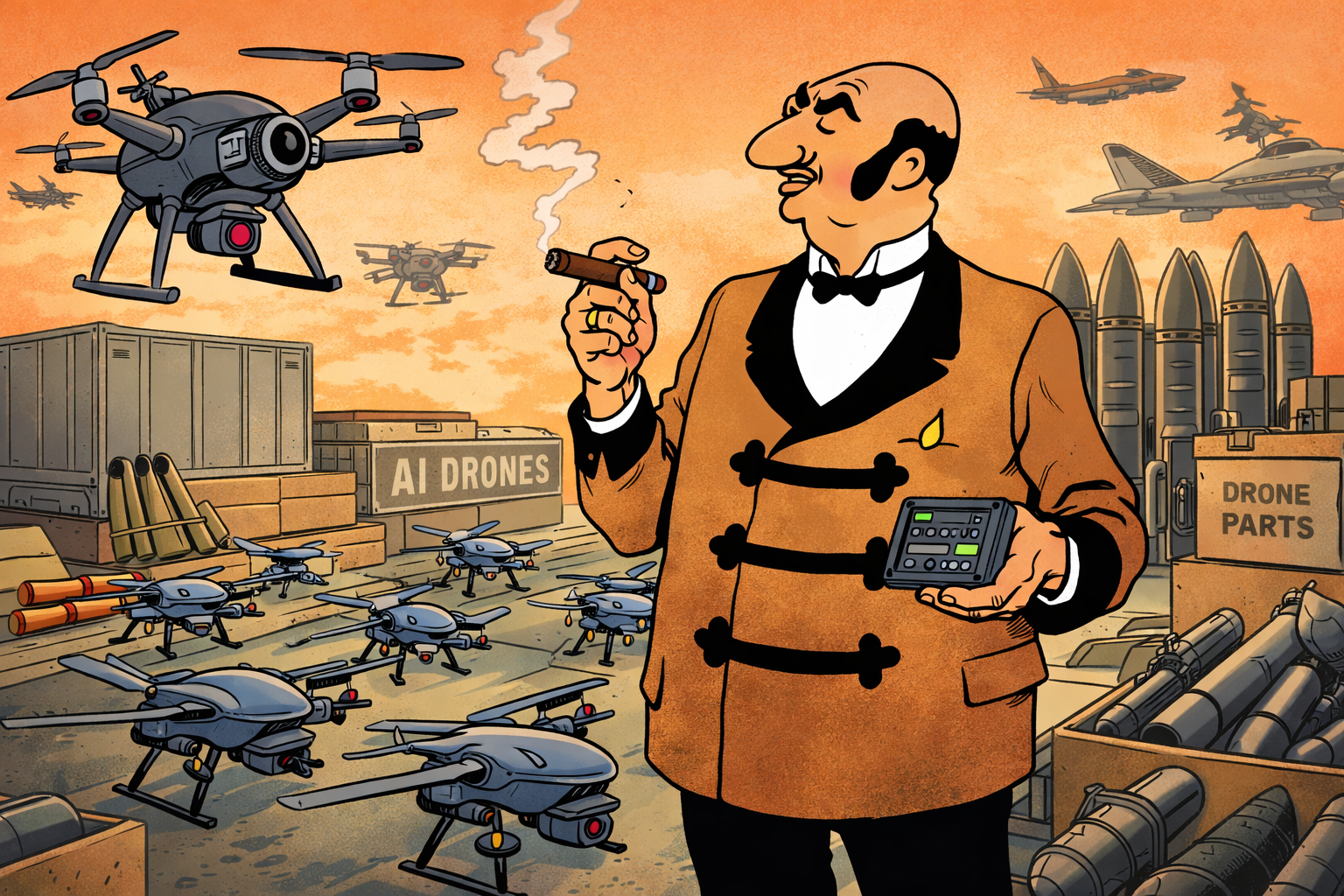
Image created with AI

In the adventures of Tintin (1929 - 1976), villains rarely appear as villains. They wear good suits, run international companies, and speak the language of progress and opportunity. At first glance, these stories may seem like a story from another time. Yet the patterns they reveal feel uncomfortably close to decisions being made in our own time.

No one embodies the dealmakers that we are talking about better than Roberto Rastapopoulos, the cigar-smoking tycoon who first appeared in Cigars of the Pharaoh (1934). Behind his elegant offices and film studios lay a network of smuggling, bribery, and intimidation that stretched across continents.

Rastapopoulos’ genius was not the crime itself, but his ability to make the system work for him.

If Hergé were writing the stories today, Rastapopoulos would probably not be dealing in opium or stolen jewels. His warehouse might instead contain rows of AI drones, missile components, and autonomous aircraft being prepared for “defense contracts.”

Everything would look perfectly legitimate.

Government officials would speak about security. Companies would talk about innovation. Investors would discuss growth markets.

But Tintin — and readers of Tintin — would look beyond the hardware.

  • A contract appears after a convenient political donation.

  • A procurement board is chaired by an old acquaintance.

  • A strategic position goes to a relative of someone powerful.

  • A competitor quietly withdraws after an unpleasant conversation.

Corruption opens doors. Nepotism keeps them open.

From the outside it all looks modern, technical, even respectable. Yet the structure behind it would be instantly familiar to anyone who has followed the adventures of Tintin.

Because in Rastapopoulos’ world, the real product was never opium, diamonds, or weapons. The real product was influence. And influence, once captured, can move markets, governments — and sometimes even wars.

Rutger Bregman and the Possibility of a Better World

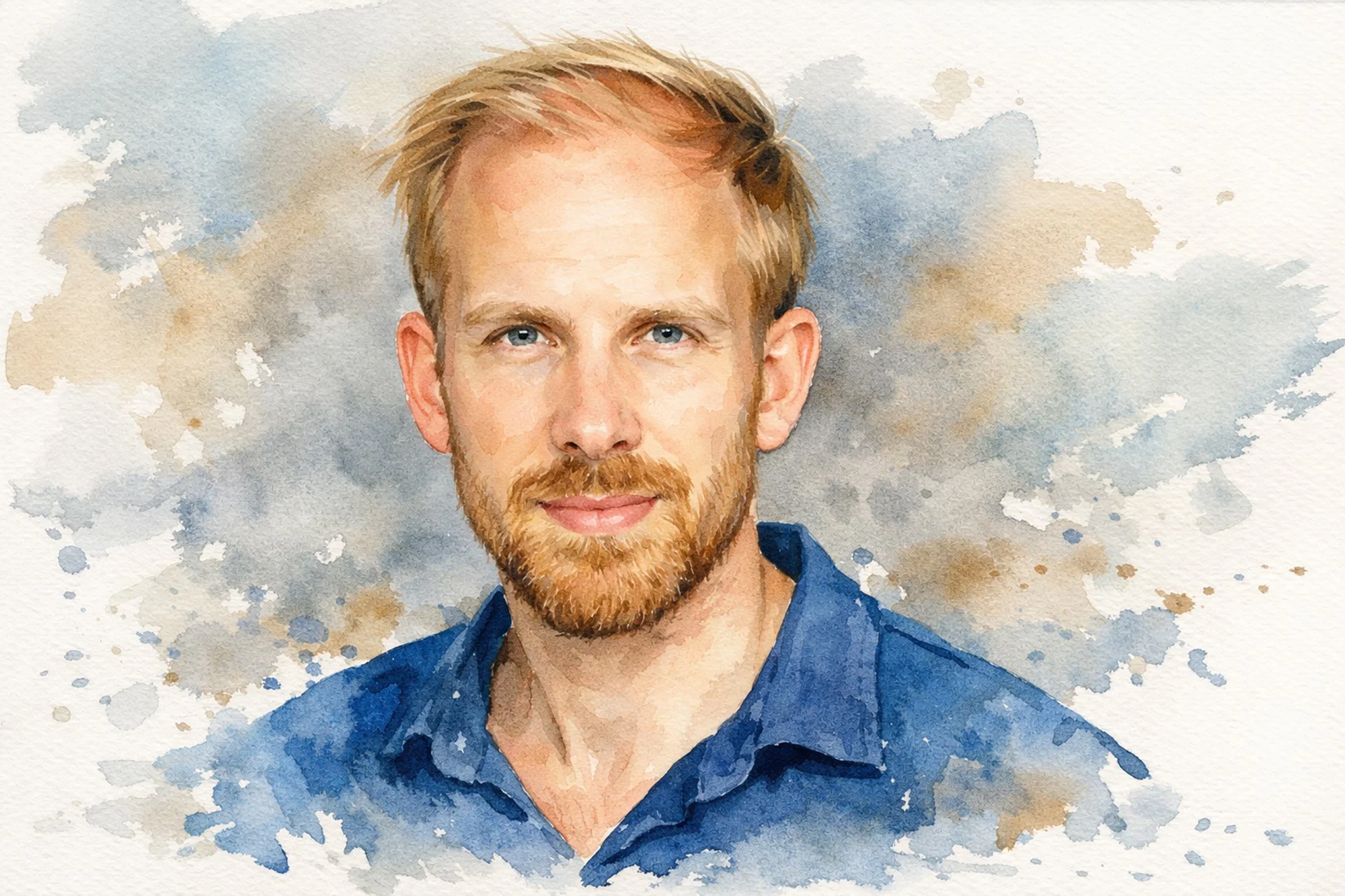
Rutger Bregman

In a time when public debate often assumes the worst about human nature, the Dutch historian and writer Rutger Bregman has built a career around a strikingly different idea: most people are fundamentally decent, cooperative, and capable of building a better society—if institutions allow it.

His books, especially Utopia for Realists and Humankind: A Hopeful History, combine history, social science, and moral argument to challenge common assumptions about human behavior, poverty, and economic systems.

A More Optimistic View of Human Nature

At the center of Bregman’s thinking is a simple but controversial claim: humans are not naturally selfish and violent. Instead, cooperation, empathy, and trust have been crucial to our evolutionary success.

Many famous historical stories, he argues, reinforce an overly pessimistic image of humanity. Looking more closely at history—from wartime behavior to everyday crises—often reveals the opposite: people helping one another rather than descending into chaos.

If this more optimistic view is correct, it has important consequences for politics and economics.

Poverty as a Lack of Money

One of Bregman’s most famous arguments concerns poverty. Rather than seeing poverty as a moral failure, he describes it as something simpler: a shortage of money.

From this perspective, direct support—simply giving people money—can be one of the most effective solutions. This idea lies behind his support for a universal basic income, a policy in which every citizen receives a regular payment from the state.

Supporters argue that such a system could reduce bureaucracy, eliminate extreme poverty, and give people greater freedom to shape their own lives.

A Critique of Modern Capitalism

Bregman does not call for the abolition of markets or capitalism. Instead, he argues that modern capitalism operates under rules that often favor the wealthiest actors.

One of his most widely discussed moments came during a speech at the World Economic Forum in Davos, where he criticized global elites for celebrating philanthropy while avoiding serious discussion about taxation. For Bregman, fair taxation and the closing of tax havens are essential for a more balanced economic system.

Rethinking Work

Another theme in Bregman’s work concerns the nature of modern work. He has helped popularize the debate about so-called “bullshit jobs”—roles that even the people performing them feel contribute little to society.

At the same time, many socially essential professions—teachers, nurses, and caregivers—often receive lower pay and status. This contrast, he argues, suggests that markets do not always reward what is most valuable to society.

What His Vision Would Mean

If Bregman’s ideas were widely implemented, the result would not be a revolutionary overthrow of capitalism but a redesign of its rules.

Extreme poverty might largely disappear through direct income support, taxation systems could become more transparent, and social policy would rely more on trust than suspicion.

Whether one agrees with his conclusions or not, Bregman’s work invites readers to consider a simple question: what kind of institutions would we build if we truly believed that most people are basically good?

Further Reading

  • Rutger Bregman - Utopia for Realists

  • Rutger Bregman - Humankind: A Hopeful History

  • Davos speech by Rutger Bregman at the World Economic Forum (2019)

  • David Graeber – Bullshit Jobs

What Evolution Teaches Us About Power and Conflict

John Maynard Smith

In 1973, the British evolutionary biologist John Maynard Smith published a book that would quietly reshape how scientists think about conflict: Evolution and the Theory of Games.

Maynard Smith, who spent much of his career at University of Oxford, was not writing about politics or diplomacy. He was studying animals. Yet his ideas may help explain a surprising amount about the modern geopolitical world.

Hawks and Doves

Maynard Smith introduced a simple model to understand conflict in nature. Imagine two types of behavior:

  • Hawks escalate immediately. They fight aggressively for territory, food, or status.

  • Doves avoid real fighting. They threaten a little, display strength, but retreat before serious damage occurs.

When two hawks meet, the result can be destructive: both risk injury.
When a hawk meets a dove, the hawk wins easily.
When two doves meet, they avoid costly violence and usually share or withdraw.

The key insight was striking: if the cost of fighting is high enough, a population made entirely of hawks is unstable. Pure aggression destroys itself. Nature therefore tends to produce a balance of strategies — what Maynard Smith called an evolutionarily stable strategy. Conflict exists. But it is limited.

Why Threats Often Replace War

Across the animal world, species rarely fight to the death. Instead, they rely on ritualized displays: antlers clashing, birds spreading wings, animals roaring or circling. These displays are not pointless theatre. They are a way to signal strength while avoiding catastrophic costs. In other words, nature evolved something that looks suspiciously like deterrence.

The Geopolitical Parallel

Look at today’s world and the pattern becomes recognizable.

Great powers threaten. They posture. They test each other’s resolve.
Military exercises replace battles. Sanctions replace invasions.
Rhetoric escalates while leaders quietly try to avoid direct collision.

From the perspective of Maynard Smith’s model, this is not surprising. When the cost of war becomes extreme — especially in a nuclear age — a world of constant hawks becomes dangerously unstable. If every actor behaves like a hawk, sooner or later two hawks collide. And in modern geopolitics, the injuries would be catastrophic.

The Dangerous Moment

But Maynard Smith’s work also highlights something unsettling.

Stable systems depend on a recognition of costs.

If leaders begin to believe that conflict will be cheap — or that opponents will always retreat — hawkish strategies suddenly become attractive. Escalation becomes rational again. History shows that many wars begin precisely when actors misjudge those costs. In evolutionary terms, the system briefly forgets the price of being a hawk.

A Lesson from Evolution

Maynard Smith never intended his work as political theory. Yet it offers a useful lens for understanding power and conflict. Peace is rarely the result of goodwill alone. More often, it emerges from a shared understanding that some fights are simply too expensive to win. Nature discovered this long before humans invented diplomacy. The real question for our time is whether political leaders still remember the same lesson.

Further Reading

  • John Maynard Smith - Evolution and the Theory of Games

  • John Maynard Smith & George.R. Price - The Logic of Animal Conflict

  • Richard Dawkins – The Selfish Gene

When Republics Drift: Tacitus and the Politics of Our Time

Image created with AI.

Around the year 100 AD, the Roman historian Tacitus looked back on the political world he had lived through and saw something unsettling. Rome still had its Senate. Laws were debated, magistrates held office, and the language of republican government survived. Yet everyone understood that real power now rested with the emperor—whether under Tiberius, Nero, or later Domitian.

Tacitus captured this transformation with quiet precision. Rome had not suddenly abandoned its republican institutions. Instead, those institutions had slowly adapted to a new reality in which authority was increasingly concentrated.

For modern readers, that observation feels strikingly familiar. Across the democratic world—particularly in the United States—political debates increasingly revolve around the strength of institutions, the limits of executive power, and the resilience of constitutional systems. Tacitus does not offer a blueprint for the present. But his histories reveal a recurring pattern in political life: freedom rarely disappears through dramatic collapse. It fades gradually, while institutions continue to function.

A Senator Writing After the Republic

Tacitus was not an outsider observing Rome from afar. He was a senator who had served under several emperors, including the authoritarian reign of Domitian. His career unfolded in a political system where public institutions still existed, but where criticism of imperial authority could be dangerous.

After Domitian’s death, Tacitus began writing his great historical works, including The Histories and The Annals. These books explore the early decades of the Roman Empire and the reigns of emperors such as Tiberius, Nero, and others who shaped the imperial system.

What makes Tacitus remarkable is not only what he records, but how he interprets it. His histories are less concerned with battlefield drama than with the mechanics of power: how rulers influence institutions, how elites behave in changing political environments, and how a political culture gradually adjusts to new realities.

Institutions That Remain, but Change

Rome did not lose its republican structures overnight. The Senate continued to meet and to vote. Courts functioned. Public ceremonies preserved the appearance of the old order.

Tacitus shows how these institutions slowly evolved under imperial authority. Emperors shaped the political climate in which decisions were made. Legal mechanisms could be used to silence rivals. Public debate became more cautious as people learned where the true boundaries of power lay.

What makes Tacitus’ account so compelling is his restraint. He rarely launches direct attacks on the system. Instead, he describes events carefully, allowing readers to see how authority shifts even while institutions outwardly survive.

The Quiet Adaptation of Elites

A central theme in Tacitus’ work is the behavior of Rome’s political elite.

The Senate once stood at the center of Roman public life. Under the empire, it continued to exist but operated within a system dominated by the emperor. Senators responded in different ways. Some openly praised imperial authority. Others remained silent. A few attempted resistance and paid a heavy price.

Tacitus portrays these figures with striking nuance. They are not simply villains or heroes. Many are pragmatic individuals navigating a system that has fundamentally changed.

This raises one of Tacitus’ most uncomfortable questions: when freedom erodes, is it only because rulers seize power—or also because elites adapt to the new order?

A Lens for the United States—and Beyond

Tacitus does not tell us that modern republics will follow the same path as Rome. History never repeats itself so neatly. But his work offers a powerful framework for thinking about political change.

In the United States, institutions remain strong and deeply rooted. Congress legislates, courts interpret the law, and elections regularly shift political power. Yet debates about executive authority, the role of the judiciary, and the stability of democratic norms have become increasingly central to American political life. Presidents rely more frequently on executive orders and emergency powers. Political battles over the courts have intensified. Trust between branches of government has grown more fragile. None of these developments mean that the American republic is destined to follow Rome’s path. But Tacitus reminds us that the health of institutions depends not only on laws and constitutions. It also depends on political habits, expectations, and the willingness of elites to respect the limits of power.

These tensions are not unique to the United States. Across Europe and other parts of the world, societies are also debating the balance between strong leadership, institutional independence, and democratic accountability.

Tacitus helps us see why these debates matter.

The Slow Drift of Political Systems

Tacitus never wrote a formal theory of politics. Yet his histories contain one of the most enduring observations about power.

Political systems rarely collapse overnight. The greater danger lies in gradual change: the expansion of authority in times of crisis, the normalization of exceptional powers, and the quiet adaptation of institutions to new political realities. By the time these shifts become obvious, the system itself has already evolved.

That insight, drawn from the experience of ancient Rome, continues to resonate today. Tacitus reminds us that republics are not only sustained by laws and institutions. They are sustained by the political culture that surrounds them.

When that culture changes, freedom can fade—even while the structures of government remain.

Further Reading

  • Tacitus – The Annals

  • Tacitus – The Histories

  • Tacitus – Agricola

  • Tacitus – Germania

  • Ronald Syme – Tacitus

  • Christopher Kelly – The Roman Empire: A Very Short Introduction

  • Miriam Griffin – Nero: The End of a Dynasty

  • Anthony Everitt – The Rise of Rome

Europe, Melos, and the Return of Geopolitics

The Lesson of Melos (image created with AI)

In 416 BC the powerful city of Athens confronted the neutral island of Melos during the Peloponnesian War. The Melians appealed to justice and neutrality. The Athenians answered with the cold logic of power.

“The strong do what they can, and the weak suffer what they must.”

Soon afterwards Athens besieged the island. When Melos fell, the men were executed and the women and children enslaved.

Thucydides recorded this episode not to glorify power, but to expose how international politics sometimes works when survival, fear, and prestige dominate the decisions of states. For Europe today, the uncomfortable relevance of that ancient dialogue is becoming increasingly clear.

Europe’s Great Experiment

For seventy years Europe has pursued one of the most remarkable political projects in history. After two world wars the continent tried something radically different: replacing power politics with rules, institutions, and economic integration. The European Union became a system in which borders opened, sovereignty was shared, and disputes were managed through law rather than force. Inside Europe, that experiment worked astonishingly well. Outside Europe, however, the world never fully adopted the same logic.

The Return of Hard Geopolitics

Over the past decade Europe has rediscovered that it still lives in a wider international system shaped by power. The Russian invasion of Ukraine reminded Europeans that territorial war has not disappeared from the continent. Military strength and deterrence — concepts that many hoped belonged to the past — suddenly became central again. At the same time Europe faces instability along its southern horizon. Tensions involving Iran, Israel, and the United States affect energy markets, shipping routes, and regional stability. A wider conflict in the Middle East would quickly reverberate through Europe’s economy and politics. Above these regional crises lies a deeper transformation: the long-term strategic rivalry between China and the United States, which is reshaping global trade, technology, and alliances. These developments are not separate events. They are parts of a single geopolitical landscape in which the balance of power is shifting again.

Europe Between Power and Rules

Europe today occupies a unique position in that landscape. Economically it is one of the largest powers in the world. The European Union’s combined economy rivals that of the United States and China, and its regulatory influence shapes global markets. Yet in strategic and military terms Europe remains fragmented and still depends heavily on American security guarantees through NATO. This creates a fundamental tension. Europe believes deeply in a rules-based international order. But the stability of that order ultimately depends on power — military, economic, and political — capable of defending it.

The Lesson of Melos

The tragedy of Melos did not happen only because Athens was powerful. It happened because Melos had no reliable structure of power around it: no strong alliances, no credible deterrence, and no ability to shape the strategic environment in which it lived. Europe today is obviously not Melos. It is far larger, richer, and more influential. But the ancient story still raises a question that Europe cannot ignore. A political order based on rules works only when those who believe in it also possess the capacity to defend it. Europe has spent seventy years building one of the most successful political systems in modern history. The challenge of the twenty-first century may be learning how to protect it in a world where power politics has returned.

Further Reading

Thucydides — History of the Peloponnesian War (Book V, Melian Dialogue)
Donald Kagan — The Peloponnesian War
Richard Ned Lebow — The Tragic Vision of Politics
Graham Allison — Destined for War: Can America and China Escape Thucydides’s Trap?
Mark Leonard — The Age of Unpeace
Timothy Garton Ash — Homelands

A Contemporary Version of The Myriad Horsemen of the Apocalypse

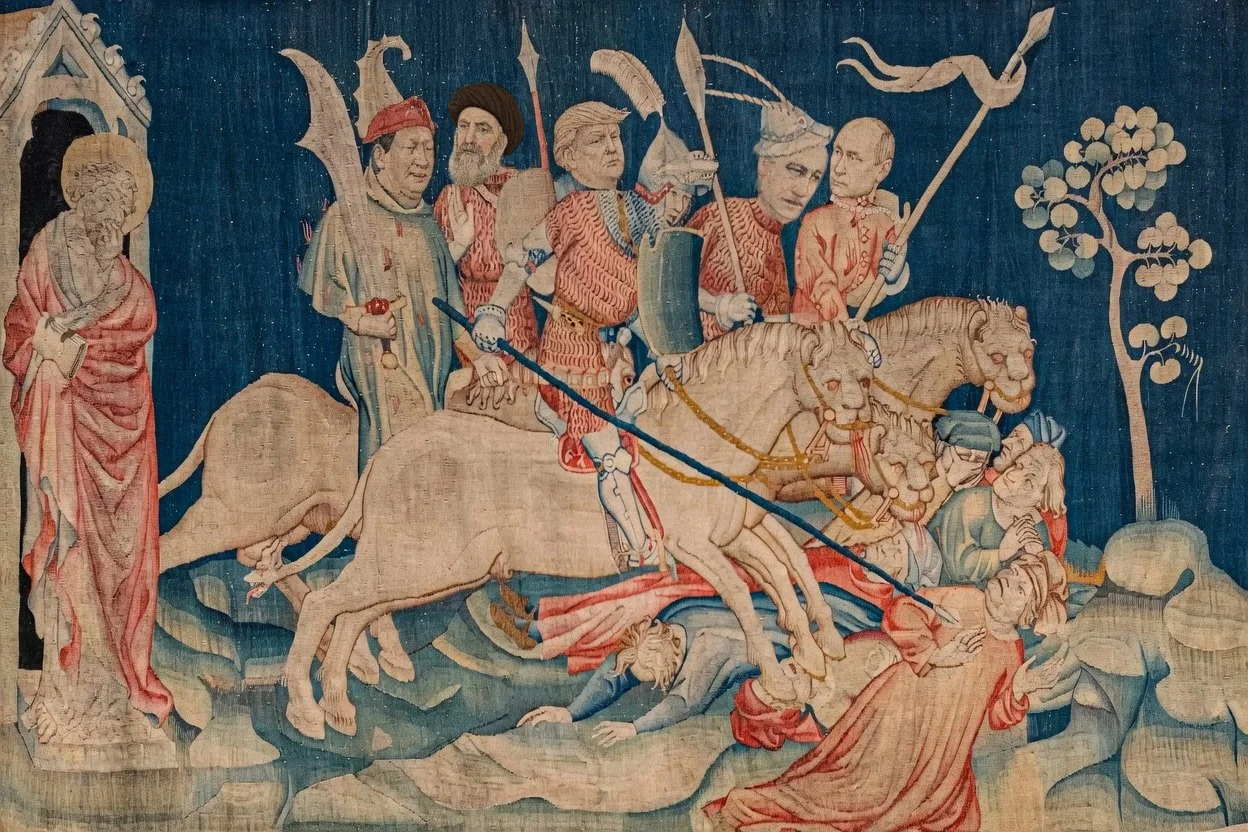
The Myriad Horsemen, this time with Xi Jinping, Ali Khamenei, Donald Trump, Benjamin Netanyahu, and Vladimir Putin.

A contemporary version of The Myriad Horsemen of the Apocalypse, this time with Xi Jinping, Ali Khamenei, Donald Trump, Benjamin Netanyahu, and Vladimir Putin.

At first glance, the image above looks like a fragment of a medieval tapestry: armored riders charging forward, people crushed beneath their horses. But look again. The riders are not medieval knights. Their faces resemble figures from today’s headlines — Xi Jinping, Ali Khamenei, Donald Trump, Benjamin Netanyahu, and Vladimir Putin.

This modern image reimagines one of the most striking scenes from the Apocalypse Tapestry in Angers, the panel often called The Myriad Horsemen. The original 14th-century tapestry illustrates the terrifying armies described in the Book of Revelation. (For the story behind the tapestry itself, see: The Apocalypse Tapestry, Château d’Angers, Angers (France).)

But medieval viewers probably saw more than a biblical vision. Europe was reeling from the Black Death and the destruction of the Hundred Years’ War. The riders even wear the armor of contemporary soldiers. To many people in 14th-century France, the apocalypse did not feel symbolic — it felt like the news of the day.

This modern reinterpretation simply continues that tradition.

Each age replaces the riders with the figures that embody its own anxieties. In the Middle Ages, they could evoke the armies ravaging France. Today, they may evoke a world unsettled by wars, rival powers, and a fragile international order.

The faces change. The uneasy sense of living in dangerous times does not.

The Many Beginnings of Christianity

Image created with AI

When you travel through Europe, Christianity is everywhere. It is in the skyline of almost every town, in the rhythm of the calendar, in music, art, law, and even in the way communities organise care and solidarity. From the Camino routes to the monasteries of Cluny, from small village chapels to the great cathedrals of France, Germany, and Spain, Christianity shaped Europe for more than a thousand years.

To understand Europe, we need to understand how this religion developed. And that story is far more complex than many people assume.

One of the historians who has helped reshape this conversation is Elaine Pagels. Her work shows that early Christianity was not a single, unified movement. It was a landscape of competing ideas, interpretations, and spiritual paths. What we now call “Christianity” emerged only after centuries of debate, conflict, and adaptation.

In the first centuries, different groups tried to answer the same questions. Who was Jesus? What did his message mean? Some focused on faith, authority, and community. Others emphasised inner transformation and spiritual insight. Some believed the kingdom of God would soon arrive in dramatic historical events. Others saw it as a deeper awakening within the human person.

This diversity should not surprise us. Europe itself grew in the same way: through disagreement, exchange, and gradual consolidation. Cultural unity often came later, and rarely without conflict.

The early Christians also lived in a harsh and dangerous world. They were a small and vulnerable movement inside the Roman Empire. War, repression, and sudden political change shaped their experience. The destruction of Jerusalem in the first century forced followers of Jesus to rethink their identity and their future. In this environment, religious stories were not only spiritual. They were also tools for survival.

One of Pagels’ most striking insights concerns the development of ideas about good and evil. In earlier Jewish tradition, the figure of Satan played only a limited role. Over time, however, this figure became a powerful symbol of opposition. Religious language helped communities define boundaries: who belonged, and who did not.

Throughout European history, this pattern repeated itself. Christians divided among themselves. Catholics and Protestants fought devastating wars. Each side believed it defended truth against evil. These conflicts shaped the political and cultural map of Europe as much as kings and armies did.

Yet there was always another current. Alongside institutions and conflict, there were voices that focused on inner transformation. Some early Christian texts speak about discovering a deeper reality within oneself. This tradition echoes later in European mysticism, in monastic life, and in spiritual movements that emphasise experience rather than authority.

Eventually, a structured church emerged. It created stability, built institutions, founded universities and hospitals, and helped organise European societies. Without this framework, Europe would look very different today. At the same time, this process also narrowed the range of accepted beliefs. Many early voices disappeared from view.

When we travel through Europe now, we see the result of this long evolution. Every cathedral, pilgrimage route, and festival reflects centuries of debate, hope, fear, and imagination. Christianity did not simply shape Europe. It evolved together with Europe.

Understanding this makes travelling richer. The places we visit are not only monuments of faith. They are traces of the human search for meaning, community, and belonging.

Perhaps this is one of the deepest lessons Europe offers: culture is never fixed. It is always becoming.

Further reading

  • Elaine Pagels The Gnostic Gospels

  • Elaine Pagels The Origins of Satan

  • Elaine Pagels Revelations: Visions, Prophecy, and Politics in the Book of Revelation

  • Diarmaid MacCulloch Christianity: The First Three Thousand Years

  • Tom Holland Dominion

When Contexts Don’t Travel Well

Migration, culture, and why tensions arise before intentions are understood

Image generated with ChatGPT.

People have always moved. Romans settling far from Rome, Visigoths crossing a collapsing empire, Vikings navigating river systems deep into Europe, Moors shaping Iberian cities for centuries. Migration is not an exception in European history; it is one of its constants.

What is new is the speed, the scale, and the way migration now unfolds in societies that already struggle to agree on what holds them together.

Public debates usually frame migration in economic, legal or moral terms. Numbers, quotas, asylum procedures, labour shortages, humanitarian duty. All of that matters. But beneath these arguments lies a quieter layer that is rarely addressed: migration is not only about people crossing borders — it is also about different ways of carrying meaning and responsibility colliding.

In earlier blogs on low-context and high-context cultures, we explored how societies differ in where they locate meaning, how responsibility is shared, and how social order is maintained. Those distinctions matter even more once people move across cultural boundaries — because context does not stay behind when people migrate.

Migration makes cultural assumptions visible — and fragile.

When people move from one society to another, they do not leave their sense of meaning, responsibility or belonging at the border. They bring with them deeply ingrained expectations about how trust is built, how authority is recognised, how conflicts are handled, and how one knows what is expected without being told.

This is where friction begins.

It is tempting to describe Europe as predominantly low-context: rule-based, procedural, explicit. In practice, Europe has always been more complex. Alongside formal institutions and written law exist strong high-context regions and traditions — shaped by religion, history, family structures and local customs.

Migration therefore does not only create tension between low-context host societies and high-context newcomers. It also creates collisions between different high-context worlds, each organised around its own implicit rules.

High-context cultures do not automatically recognise each other’s signals.

What feels self-evident in one community may be meaningless — or even offensive — in another. Norms around gender, authority, hospitality, conflict or public behaviour often rely on unspoken cues that do not translate easily. When these cues are misread, misunderstanding does not feel like misunderstanding. It feels like disrespect.

For people arriving from strongly high-context backgrounds, contemporary European societies can feel disorienting. Social life may appear impersonal. Institutions may seem distant or indifferent. The absence of dense relational networks can be experienced not as freedom, but as isolation. What the host society understands as neutrality or equality, newcomers may experience as coldness or abandonment.

At the same time, host societies — whether more low- or high-context themselves — often expect newcomers to adapt quickly to existing norms. When this does not happen, frustration grows. Rules are explained. Expectations are repeated. Compliance is demanded. What is perceived as unwillingness or non-integration may in fact be uncertainty about how meaning and responsibility are supposed to work in this new setting.

The reverse misunderstanding is just as common. Migrants may rely on family networks, community leaders or informal structures to navigate daily life — perfectly rational strategies in many high-context cultures. Host societies may interpret this as withdrawal, parallel worlds, or resistance to shared norms.

These frictions are not merely cultural misunderstandings at the level of manners or communication. They are structural. They shape schooling, labour markets, neighbourhoods, policing, welfare systems and political debate. And when they accumulate, they harden into resentment on all sides.

Times of rapid change intensify this process.

Migration today often coincides with housing shortages, economic pressure and political uncertainty. In response, societies seek stability. Low-context systems tend to tighten rules, refine procedures and demand clearer enforcement. High-context communities — both established and newly arrived — often retreat into trusted networks, reinforce internal bonds and protect their own coherence.

Each side believes it is acting rationally. Each side experiences the other as unreasonable.

This helps explain why debates about migration so quickly polarise. What one group frames as law and order, another experiences as loss of dignity or recognition. What one side calls social cohesion, another experiences as exclusion. The conflict is rarely only about migrants themselves; it is about incompatible expectations of how societies are supposed to function.

History offers many parallels. Cities that tolerated newcomers as long as they fitted into existing networks. Empires that governed diversity through layered systems of belonging. And moments when those balances broke down once centralised rules replaced negotiated coexistence.

Looking at migration through the lens of context does not offer simple solutions. It does not settle questions about borders, numbers or policy. But it clarifies something essential: migration is not only about integrating people into systems. It is about negotiating between different ways of making sense of the world.

If societies ignore that layer, cultural misunderstanding easily turns into political conflict. If they acknowledge it, they may begin to see that many tensions are not driven by bad intentions, but by incompatible assumptions about meaning, responsibility and belonging.

When people move, context moves with them. Learning to live with that reality may be one of Europe’s most difficult — and most necessary — challenges.

Darwin’s Cathedral: Seeing Religion Through an Evolutionary Lens

Image created with AI.

When we travel across Europe, it is almost impossible not to notice the presence of religion. Cathedrals shape skylines. Small shrines mark old roads. Processions still move through villages where people know each other. Whether in a Portuguese hamlet, a Spanish mountain town, or a Flemish square, religion has long shaped landscapes and identities.

But what if we look at religion not only as belief, but also as a way in which human communities learned to live together?

This is the central idea of Darwin’s Cathedral by evolutionary biologist David Sloan Wilson. The book invites us to see religion through the same lens we use to understand cooperation and social life. Not to dismiss it or defend it, but to ask why it has appeared in so many cultures and why it has lasted so long.

Religion and Cooperation

Humans survive by cooperating. We are not the strongest animals, but we are exceptionally good at forming groups. From early hunting bands to modern societies, working together has been our greatest strength.

Yet cooperation is fragile. Every community must deal with selfish behaviour. How do you build trust? How do you encourage people to contribute when no one is watching?

Wilson suggests that many religious traditions grew in part because they helped communities answer these questions. They created shared moral expectations, common stories, and a sense of belonging. They encouraged generosity and discouraged behaviour that harmed the group. People felt accountable not only to each other, but also to something greater than themselves.

Over generations, communities that were able to strengthen trust and solidarity were often more stable. Those that failed to do so tended to fragment or disappear. In this way, religious traditions were shaped by the practical challenges of everyday life.

The Power of Ritual

The book also highlights the importance of ritual. From chanting to pilgrimages, rituals may appear mysterious, but they create strong emotional bonds. Anyone who has witnessed a local feast or procession in southern Europe recognises their effect. They bring people together, reinforce memory, and strengthen identity.

Even today, societies that see themselves as secular use similar practices—national ceremonies, commemorations, and shared public events. These moments remind people that they belong to a larger story.

Belief and Behaviour

One of the most striking ideas in the book is that behaviour often matters more than doctrine. In practice, what counts is whether people act in ways that support cooperation and stability.

This helps explain why many religious traditions emphasise visible commitment. Charity, prayer, fasting, and other demanding practices signal loyalty. They show that someone is willing to invest time and effort in the community, which makes trust easier.

Religious communities have also often built strong networks of support. Many hospitals, schools, and welfare systems have roots in these traditions.

A Cultural Traveller’s Perspective

For travellers, this perspective opens a new way of seeing. A cathedral is not only an architectural masterpiece; it is the result of centuries of shared effort. A pilgrimage route is also a network that connected communities, trade, and culture.

Standing in Vézelay, Santiago de Compostela, or a small Romanesque church in rural France, you are looking at the long history of how people learned to organise their lives together. These places show how trust, identity, and cooperation were built across generations.

This approach encourages curiosity rather than judgement. Religion becomes part of an evolving cultural landscape that continues to shape Europe today.

Further Reading

  • David Sloan Wilson — Darwin’s Cathedral

  • Joseph Henrich — The WEIRDest People in the World

  • Pascal Boyer — Religion Explained

  • Scott Atran — In Gods We Trust

Fool’s Paradise

Schopenhauer, Dunning–Kruger, and the Comfort of Being Certain

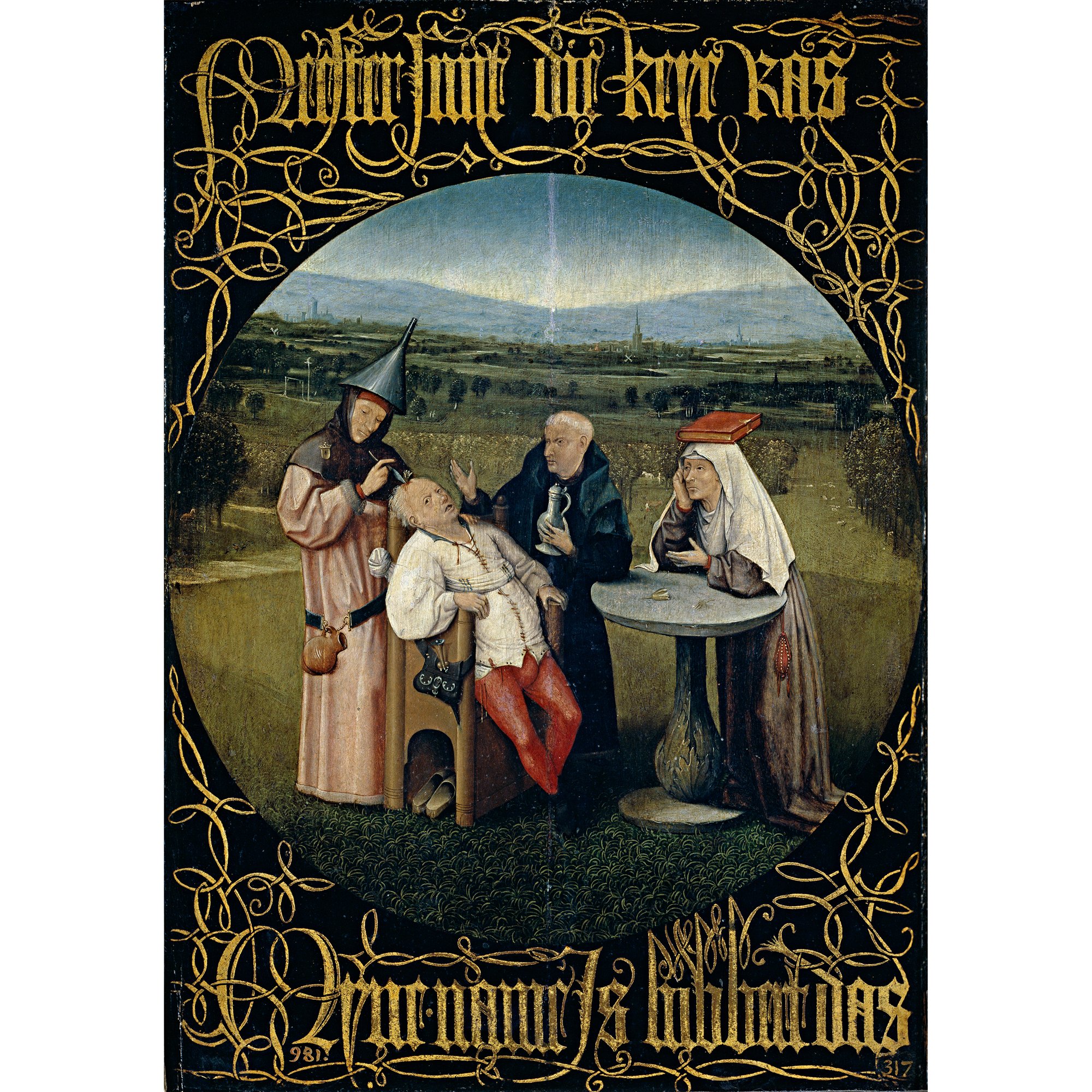
Hieronymus Bosch, The Extraction of the Stone of Madness (c. 1494–1516, Museo del Prado, Madrid, Spain).
A fool submits to surgery to remove the “stone” of stupidity, while the surgeon himself wears a funnel — the medieval symbol of folly. Bosch’s satire is razor-sharp: ignorance is not a pebble to be extracted, nor wisdom something that can be poured in. Five centuries later, the scene still reads like a warning against the comfort of a fool’s paradise.

Have you ever argued with someone who was completely wrong — and completely certain?

No hesitation. No nuance. No curiosity. Just calm assurance, as if reality itself had signed off on their conclusion.

A recent YouTube video titled “Why ‘Idiots’ Think They're Intelligent – Schopenhauer” revisits an old and unsettling insight: long before modern psychology described the Dunning–Kruger effect, Arthur Schopenhauer had already identified the mechanism behind confident ignorance.

He called it, in essence, a fool’s paradise.

When Ignorance Feels Like Clarity

Schopenhauer observed something simple and devastating: intelligence perceives complexity; ignorance does not.

If you lack the knowledge to detect nuance, competing interpretations, hidden assumptions, and technical depth, everything appears straightforward. And when the world appears simple, you feel certain.

Doubt only begins when complexity becomes visible.

Anyone who has seriously studied a discipline recognizes the pattern. At first, it looks manageable. Then, as you go deeper, the terrain becomes more intricate. What once felt obvious dissolves into questions. That uncomfortable realization — the sudden awareness of how much you do not know — is the beginning of competence.

But if you never reach that point, you remain in a fool’s paradise: a state of effortless confidence sustained by limited perception.

Familiarity Is Not Understanding

The video draws a crucial distinction between recognition and comprehension.

We live in an age of exposure. We scroll through psychology threads, listen to economics podcasts, quote philosophers on social media, and absorb fragments of neuroscience. We become familiar with terminology. We can follow conversations. We feel informed.

Familiarity is passive. Expertise is active.

Expertise allows you to apply ideas, defend them against strong criticism, explain them clearly, and recognize their limits. Familiarity simply means you have encountered the vocabulary before. The mind easily confuses the two. Once we believe we understand something, curiosity fades. Why investigate further what already feels known?

Modern psychology later formalized this pattern through the work of David Dunning and Justin Kruger. Their research showed that the skills required to perform well in a domain are often the same skills required to evaluate performance accurately. Without those skills, self-assessment becomes unreliable — and confidence inflates.

Schopenhauer had already seen this dynamic in academic life and public debate.

Blindness Disguised as Equality

There is a harsher dimension.

To recognize excellence, you need some baseline competence yourself. Without it, the expert and the amateur appear indistinguishable. A rigorous philosophical system and a casual opinion can look equally valid. A peer-reviewed study and a persuasive blog post may seem interchangeable.

From inside that limitation, the person is not necessarily arrogant. They are blind. And blindness feels like equality.

If you cannot see higher standards, you do not aspire to them. Without aspiration, there is no improvement. Without improvement, the gap remains invisible. The fool’s paradise sustains itself.

Complexity as Camouflage

Not all confident ignorance sounds simple. Sometimes it sounds impressively complex.

Dense language, elaborate frameworks, and abstract terminology can create the illusion of depth. Yet complexity is not proof of understanding. True intelligence can move between complex and simple forms without losing precision. Performed intelligence hides in obscurity because obscurity is harder to challenge.

If an idea cannot be explained clearly, it is often not because it is profound. It may be because it has not yet been fully understood.

The Closed Loop of Certainty

The most frustrating aspect of the fool’s paradise is correction.

If someone lacks the conceptual tools to detect their own error, evidence does not penetrate. Counterarguments feel like mere disagreement. Data appears biased. Logical analysis sounds like unnecessary complication. The corrective signal never arrives because the receiver is not equipped to process it.

This is why arguing with confident ignorance often feels futile. The problem is not always stubbornness. It is structural limitation.

And here is the uncomfortable truth: every person who has ever been confidently wrong believed they were right at the time. Including you. Including me.

The only reliable antidote is disciplined doubt — not paralyzing insecurity, but the habit of asking, “What might I be missing? Who understands this better than I do? What evidence would change my mind?”

Certainty is comfortable. Doubt is demanding. But doubt is the only way out of the fool’s paradise.

Further Reading

  • David Dunning & Justin Kruger (1999), Unskilled and Unaware of It

  • David Dunning, Self-Insight: Roadblocks and Detours on the Path to Knowing Thyself

  • Arthur Schopenhauer, The Wisdom of Life (from Parerga and Paralipomena)

  • Arthur Schopenhauer, On the Basis of Morality

  • Marcus Aurelius, Meditations

  • Bertrand Russell, The Triumph of Stupidity

  • Daniel Kahneman, Thinking, Fast and Slow

  • Richard Feynman, Surely You’re Joking, Mr. Feynman!

  • Nassim Nicholas Taleb, The Black Swan

  • The Article is based on YouTube: Why “Idiots” Think They're Intelligent – Schopenhauer

Who Is Responsible Here?

How cultures carry responsibility — and why this matters in times of change

Image generated with ChatGPT.

Something goes wrong. Not dramatically, not through a single mistake, but slowly and quietly. Plans stall. Expectations drift apart. When the moment comes to ask what happened, no one can quite point to a clear failure. No rule was broken. No promise was openly violated. And yet, something has clearly gone wrong.

Situations like this are familiar — in families, neighbourhoods, communities and societies. We often describe them as failures of leadership or accountability. But beneath those explanations lies a deeper question: how do different cultures understand responsibility itself?

As in the previous blog on low and high-context, we use the concepts of low-context and high-context cultures to make sense of these differences.

In low-context cultures, meaning is carried mainly by words. Communication is explicit. What is said or written matters most, because shared assumptions cannot be taken for granted.

In high-context cultures, meaning is carried largely by context. Much is understood without being said. Relationships, shared history and social cues carry more weight than explicit wording.

Most societies fall somewhere in between. Misunderstandings arise when people assume their own way of carrying meaning is universal.

These differences do not stop at communication. They shape how responsibility itself is carried.

In low-context cultures, responsibility is usually explicit. It is tied to clearly stated commitments, defined roles and visible decisions. Responsibility can be traced: someone agreed, someone decided, someone is accountable.

This approach values clarity and fairness. It allows societies to function at scale, among people who may not know each other well. Responsibility becomes something that can be assigned and reviewed.

In high-context cultures, responsibility is more diffuse and relational. It is embedded in social bonds, mutual expectations and long-standing ties. Responsibility is not always spoken aloud, because it is assumed to be understood. Calling someone out directly can feel less like justice and more like a rupture in the social fabric.

Here, failure is often experienced not as guilt — breaking a rule — but as shame: a disturbance of harmony, a loss of trust, a weakening of the group.

Neither model is morally superior. Each reflects a different way of holding society together.

The contrast becomes especially visible in times of change.

Low-context cultures tend to manage change by rewriting rules. Laws are updated, procedures adjusted, responsibilities redefined. Change is something that can be planned and implemented.

High-context cultures approach change more cautiously. Because responsibility is woven into relationships, change requires renegotiating trust, status and shared expectations. Too much speed can feel destabilising.

This helps explain why reforms that appear perfectly reasonable on paper may meet quiet resistance in practice. One side sees clarity and progress; the other experiences disruption and loss.

History offers many examples. In medieval Spain, Muslim, Jewish and Christian communities lived side by side for centuries, not because they shared beliefs, but because they operated within overlapping yet distinct systems of responsibility. What ultimately failed was not only tolerance, but compatibility.

Similar tensions emerge whenever universal systems meet local worlds. Centralised states encounter regions governed by tradition. Formal institutions meet relational communities. The conflict is not only about power, but about how responsibility is understood and enforced.

Understanding this does not provide easy solutions. But it changes how we interpret failure and resistance. What looks like irresponsibility from one perspective may be an attempt to preserve social coherence from another.

In times of change, the question “Who is responsible?” is never only technical. It is cultural.

Recognising that responsibility can be carried in different ways does not eliminate conflict. But it allows us to see that many fractures are not driven by bad intentions or incompetence — they arise from incompatible expectations, and from the fragile balance between rules and relationships that every society must find for itself.

Jeffrey Epstein and the Architecture of Kompromat

How Power Uses Sex as an Instrument of Control

Kompromat: Evolutionary impulse supplies the hook; social taboo supplies the trap.

When the story of Jeffrey Epstein is retold, it often dissolves into lists of names, flight logs, and denials. That misses the deeper point.

Epstein matters not because he was exceptional, but because he exposed a structural truth about power — and about human nature itself.

Who Jeffrey Epstein Was

Jeffrey Epstein was an American financier whose wealth, client base, and business model were never clearly explained, yet whose access to global elites was extraordinary. Over several decades, he moved inside the inner architecture of elite power, where politicians, financiers, academics, celebrities, and royalty converged. He owned multiple high-security properties, operated private aircraft, and cultivated a reputation for absolute discretion, while nobody knew where his wealth came from.

Behind this façade, Epstein ran a system that systematically abused and trafficked underage girls. Court records and survivor testimonies describe a pattern of recruitment, grooming, payment, coercion, and reuse. Jeffrey Epstein was convicted in 2008 in Florida for soliciting prostitution and procuring a minor for prostitution and served about 13 months for this under a lenient plea deal. Arrested again in 2019 on federal sex-trafficking charges, Epstein died in jail before trial. His death closed a criminal case, but it did not close the questions his life raised about elite impunity, private power, and institutional silence.

The Girls at the Centre

At the centre of Epstein’s operation were girls, many of them underage. They were recruited, groomed, paid, coerced, and reused. Their exploitation was not accidental. It was instrumental.

To understand why, one must look beyond scandal or personality and briefly — uncomfortably — toward evolutionary biology.

Why Young Girls Are the Ultimate Lever

From an evolutionary perspective, youth signals fertility, health, and reproductive potential. Across cultures and eras, these signals have exerted a powerful pull on male psychology — often stronger than reason, reputation, or long-term self-interest.

At the same time, those very signals place young girls in the opposite position socially. They are the individuals most in need of protection. They sit at the intersection of maximum biological attraction and maximum social vulnerability.

That contradiction is precisely why exploitation here is so effective.

When powerful men are drawn into sexual situations involving young girls, several forces collide:

  • deep evolutionary drives

  • absolute social taboo

  • severe legal consequences

  • irreversible reputational damage

The result is not merely transgression, but total vulnerability.

Closed Worlds, Open Leverage

Epstein’s homes, planes, and private island functioned as sealed environments — spaces stripped of ordinary safeguards. Inside them, boundaries softened. Escalation felt gradual. Silence felt mutual.

This is how kompromat works in practice. Not always through explicit blackmail, but through uncertainty: What happened? Who saw it? What exists?

Fear of exposure does not require exposure. Evolutionary impulse supplies the hook; social taboo supplies the trap.

Why Royals Matter

The association between Epstein and Prince Andrew, followed by Andrew’s settlement with a victim, became emblematic for a reason.

Royalty embodies two extremes at once:

  • elevated status

  • catastrophic reputational fragility

A compromised royal threatens not just an individual, but an institution built on legitimacy, continuity, and deference. The instinctive response is protection: deflection, minimisation, procedural fog.

This is not conspiracy. It is institutional self-preservation.

Trump, Epstein, and the Logic of Exposure

Epstein’s close social relationship with Donald Trump has been extensively documented. Trump publicly described Epstein as a friend in the past, socialised with him in elite circles, and appears alongside him in multiple accounts of New York and Florida high society.

Beyond social proximity, Trump has long been surrounded by publicly reported hypotheses concerning:

  • opaque financial dependencies

  • extensive ties to Russian and post-Soviet capital

  • and persistent stories and allegations involving sexual misconduct

Some of these allegations have led to civil cases or public settlements; others remain unresolved or contested. What matters here is not adjudication, but structure.

The connection is not evidentiary but systemic.

Intelligence and power systems have long understood that the most effective leverage does not create desire — it exploits existing drives. Whether through debt or sex, the principle is the same: exposure plus dependency equals influence.

Evolution supplies the weakness. Systems of power merely learn how to use it.

The Unspoken Contract of Silence

Elite worlds function on an implicit understanding: discretion is virtue; curiosity is danger.

Once someone has crossed an absolute boundary — especially one involving the exploitation of the young — silence becomes self-enforcing. People comply not because they are ordered to, but because their own instincts warn them what disclosure would cost.

This is governance without commands.

The Enduring Lesson

The Epstein affair was not primarily about sex, nor even about crime alone. It was about how deeply human biology can be weaponised inside modern power structures.

Young girls worked as leverage because evolution made them irresistible — and civilisation made their exploitation unforgivable.

That combination produces the strongest form of compromise there is.

Epstein is dead. The architecture he revealed remains.

Its core materials are ancient, and unsettlingly simple: desire, protection, fear — and silence.

Between What Is Said and What Is Understood

High-context and low-context cultures explained through everyday life

Image generated with ChatGPT.

You leave a conversation with the feeling that everything was clear. Nothing dramatic was said, no disagreement surfaced, the exchange felt polite, even warm. Later, you discover that the other person took something entirely different from it. No one lied. No one acted in bad faith. And yet, something essential was missed.

Most of us recognise this — while travelling, visiting family, dealing with neighbours, or moving between regions and countries. We tend to explain it away as “culture,” temperament, or personality. But beneath these moments lies something more fundamental: different ways cultures carry meaning.

To make sense of this, anthropologists often distinguish between low-context and high-context cultures. The terms describe where a culture expects meaning to live.

In low-context cultures, meaning is carried mainly by words. Communication is explicit. What is said or written matters most, because shared assumptions cannot be taken for granted.

In high-context cultures, meaning is carried largely by context. Much is understood without being said. Relationships, shared history and social cues carry more weight than explicit wording.

Most societies fall somewhere in between. Misunderstandings arise when people assume their own way of carrying meaning is universal.

With that in mind, many everyday frictions suddenly become easier to recognise.

In low-context cultures, words are expected to do the heavy lifting. If something matters, it should be stated clearly. Precision is not coldness; it is care. Written language, exact phrasing and explicit explanations are trusted because they reduce ambiguity.

In high-context cultures, meaning often lives outside words. Tone, timing, gesture and silence matter as much as speech. Saying everything out loud can feel unnecessary or even awkward — as if you are questioning what everyone already understands.

Neither approach is superior. They evolved under different social conditions. Low-context communication works well in societies where people interact frequently with strangers and move easily between roles and places. High-context communication thrives where relationships are long-term and shared experiences run deep.

Tension appears when these worlds meet.

To someone from a low-context background, high-context communication may feel vague or evasive. “Why don’t they just say it?” To someone from a high-context background, low-context communication can feel blunt, insensitive or oddly distrustful. “Why does everything need to be spelled out?”

These reactions are rarely about manners or intelligence. They reflect different assumptions about where meaning belongs.

You can sense this difference when moving across regions. In some places, a direct statement is welcomed as honest and respectful. In others, the same sentence may feel abrupt or even offensive. A carefully phrased hint may feel perfectly clear to one person and completely insufficient to another. Neither is wrong — they are listening for meaning in different places.

This difference also shapes how people understand responsibility.

In low-context cultures, responsibility is closely linked to explicit statements. If something was said, agreed or written, it carries weight. Responsibility can be traced back to a moment of expression.

In high-context cultures, responsibility is more relational. It emerges from shared understanding rather than explicit declaration. Calling something out directly can feel disruptive, as if it threatens the relationship itself.

This is why misunderstandings can be so persistent. One person believes everything was clear. The other believes nothing was settled. Both interpretations make sense — within their own cultural logic.

History offers many echoes of this tension. Written law alongside customary law. Urban centres governed by charters next to rural communities guided by tradition. These were not only legal differences, but differences in how meaning itself was organised.

Understanding high-context and low-context communication does not eliminate conflict. What it offers is insight into why good intentions so often fail to land as intended.

Meaning is not always contained in words. Sometimes it lives in what surrounds them — and noticing that can change how we listen, how we travel, and how we live with difference.

Trump, Carney and Europe’s Identity Crisis

ChatGPT’s version of the Europe’s leaders looking for answers as familiar reference points fade — a collective portrait of uncertainty in a moment when Europe’s identity is no longer self-evident.

At the World Economic Forum this year, the most revealing moment did not come from grand declarations or carefully choreographed panels, but from a single, deliberately chosen word. Mark Carney spoke of a rupture — a break in continuity that cannot be repaired with reassuring language about a “rules-based order” or nostalgic references to post-Cold War stability.

Carney’s choice of words mattered. A rupture is not a temporary disruption, nor a crisis awaiting managerial correction. It is a structural break: a point at which underlying assumptions no longer hold. His intervention acknowledged what many European leaders still hesitate to state openly — that the geopolitical environment which underpinned Europe’s prosperity, security, and political confidence has fractured, and that denial has itself become a strategic vulnerability.

In that sense, Carney was the adult in the room. He did not offer restoration narratives or institutional comfort. He did not pretend that existing frameworks could simply absorb the shock. Instead, he described a world in which power is exercised more directly, norms are increasingly conditional, and responsibility is unevenly distributed. Middle powers, he argued, must respond not with moral reassurance, but with coordination, resilience, and strategic realism.

Set against this sober diagnosis stood the political style of Donald Trump, whose recent interventions illustrate the rupture rather than merely describing it. Trump’s renewed fixation on Greenland was not an eccentric sideshow or a failed negotiating gambit; it reflected a political logic in which sovereignty becomes negotiable, territory becomes transactional, and alliances become instruments rather than commitments.

His statements oscillated between boastful deal-making, casual dismissal of territorial integrity, and vague assurances that force would not be used — all without strategic coherence. For Europe, this was not simply embarrassing theatre. Greenland sits at the intersection of Arctic security, climate transformation, resource competition, and the erosion of assumptions that territorial sovereignty remains beyond negotiation. Trump’s handling of the issue exposed how fragile Europe’s assumptions about American predictability and strategic continuity have become.

The same rupture is visible in Ukraine. Russia’s aggression against Ukraine is not just a test of Ukrainian military endurance; it is a test of Western political stamina and credibility. Europe continues to speak the language of solidarity, yet remains painfully aware that the long-term response to Russia’s aggression may hinge on electoral cycles, domestic instability, and political volatility across the Atlantic.

Uncertainty in this context is corrosive. It transforms deterrence into hesitation and commitment into contingency. What should function as strategic clarity becomes conditional support. From Kyiv — where Europe confronts the direct consequences of Russia’s aggression — to the strategic Arctic, Europe is forced to reckon with how much of its security still depends on external guarantees it does not control.

What Carney articulated, and what Trump inadvertently reinforces, is that Europe can no longer outsource adulthood. For decades, Europe operated within a system in which American power provided the ultimate backstop, institutions smoothed political shocks, and economic integration substituted for strategic agency. That system has ruptured — not suddenly, but structurally — and cannot simply be repaired.

Europe’s identity crisis lies precisely here. It continues to behave as though continuity can be restored through diplomacy alone, while the world increasingly operates through leverage, coercion, and unilateral action. It still confuses values with power, process with agency, and institutional language with geopolitical capacity.

The contrast at Davos was therefore not ideological, but existential. Trump embodies a politics that accelerates rupture through impulse, spectacle, and transactional logic. Carney acknowledges rupture and insists on governing within it. Europe, meanwhile, hesitates — caught between denial and dependency.

Ruptures do not close themselves. They force choices. Europe must decide whether it intends to remain an object of other powers’ politics, or whether it is finally prepared to act as a geopolitical subject in a fractured world.

That decision can no longer be postponed.