Charlemagne: Wisdom in Government
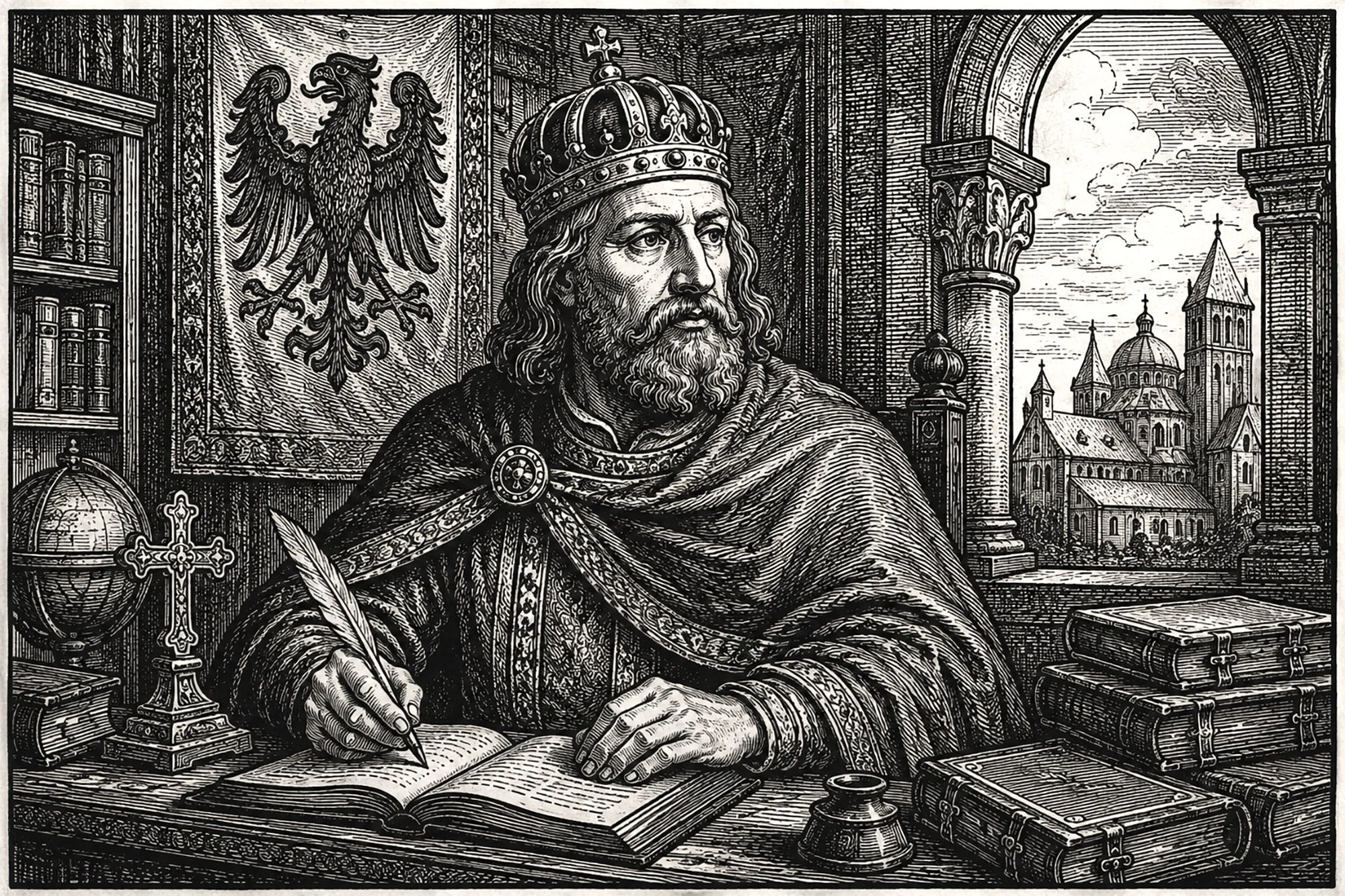
Charlemagne (image created with AI).
When people think of Charlemagne (742–814), they usually picture the ruler who united much of Western Europe through conquest and diplomacy. Yet one of the most fascinating portraits of the emperor tells a different story. It is not about battles or military victories, but about government.
This portrait comes from Notker the Stammerer (Notker Balbulus), a monk at the Abbey of Saint Gall in present-day Switzerland. Around AD 884—roughly seventy years after Charlemagne's death—Notker wrote the Gesta Karoli Magni ("The Deeds of Charlemagne"). Rather than producing a chronological biography, he collected memorable stories that illustrated the emperor's character. Modern historians recognise that some episodes are embellished or even legendary, but together they reveal how Charlemagne was remembered by later generations.
The following stories, drawn from different chapters of the Gesta Karoli Magni, show what Notker believed made a ruler truly wise. Good government, he suggests, depends not only on military strength, but on education, wise advisers, fair appointments, personal involvement, and a constant concern for the common good.
A King Who Sought Wise Advisers (Book I, Chapter 2)
One of the first qualities Notker praises is Charlemagne's willingness to learn from others.
When the famous English scholar Alcuin of York heard that Charlemagne welcomed learned men from across Europe, he travelled to the Frankish court. The king not only received him warmly but even described himself as Alcuin's pupil, despite being the most powerful ruler in Western Europe.
Rather than seeing scholarship as something separate from politics, Charlemagne made it part of government itself. Under Alcuin's influence, learning flourished throughout the kingdom, so much so that Notker claims the Franks became the equals of the ancient Romans and Athenians.
For Notker, wise government begins with a ruler who is willing to learn.
Education Builds Better Government (Book I, Chapter 3)
The next story moves from the royal court to Charlemagne's palace school.
After returning from a military campaign, the emperor inspected the work of the pupils. To everyone's surprise, the finest essays and poems had been written not by the sons of powerful nobles but by boys from ordinary families who had worked hard.
Charlemagne praised these students and promised that their dedication would one day be rewarded. The noble boys, by contrast, received a sharp rebuke. They had relied on their family status instead of applying themselves.
For Notker, the lesson is clear. A kingdom prospers when education identifies talent and prepares capable people for future responsibility rather than simply preserving inherited privilege.
Choosing the Right People (Book II, Chapter 2)
Education alone is not enough. Good government also requires wise appointments.
During one of the Saxon campaigns, two ordinary soldiers displayed exceptional courage while attacking a heavily defended fortress. Charlemagne noticed their bravery immediately.
Instead of overlooking them because of their humble background, he promoted one of them to an important command responsible for the frontier between the Rhine and the Alps.
Notker uses this story to show that leadership should be entrusted to those who have proved themselves through courage and ability. A ruler who appoints the right people strengthens the whole kingdom.
Justice Creates Confidence (Book II, Chapter 3)
Wise government also depends on public trust.
Notker illustrates this with the story of the sons of two powerful dukes. While guarding the royal camp, they neglected their duty by becoming drunk and falling asleep.
The following morning Charlemagne assembled his leading nobles and asked what punishment such negligence deserved. Only after they had given their judgement did he reveal that the offenders were their own sons.
Although the young men were ultimately spared, the point had already been made. Justice could not depend on wealth or family influence. When rulers apply the same standards to everyone, confidence in government grows stronger.
Governing for the Common Good (Book I, Chapter 13)
Another story illustrates how Charlemagne viewed the ruler's responsibility towards ordinary people.
Notker describes the emperor intervening when those with influence abused their position. Rather than automatically siding with the powerful, Charlemagne listened carefully before reaching a decision and sought to protect those who had little influence of their own.
Whether the individual events happened exactly as described is impossible to know. Together, however, they reveal the kind of government Notker admired: one in which authority exists to serve the whole community instead of a privileged few.
Good government, in this view, is measured not by the comfort of the powerful but by the protection it offers to ordinary people.
A Ruler Who Remained Personally Involved (Book II, Chapter 17)
Notker's final lesson is that wise rulers cannot govern from a distance.
One story describes Charlemagne personally checking on the conduct of those entrusted with authority instead of assuming that officials would always perform their duties faithfully. He believed that responsibility could be delegated, but accountability could not.
Throughout the Gesta, Charlemagne appears as a ruler who wanted to see things with his own eyes, hear reports for himself, and intervene whenever necessary. Good government required constant attention rather than occasional supervision.
For Notker, this personal involvement distinguished an excellent ruler from an ordinary one.
The Charlemagne People Remembered
Modern historians rightly caution that Notker's stories should not always be read as literal history. They are moral narratives as much as historical memories. Yet that is precisely why they remain valuable.
Taken together, these stories form more than a collection of entertaining anecdotes. They describe a coherent philosophy of government. A wise ruler seeks good advice, invests in education, promotes ability rather than privilege, applies justice fairly, protects ordinary people, and remains personally engaged in the work of governing.
The Charlemagne who emerges from these pages is remembered not simply as a conqueror, but as a ruler who believed that strong government begins with wise leadership.
More than eleven centuries later, these stories still raise a timeless question: what makes government wise?
For Notker, military victories may have built an empire, but wise government was what gave that empire its strength and enduring reputation.
Further Reading
Notker Balbulus. Gesta Karoli Magni Imperatoris (The Deeds of Charlemagne), written around AD 884.
Recommended scholarly edition:
Hans F. Haefele (ed.), Notkeri Balbuli Gesta Karoli Magni Imperatoris, Monumenta Germaniae Historica, Scriptores rerum Germanicarum, Nova Series 12. Berlin: Weidmann, 1959.
Charlemagne: Justice Above Privilege
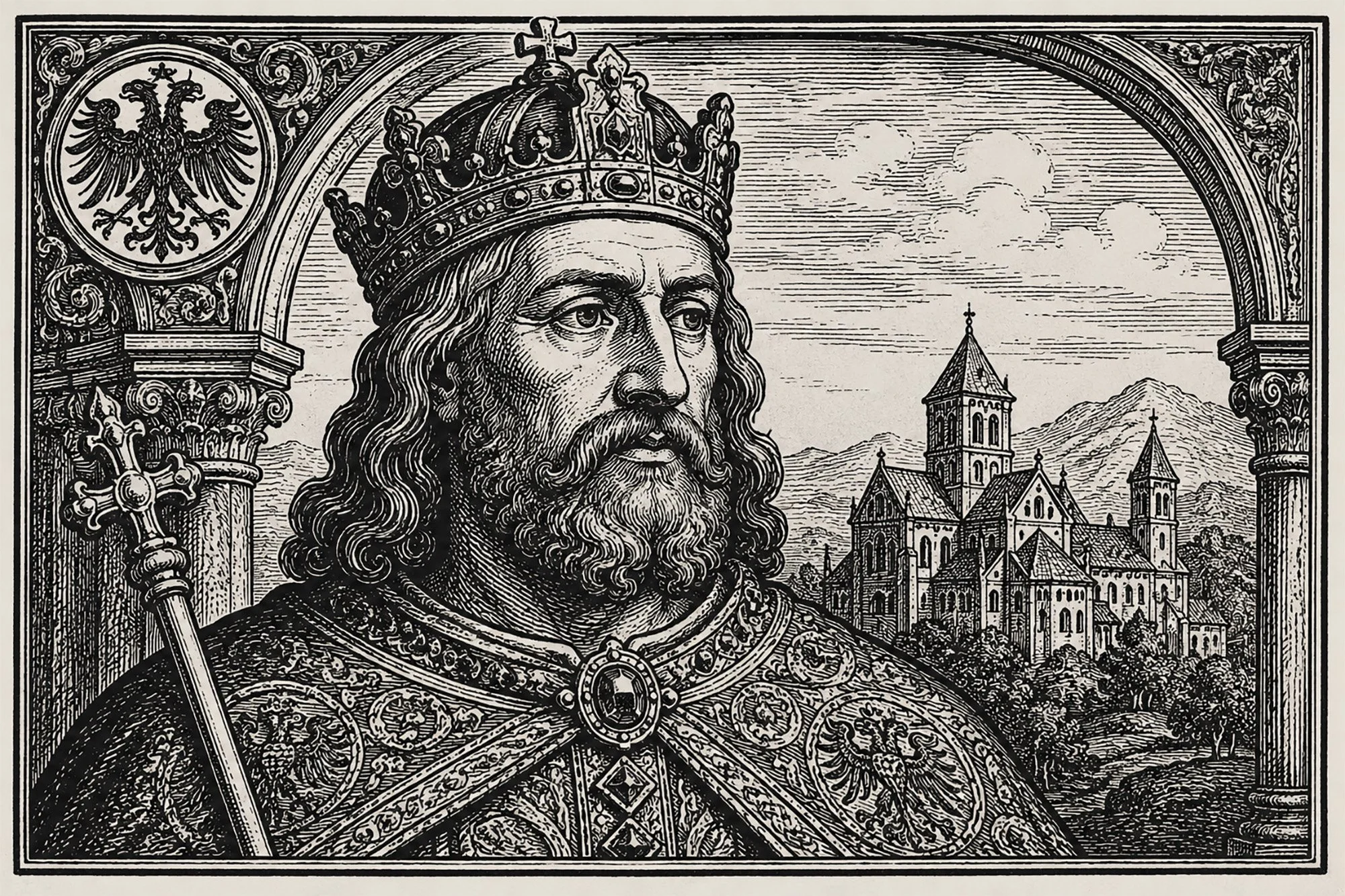
Charlemagne (image created with AI).
When people think of Charlemagne (742–814), they usually picture the ruler who united much of Western Europe through conquest and diplomacy. Yet one of the most fascinating portraits of the emperor tells a different story. It is not about battles or politics, but about justice.
This portrait comes from Notker the Stammerer (Notker Balbulus), a monk at the Abbey of Saint Gall in present-day Switzerland. Around 884—roughly seventy years after Charlemagne's death—Notker wrote the Gesta Karoli Magni ("The Deeds of Charlemagne"). Rather than producing a chronological biography, he collected memorable stories that illustrated the emperor's character. Modern historians recognise that some episodes are embellished or even legendary, but together they reveal how Charlemagne was remembered by later generations.
The following five stories, drawn from different chapters of the Gesta Karoli Magni, offer a glimpse into that memory. Whether every episode happened exactly as described is less important than the ideals they express. Together they portray a ruler who valued merit above birth, expected those in power to act responsibly, and believed that justice should apply equally to everyone.
Merit Before Noble Birth (Book I, Chapter 3)
Notker begins one of his best-known stories in Charlemagne's palace school. After returning from a military campaign, the emperor asked to inspect the work of the pupils. To the surprise of everyone present, the finest essays and poems had been written not by the sons of powerful nobles but by boys from ordinary families who had worked hard.
Charlemagne praised these students warmly and promised that their dedication would one day be rewarded. The noble boys, however, received a sharp rebuke. They had relied on their family status instead of applying themselves.
The story reflects one of Notker's central themes: talent and diligence deserve recognition, while privilege without effort deserves none. It is one of the earliest medieval stories to suggest that education should reward ability rather than social background.
Courage Earns Honour (Book II, Chapter 2)
Justice, in Notker's view, also meant recognising courage wherever it appeared.
During one of Charlemagne's campaigns, two ordinary soldiers distinguished themselves by attacking the walls of a heavily defended town. Their bravery caught the emperor's attention.
Instead of reserving promotion for men of noble birth, Charlemagne rewarded one of them with one of the highest military commands in the empire.
The lesson is straightforward. Honour should not depend on family connections but on proven courage and loyal service.
No One Is Above the Law (Book II, Chapter 3)
Another story demonstrates that justice must also apply to the powerful.
During a military expedition, the sons of two dukes were entrusted with guarding the royal camp. Instead of carrying out their duty, they became drunk and fell asleep while on watch.
The following morning Charlemagne gathered his leading nobles and asked what punishment such negligence deserved. They unanimously declared that anyone whose carelessness had endangered the king and the Frankish army deserved the harshest penalty.
Only then did Charlemagne reveal that the offenders were their own sons.
Although he ultimately chose mercy rather than execution, the point had already been made. Noble birth did not place anyone beyond judgement.
Protecting Those Without Power (Book I, Chapter 13)
Notker repeatedly returns to another characteristic of Charlemagne's rule: his willingness to protect ordinary people.
In several stories, the emperor refuses to let influential nobles misuse their authority. He listens carefully before reaching a decision and expects those in positions of power to exercise their authority fairly.
Whether these episodes are exact historical accounts is impossible to know. Together, however, they reveal the kind of ruler Notker believed people should admire: one who defended those who could not easily defend themselves.
Power Brings Responsibility (Book I, Chapter 18)
The final story reinforces a principle that runs throughout the Gesta.
Notker makes it clear that bishops, judges and royal officials were not exempt from the standards they imposed on others. Holding office brought greater responsibility, not greater privilege.
For Charlemagne, justice did not stop with ordinary people. Those entrusted with governing were expected to set the example. A ruler who tolerated corruption or unfair judgement among his own officials would fail in his most important duty.
The Charlemagne People Remembered
Modern historians rightly caution that Notker's stories should not always be read as literal history. They are moral narratives as much as historical memories. Yet that is precisely why they remain so valuable.
Notker was writing only a few generations after Charlemagne's death. His readers still lived in a world shaped by the emperor's legacy, and the stories he chose reveal which qualities were considered worthy of remembrance.
The Charlemagne who emerges from these pages is remembered not primarily as a conqueror, but as a ruler who rewarded learning, recognised courage wherever he found it, refused to excuse privilege, protected the vulnerable, and expected even the most powerful people to answer for their actions.
Whether every event happened exactly as Notker describes it is ultimately less important than the portrait these stories create. More than eleven centuries later, they continue to raise a timeless question: what makes a ruler truly great?
For Notker, the answer was clear. A great ruler is not defined by military victories alone, but by the determination to place justice above privilege.
Further Reading
Notker Balbulus. Gesta Karoli Magni Imperatoris (The Deeds of Charlemagne), written around AD 884.
Recommended scholarly edition:
Hans F. Haefele (ed.), Notkeri Balbuli Gesta Karoli Magni Imperatoris, Monumenta Germaniae Historica, Scriptores rerum Germanicarum, Nova Series 12. Berlin: Weidmann, 1959.
Lyon 1245: The Trial of an Emperor
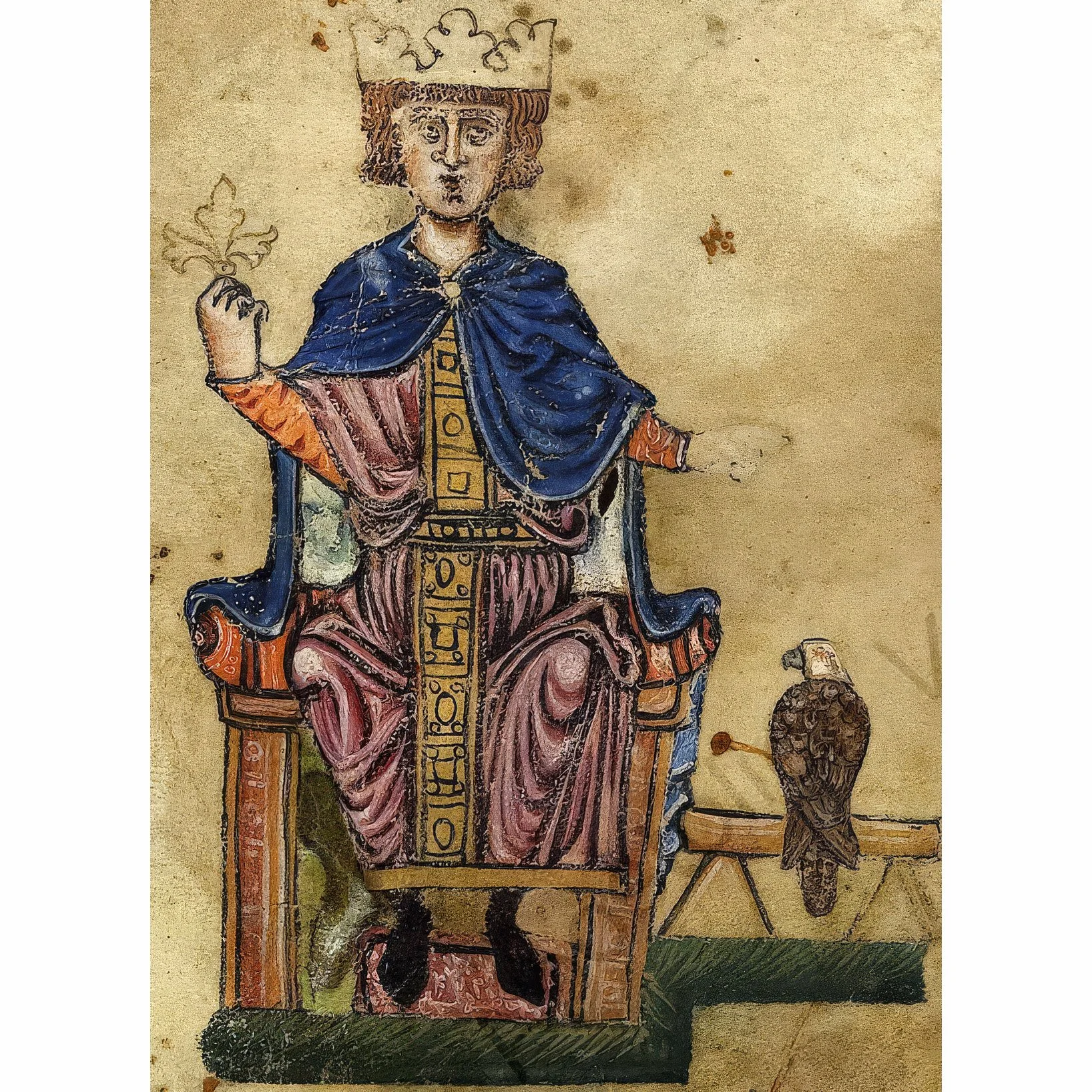
Emperor Frederick II with his falcon. Illustration from De arte venandi cum avibus (The Art of Hunting with Birds), Frederick's celebrated treatise on falconry. Manuscript, late 13th century. Biblioteca Apostolica Vaticana, Pal. lat. 1071, fol. 1r.
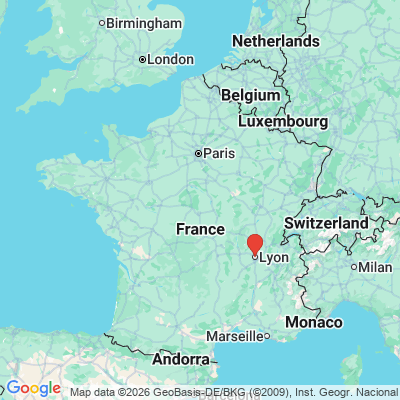
In the summer of 1245, bishops, abbots and ambassadors from across Europe gathered in Lyon (France) for one of the most important Church councils of the Middle Ages. Before the meeting was over, Pope Innocent IV would make an extraordinary announcement: Emperor Frederick II was deposed.
Whether the pope actually had the power to remove an emperor was fiercely debated at the time—and it remains one of the most remarkable constitutional questions in European history.
One of our best guides to this dramatic period is Salimbene de Adam (1221–c.1290), a Franciscan friar from Parma (Italy). Salimbene travelled widely through Italy and France, met many leading figures of his age, and wrote one of the liveliest medieval chronicles that has survived. His Cronica is filled with eyewitness accounts, political observations and memorable stories. Although he strongly supported the papacy, his work offers a fascinating window into one of Europe's greatest power struggles.
The Emperor Who Fascinated Europe
Frederick II (1194–1250) was one of the most remarkable rulers of the Middle Ages.
He was born in Jesi (Italy), the son of Emperor Henry VI and Queen Constance of Sicily. When Frederick was only four years old, both of his parents had died. The young prince inherited the Kingdom of Sicily, with its capital in Palermo (Italy) and came under the protection of Pope Innocent III.
Growing up in Palermo exposed him to an extraordinary mix of cultures. Latin Christians, Greek Christians, Muslims and Jews all lived and worked in the city. Frederick learned several languages, developed a lifelong interest in science and philosophy, and became famous for his curiosity about the natural world. His book on falconry is still regarded as one of the finest scientific works of the Middle Ages.
In 1212, German princes invited Frederick to claim the German crown. He crossed the Alps, defeated his rival, and was crowned King of the Romans. Ten years later, in 1220, Pope Honorius III crowned him Holy Roman Emperor in Rome (Italy).
At the height of his power, Frederick ruled an empire stretching from the North Sea to the Mediterranean. Besides Germany, he controlled the Kingdom of Sicily, making him master of territories both north and south of the Papal States. To many popes, this looked dangerously close to surrounding the Church politically and militarily.
When Frederick died in 1250 at Castel Fiorentino in southern Italy, his son Conrad IV succeeded him as King of Germany and King of Sicily. Conrad died only four years later, leaving the dynasty weakened. Frederick's illegitimate son Manfred continued the struggle in Italy until he was defeated and killed at the Battle of Benevento in 1266. With Manfred's death, the Hohenstaufen dynasty effectively lost its grip on Italy, bringing an end to the long conflict that Frederick had dominated for decades.
The Road to Lyon
The struggle between Frederick and the papacy lasted for much of his reign.
The emperor believed that his authority came directly from God and that he should be free to govern his empire without papal interference. The popes, on the other hand, argued that even emperors had duties towards the Church and could be judged if they endangered Christendom.
The disagreement led to repeated excommunications, diplomatic crises and military campaigns, particularly in northern and central Italy. Cities such as Parma, Milan and Bologna often found themselves caught between imperial and papal interests.
By 1245, relations had broken down completely.
The Trial at Lyon
Pope Innocent IV summoned a great council in Lyon.
The pope accused Frederick of breaking solemn promises, persecuting the Church, interfering in papal territory and threatening the unity of Christendom. Frederick defended himself through envoys, arguing that the accusations were politically motivated, but he was not present when the final judgement was delivered.
The verdict stunned Europe.
The pope declared that Frederick had forfeited his imperial office.
Never before had a pope so openly claimed the authority to judge and depose the most powerful secular ruler in Christian Europe. Whether this declaration had legal force was immediately disputed, but symbolically it was an event of enormous importance.
Salimbene's View
Salimbene leaves little doubt about where his sympathies lay.
To him, Frederick's troubles were not simply political setbacks. They were signs of God's judgement upon an emperor whose pride had grown too great. Throughout his Cronica, he repeatedly returns to Frederick's defeats as evidence that the sentence pronounced at Lyon was being fulfilled by divine providence.
Only three years after the council, in 1248, Frederick suffered one of the greatest humiliations of his reign. During the siege of Parma the citizens stormed and destroyed his enormous fortified camp, called Victoria. The emperor escaped, but he lost treasure, military equipment and much of his prestige. For Salimbene, who came from Parma himself, this was clear proof that God's judgement had begun to unfold.
Who Really Won?
In reality, the Council of Lyon did not end Frederick's reign.
Many princes continued to recognise him as emperor, and the wars continued until his death five years later. Yet something fundamental had changed.
The conflict was no longer simply about territory or political influence. It had become a struggle over a much deeper question: Who stood highest in Christian Europe? Could a pope judge an emperor, or did an emperor answer only to God?
That question would continue to shape European politics for centuries.
Visiting Lyon Today
Modern Lyon is famous for its gastronomy and its beautifully preserved old town, but it also witnessed one of the most dramatic political events of the Middle Ages.
Walking through Vieux Lyon, crossing the Saône River, or climbing to the Basilica of Notre-Dame de Fourvière, you are exploring the city where Europe's spiritual and secular powers confronted one another in 1245.
If you visit Lyon today, you are not just exploring another beautiful French city—you are standing where one of the greatest political dramas of medieval Europe unfolded.
For Salimbene, the verdict was clear: God had spoken through the pope. Modern historians tend to see a more complicated picture. Yet nearly eight centuries later, the Council of Lyon remains one of the defining moments in the long struggle between Church and Empire.
Discovering the Art of Kneipping
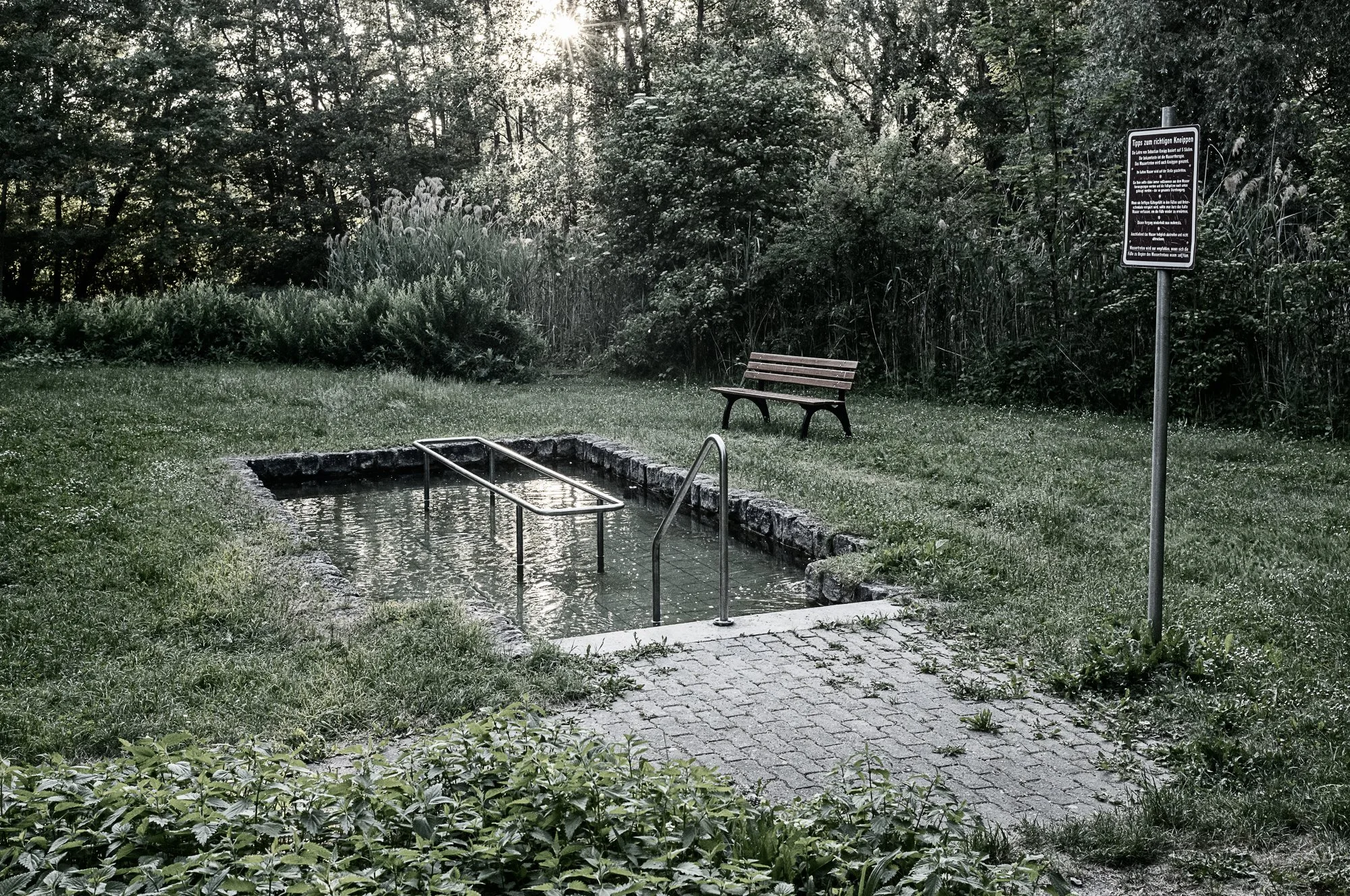
A traditional Kneipp bath in Castell, Germany.
Kneipping is a traditional German health practice developed by Sebastian Kneipp in the nineteenth century. One of its best-known forms is water treading: walking slowly through cold water while lifting each leg high, like a stork. According to Kneipp, the brief exposure to cold water stimulates circulation and helps the body become more resilient.
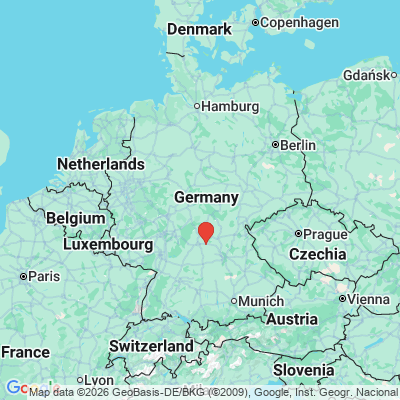
Today, many villages and spa towns in Germany maintain public Kneipp baths where visitors can try the technique for themselves. This Kneippanlage in Castell offers a simple opportunity to experience a tradition that has been part of German wellness culture for more than 150 years. Whether it truly improves health or simply provides a refreshing moment outdoors, it remains a popular way to connect with nature and local traditions.
Without Data, You're Just Another Person with an Opinion

Image created with AI.
Most of us have experienced it.
Someone speaks with great confidence. The room becomes quiet. Heads begin to nod. The conclusion sounds convincing. Yet, after the meeting, you may wonder: What was the evidence?
The famous quote, often attributed to the American statistician and management thinker W. Edwards Deming, captures this perfectly:
"Without data, you're just another person with an opinion."
Although Deming said this in the context of business and quality management, the idea is much older. It reaches back to the philosophers of ancient Greece, who argued that claims should be supported by reason rather than authority. It also echoes the spirit of the scientific revolution, when observation gradually replaced tradition as the foundation of knowledge.
For most of history, however, people often accepted statements because they came from kings, priests, nobles, or respected elders. Their position gave weight to their words. The question "How do you know?" was not always welcomed.
The modern world has largely turned this upside down. Scientists, historians, archaeologists, and judges all work from the same basic principle: conclusions should follow from evidence. A strong opinion is not enough. Even widely accepted ideas must be open to challenge when new evidence appears.
This way of thinking is not limited to laboratories or universities. It shapes everyday life as well. Whether discussing history, restoring a medieval church, managing a local association, or planning a journey, better decisions usually begin with the same simple question:
"What do the facts tell us?"
That question does not guarantee agreement. People can interpret the same evidence differently. But it shifts the discussion away from personalities and towards understanding.
Perhaps that is why Deming's words have remained so memorable. They remind us that confidence is not the same as knowledge, and that good conversations begin not with certainty, but with curiosity.
In the end, culture is more than monuments and traditions. It is also the way societies learn, question, and search for truth. Every time we ask for evidence before accepting a conclusion, we continue a tradition that has shaped the best of European thought for more than two thousand years.
How Democracies Begin to Fail
What Ernst Fraenkel, Max Weber and Aziz Huq Can Teach Us About the Rule of Law
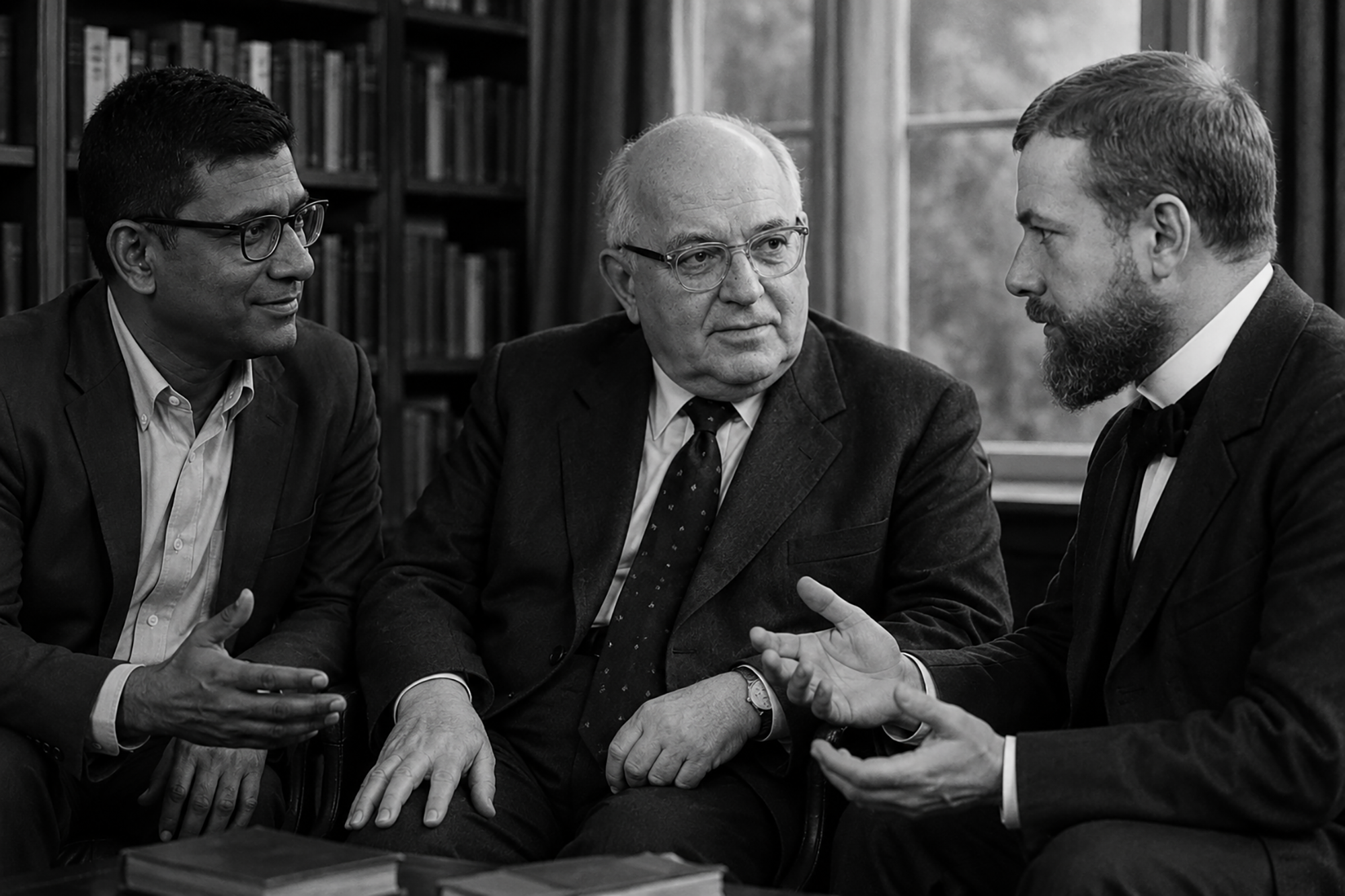
An impossible conversation across time. This AI-generated image imagines three scholars who never met. From left to right: Aziz Huq (born 1976), Ernst Fraenkel (1898–1975), and Max Weber (1864–1920). Together, their ideas offer a powerful way of understanding how the relationship between law and political power can gradually erode the rule of law.
A Lawyer in Berlin
How does a democracy begin to fail?
Most people imagine dramatic moments: soldiers in the streets, elections abolished or a constitution suspended. History is usually much quieter. Democracies often begin to change while their institutions continue to look reassuringly familiar. Courts still hear cases, governments still pass laws and elections still take place. The challenge is not recognising the end of a democracy. It is recognising the beginning of constitutional change while everyday life still appears perfectly normal.
That question led American constitutional scholar Aziz Huq to an almost forgotten book written in 1941 by a Berlin lawyer named Ernst Fraenkel. Huq was not searching for historical parallels. He was looking for a better way of understanding how constitutional systems evolve, and he found it in the observations of a man who had watched one democracy slowly transform from inside its own legal system.
Fraenkel practised law during the final years of the Weimar Republic and the first years of Nazi rule. Unlike politicians or journalists, he observed events from courtrooms rather than parliament. His days were filled with contracts, labour disputes and administrative decisions. It was an ordinary legal career in extraordinary times.
What puzzled him was not the speed of political change but the persistence of normality. Berlin still looked like a functioning modern city. Businesses signed contracts, civil courts settled disputes and much of daily life continued much as before. Yet inside the legal system he began to notice a pattern that was almost invisible from the outside.
Commercial law remained predictable, but cases involving political opponents, trade unions and, increasingly, Jewish citizens followed a different logic. Administrative authorities acquired greater freedom, while legal safeguards quietly became less reliable. No single judgement explained what was happening. Only after watching countless ordinary cases did Fraenkel realise that Germany had not abandoned the rule of law. It had divided it.
He called this the Dual State. One part of government, the Normative State, continued to function according to established legal rules. Alongside it grew the Prerogative State, where political necessity increasingly outweighed legal principle. The institutions remained, but they no longer served everyone in the same way.
Fraenkel's insight remains striking because it challenges our instinctive picture of democratic collapse. Constitutional systems do not always fail because laws disappear. Sometimes they fail because the relationship between law and political power quietly changes while the institutions themselves remain standing.
A Forgotten Book Returns
Fraenkel escaped Germany in 1938 and published The Dual State three years later in the United States. The timing could hardly have been worse. The world wanted broad explanations of fascism and totalitarianism, while Fraenkel offered something more precise: an account of how constitutional government changes from within. His book earned the respect of specialists but never reached a wider audience.
For almost eighty years it remained largely forgotten.
Then Aziz Huq picked it up again.
What fascinated Huq was not Germany in the 1930s but Fraenkel's way of thinking. Imagine a debate about immigration. Most people immediately argue about whether a policy is fair or effective. Huq asks a different question: what is happening to the relationship between law and power? Has the executive gained greater discretion? Can courts still exercise meaningful oversight? Are legal safeguards applied equally, or are exceptions gradually becoming normal?
Those questions extend far beyond immigration. They can also be asked about emergency powers, universities, the legal profession or the relationship between national and regional government. The issue is not whether every development is alarming. It is whether constitutional institutions continue to perform the role for which they were created.
At this point another German thinker quietly joins the conversation. Long before Fraenkel, Max Weber argued that modern states depend upon impersonal institutions. Judges serve the law, civil servants serve the office and governments derive legitimacy from rules that apply equally to everyone. When personal loyalty gradually becomes more important than institutional restraint, the character of the state itself begins to change. Modern political scientists describe this as neo-patrimonialism.
Fraenkel and Weber illuminate different stages of the same journey. Fraenkel helps us recognise when the rule of law begins to fragment. Weber shows where that journey may eventually lead if institutions increasingly serve people instead of principles. Huq brings their ideas together, not to predict the future, but to sharpen our observation of the present.
Learning to See
That distinction is what makes The Dual State remarkable. It is not a handbook for recognising dictatorships, nor an invitation to compare every constitutional dispute with Germany in the 1930s. It is a reminder that democratic change is often gradual and that legal institutions deserve attention long before they visibly weaken.
Some books become classics because they perfectly explain their own age. Others spend decades on library shelves before a later generation discovers that they contain questions it suddenly needs. Fraenkel's book belongs to that second category. Written to understand one constitutional crisis, it eventually became a guide to observing constitutional change more carefully.
History rarely provides ready-made answers. At its best, it offers something more valuable: new ways of seeing. Ernst Fraenkel taught us to notice when the rule of law begins to divide into different realities. Max Weber reminded us why strong institutions depend on impersonal rules rather than personal power. Aziz Huq showed that these ideas still help us ask better questions about constitutional democracy today.
Perhaps that is why forgotten books matter. They do not survive because they predict the future. They survive because, many years later, they quietly teach us to look at the present with fresh eyes.
Further Reading
Ernst Fraenkel, The Dual State: A Contribution to the Theory of Dictatorship
Aziz Z. Huq, How the Rule of Law Changes
Max Weber, Economy and Society
Hannah Arendt, The Origins of Totalitarianism
Steven Levitsky & Daniel Ziblatt, How Democracies Die
Saint Catherine of Siena: The Woman Who Dared to Speak to Popes
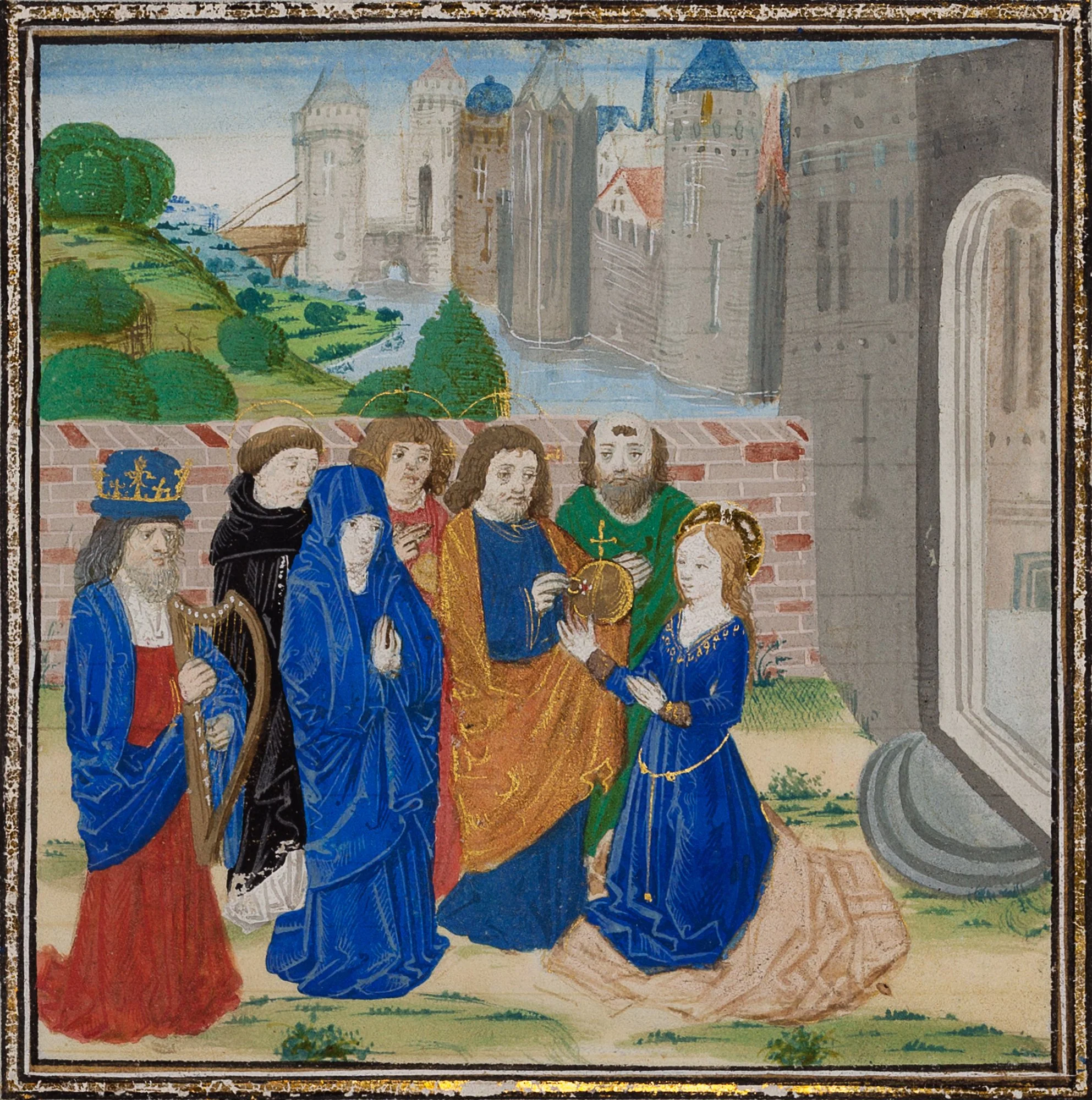
The Mystic Marriage of Catherine of Siena, painted by the Master of Margaret of York in a manuscript created for Louis of Bruges in the late 15th century.
In the narrow streets of medieval Siena, amid plague, political violence, and religious fear, a young woman began speaking with an authority that kings, bishops, and even popes found difficult to ignore.
She was not a noblewoman. She had no formal education. She never led an army, ruled a city, or held office in the Church. Yet centuries later, Catherine of Siena remains one of the most powerful female figures of medieval Europe.
For travellers wandering through Tuscany, visiting Gothic churches, or standing before weathered statues in old Italian towns, Catherine is everywhere. But who was she really, and why did her voice matter so much?
A Child of Crisis
Catherine was born in 1347, the very year the Black Death arrived in Europe. The world around her was collapsing. Entire families disappeared within days. Trade faltered, trust weakened, and many believed divine punishment had descended upon Christendom.
The Italy into which she grew up was fragmented and violent. City-states fought one another constantly. Mercenary armies crossed the countryside. The papacy itself had abandoned Rome and ruled instead from Avignon under strong French influence.
Amid this chaos, Catherine developed an intense religious life. According to tradition, she experienced visions from an early age and refused marriage despite strong pressure from her family. Instead, she joined the Dominican Third Order, remaining technically a laywoman while living a life of prayer, fasting, and service.
Yet Catherine was never simply withdrawn from the world. The remarkable thing about her life is how quickly mysticism turned into action.
The Woman Who Wrote to Popes
By her twenties, Catherine had become an unlikely political force.
She dictated hundreds of letters to rulers, bishops, merchants, and military leaders. Her most famous correspondence was with Pope Gregory XI, whom she urged to leave Avignon and return the papacy to Rome.
To modern ears, it is difficult to grasp how extraordinary this was. A young laywoman from Siena was openly advising — and at times reprimanding — the supreme leader of the medieval Church.
And yet people listened.
Part of Catherine’s influence came from timing. Europe was desperate for moral authority. Corruption inside the Church was widely discussed, and many feared Christianity itself was entering a period of decay. Catherine’s fierce sincerity gave her unusual credibility.
When the pope finally returned to Rome in 1377, many contemporaries saw Catherine as one of the voices that had helped make it happen.
But peace did not follow. Soon after came the Western Schism, when rival popes claimed legitimacy. Catherine strongly defended the Roman papacy, throwing herself into the struggle with exhausting intensity.
She died in Rome in 1380, only thirty-three years old.
Recognising Saint Catherine in Art and Statues
For travellers visiting churches and museums across Italy, Spain, France, or elsewhere in Europe, recognising Catherine is easier once you know her symbols.
She is most often shown wearing the black-and-white habit of the Dominicans. Several attributes commonly identify her:
A lily, symbolising purity.
A book, representing her writings and spiritual teaching.
A crucifix held close to her chest.
A crown of thorns, referring to her mystical union with Christ.
The stigmata — wounds corresponding to those of Christ — sometimes shown subtly on her hands.
A heart, because medieval tradition described her mystical “exchange of hearts” with Christ.
A miniature church or papal tiara, symbolising her role in defending and reforming the Church.
In paintings, she is often portrayed in ecstatic prayer, gazing upward while receiving visions. In sculpture, particularly in Italy, her expression is frequently intense and inward-looking — less serene than many saints, more like someone wrestling with the fate of the world.
One of the most memorable images of Catherine can still be found in Siena itself, where her presence remains deeply woven into the city’s identity.
A Voice from a Fractured Europe
What makes Catherine fascinating for modern travellers is not only her spirituality, but the world she reveals.
Through her life we glimpse a Europe shaken by plague, political division, fear of decline, and arguments over authority — themes that still feel strangely familiar today. Her letters show medieval Europe not as a silent or static world, but as a continent alive with debate, crisis, and competing visions of the future.
Catherine herself stood at the centre of these tensions. She comforted plague victims, negotiated between rival factions, challenged Church leaders, and tried to hold together a society she believed was drifting toward chaos.
For visitors walking through Siena today, she is more than a saint in a niche or a name attached to a basilica. She is one of the clearest human faces of the late Middle Ages: passionate, uncompromising, deeply political, and impossible to ignore.
Further Reading
Catherine of Siena: A Passion for the Truth — Ralph McInerny (1996)
The Life of Catherine of Siena — Raymond of Capua (14th century)
Catherine of Siena — Karen Scott (2009)
The Dialogue — The Dialogue by Catherine of Siena (14th century)
A Day Among Giants at Technik Museum Speyer


Aircraft on display at Technik Museum Speyer.
The Technik Museum Speyer is one of Germany’s most remarkable technology museums. Located on the site of a former aircraft factory, it brings together aviation, space travel, railways, automobiles, ships, and many other aspects of engineering under one roof.
Its most famous exhibits are machines that visitors can actually enter. Highlights include a Boeing 747 mounted high above the museum grounds, the German Navy submarine U9, and the Soviet space shuttle Buran. Standing inside these giants gives a real sense of their scale and ambition.
The museum’s collection ranges from classic cars and motorcycles to steam locomotives, fire engines, and space technology, making it an enjoyable destination for visitors of all ages.
Speyer also has a sister museum, the Technik Museum Sinsheim, about 40 kilometres away. Sinsheim is world-famous for being the only museum where visitors can see both a Concorde and a Tupolev Tu-144 supersonic airliner side by side. Its collection also includes hundreds of classic cars, motorcycles, racing cars, aircraft, locomotives, and the largest permanent Formula One collection in Europe.
Together, the two museums form one of Europe’s finest collections of transport and technology heritage. More information about both museums can be found on the official website: Technik Museen Sinsheim Speyer.
For anyone interested in engineering, innovation, or simply seeing extraordinary machines up close, Technik Museum Speyer and the one in Sinnsheim are well worth a visit.
Why Plato Still Feels Uncomfortably Modern
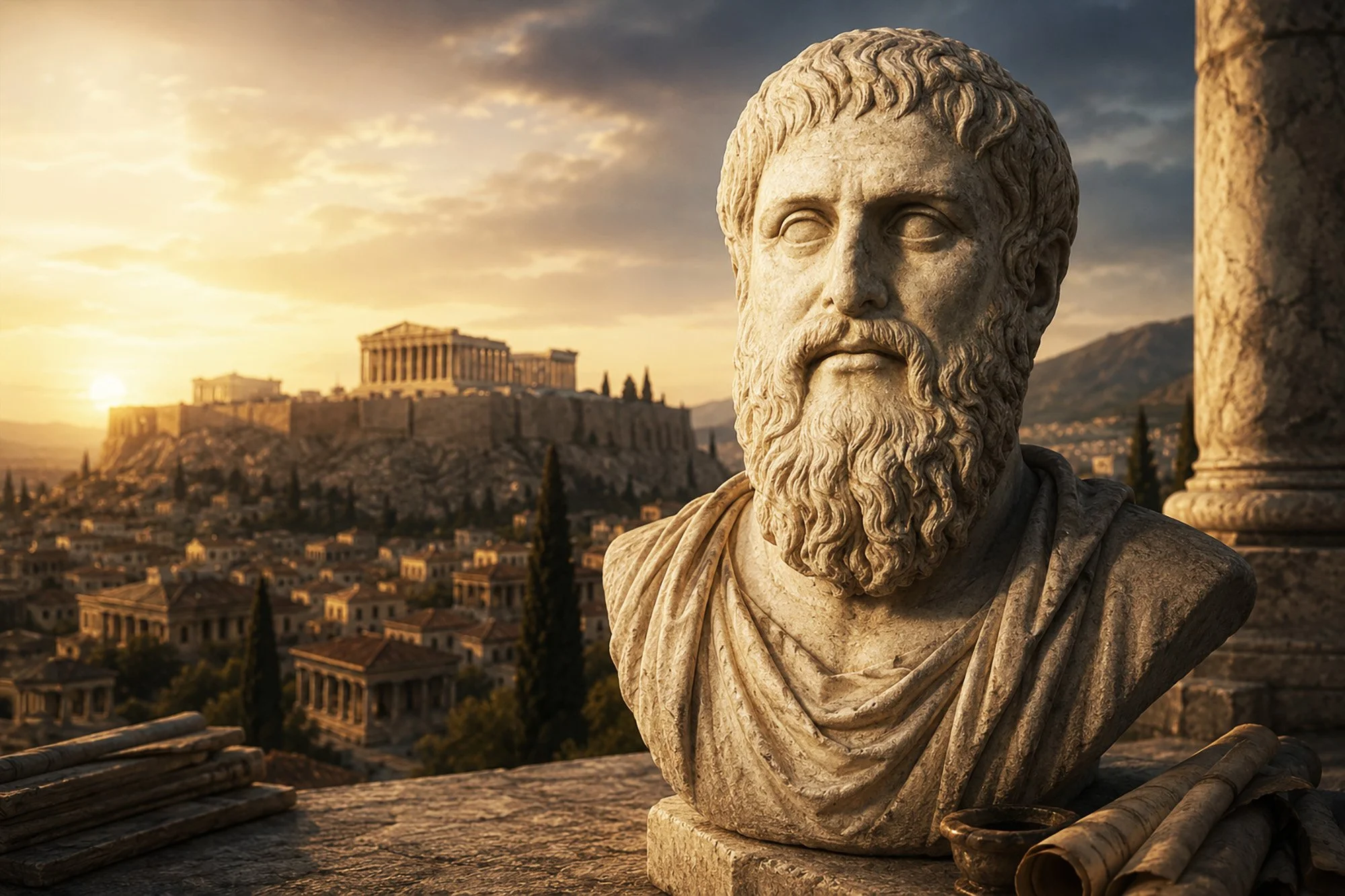
Plato with Athens in the background. Image created with AI.
More than 2,400 years ago, in the streets of ancient Athens, a philosopher began asking questions that still echo across Europe today.
Why do democracies become unstable?
Why do crowds sometimes choose leaders who damage the society they lead?
And what happens when emotion, propaganda and short-term thinking become more powerful than wisdom?
The philosopher was Plato, and his answer became one of the most influential books in European history: The Republic.
Plato did not write during a golden age of calm and stability. Athens was deeply divided. Wars had exhausted the city. Political factions fought each other constantly. Public debate was often loud, emotional and manipulative. The democracy that Athenians were proud of had also condemned Plato’s teacher, Socrates, to death.
To Plato, this was not simply a political mistake. It was evidence that a society without wisdom could become dangerous — even when it called itself democratic.
His solution was radical. He imagined an “ideal state” ruled not by wealthy elites, military strongmen or popular politicians, but by philosopher-kings: leaders trained to seek truth, justice and self-control rather than personal power.
Today, the idea sounds both fascinating and unsettling.
Plato believed that most societies fail because people are too easily distracted by wealth, ambition, fear and desire. He divided society into three groups: rulers, defenders and producers. Justice, he argued, existed when each group fulfilled its role in harmony. Education was central to this system. A good society could only exist if citizens were shaped by good education, moral discipline and a shared sense of responsibility.
Some of Plato’s ideas now feel deeply uncomfortable. He wanted strict control over culture and education. He distrusted democracy. His ideal society left little room for individual freedom. Critics later accused him of imagining a rigid and even authoritarian state.
And yet, many of his questions feel strangely modern.
Across Europe today, people worry about political polarisation, misinformation, populism and the growing distrust of institutions. Social media often rewards outrage more than wisdom. Public debate can feel increasingly emotional and fragmented. At the same time, many societies place enormous faith in experts, technocrats and even artificial intelligence to manage complex problems.
In a way, the old Platonic question has quietly returned:
Can a democracy survive if knowledge and wisdom lose authority?
One of the most famous parts of The Republic is Plato’s Allegory of the Cave. Prisoners sit inside a cave watching shadows projected onto a wall, believing those shadows are reality itself. Only when one prisoner escapes does he discover the larger world outside.
For centuries, Europeans have returned to this image whenever societies seemed trapped by illusion, propaganda or collective fear. In the age of algorithms, viral misinformation and AI-generated realities, Plato’s cave suddenly feels less like ancient philosophy and more like a mirror.
Perhaps Plato’s real importance today is not that he offered the perfect political system. He did not. Even he later admitted that his ideal state was probably impossible.
What remains powerful is the warning beneath it:
A society cannot remain free and stable if truth, education and moral responsibility no longer matter.
Further Reading
The Republic — Plato
The Open Society and Its Enemies — Karl Popper
A History of Western Political Thought — J. S. McClelland
Europe as a Layered Landscape: Where Culture Takes Shape
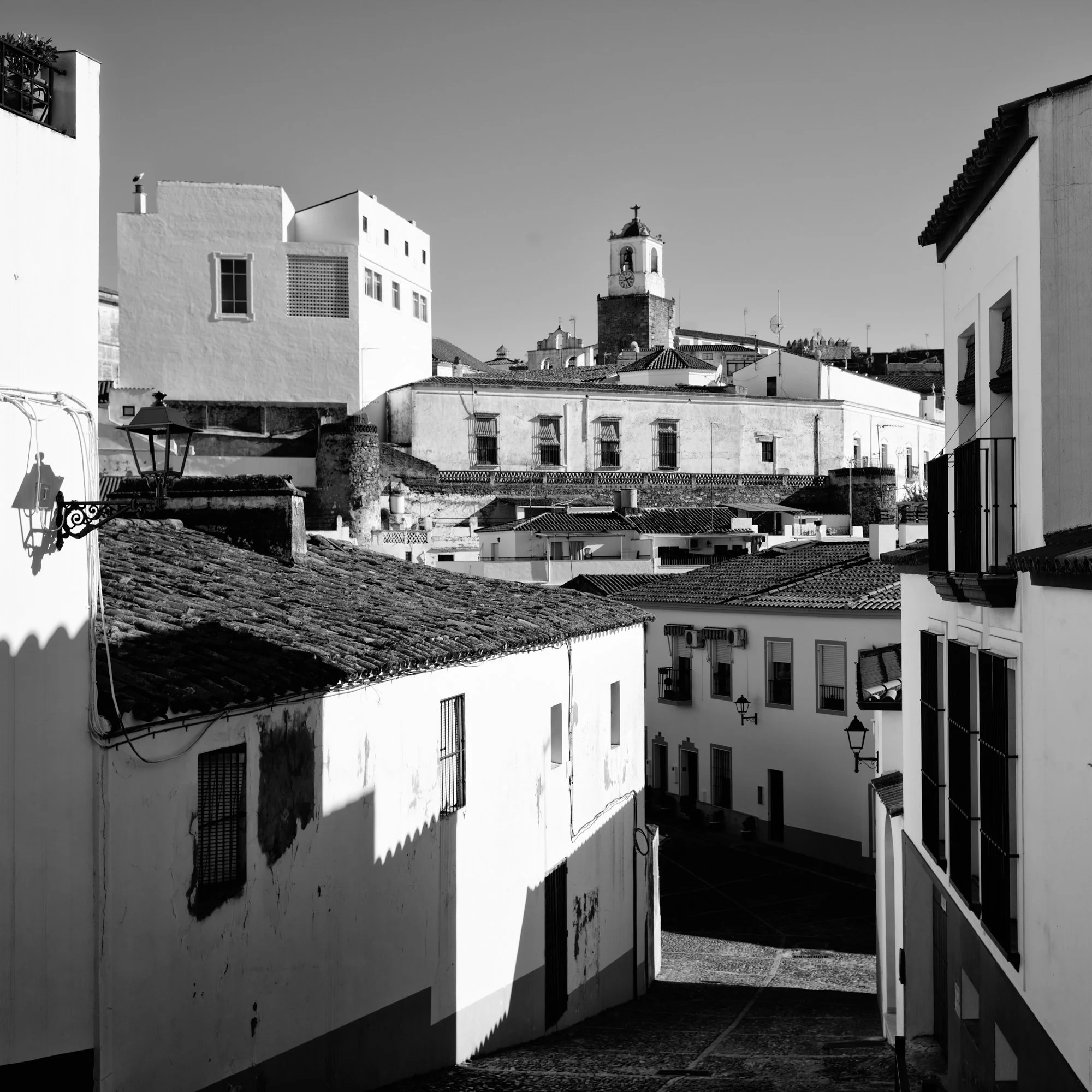
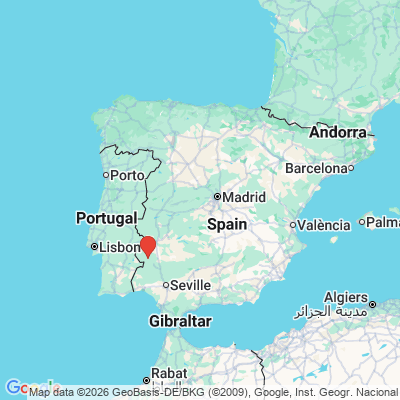
Jerez de los Caballeros (Spain).
When you travel through Europe, culture rarely announces itself with signs or explanations. It reveals itself gradually — in how a village is laid out, how a city meets its countryside, how people relate to a place they have clearly not just inherited, but lived through.
Europe is best understood not as a collection of countries, but as a layered landscape. Every place carries traces of continuity and interruption: periods of calm growth, followed by moments when everything had to be rebuilt, renegotiated, or relearned. Culture did not emerge once and settle. It accumulated — like sediment.
Place as memory, not backdrop
In some regions, life unfolded slowly and predictably for generations. Customs could remain implicit because everyone knew them. Meaning was shared without needing explanation. In other places, history kept breaking in: wars passed through, rulers changed, populations shifted. There, culture had to be spelled out, fixed in rules, buildings, and institutions. What could no longer be assumed had to be defined.
That difference is still visible today. You feel it when you cross from an area where things “just work” if you know the rhythm, into one where procedures, signs, and instructions guide you through daily life. Neither is more authentic. Both are responses to what the place has been asked to endure.
Movement as a constant, not an exception
Europe has never been still. People arrived, settled, moved on, returned, or were forced elsewhere. Sometimes movement was gradual — traders, craftsmen, seasonal workers. Sometimes abrupt — after war, famine, or political rupture. Each wave left behind habits, skills, tensions, and accommodations.
In places where new people arrived often, culture learned to be explicit. Rules replaced assumption. In places where communities remained relatively stable, culture could stay implicit, carried in gesture, timing, and shared understanding. Movement didn’t erase culture; it reshaped how culture was transmitted.
Landscapes that demand cooperation
Geography mattered, too. Rivers that flooded, mountains that isolated, coasts that opened routes outward — all of them shaped how people depended on one another. In some landscapes, survival required constant coordination beyond family or village. Elsewhere, self-contained communities could endure longer.
Those physical realities left cultural traces. You can still sense them in attitudes toward rules, toward strangers, toward collective responsibility. Culture grew out of necessity long before it became identity.
Cities, villages, and the weight of history
European cities often sit atop their own pasts. Roman grids beneath medieval streets. Industrial quarters beside old markets. Each layer represents a moment when life reorganised itself under new pressures. Villages, too, are archives: their festivals, paths, and boundaries reflect decisions made long before modern borders existed.
What matters is not how old a place is, but how often it had to adapt. Repeated disruption teaches caution. Long continuity breeds confidence. Both shape how meaning is shared — openly or implicitly, formally or relationally.
Reading Europe from the ground up
To understand Europe, it helps to slow down and read places the way you would read a landscape: noticing elevation, erosion, and deposits. Culture lives in those layers. It explains why neighbouring regions can feel worlds apart, and why habits that seem irrational often make perfect sense once you understand the place that formed them.
Europe, seen this way, is not a puzzle of national characters. It is a terrain shaped by memory — where culture does not float above the land, but grows directly from it.
On the Road with a Franciscan Friar
Imagine setting off on a journey with almost nothing.
No horse. No money. No comfortable inn waiting at the end of the day. Only a simple brown habit, a rope around your waist, a pair of worn sandals, and complete trust that God—and the kindness of strangers—would provide what you needed.
For many Franciscan friars in the thirteenth century, this was everyday life.
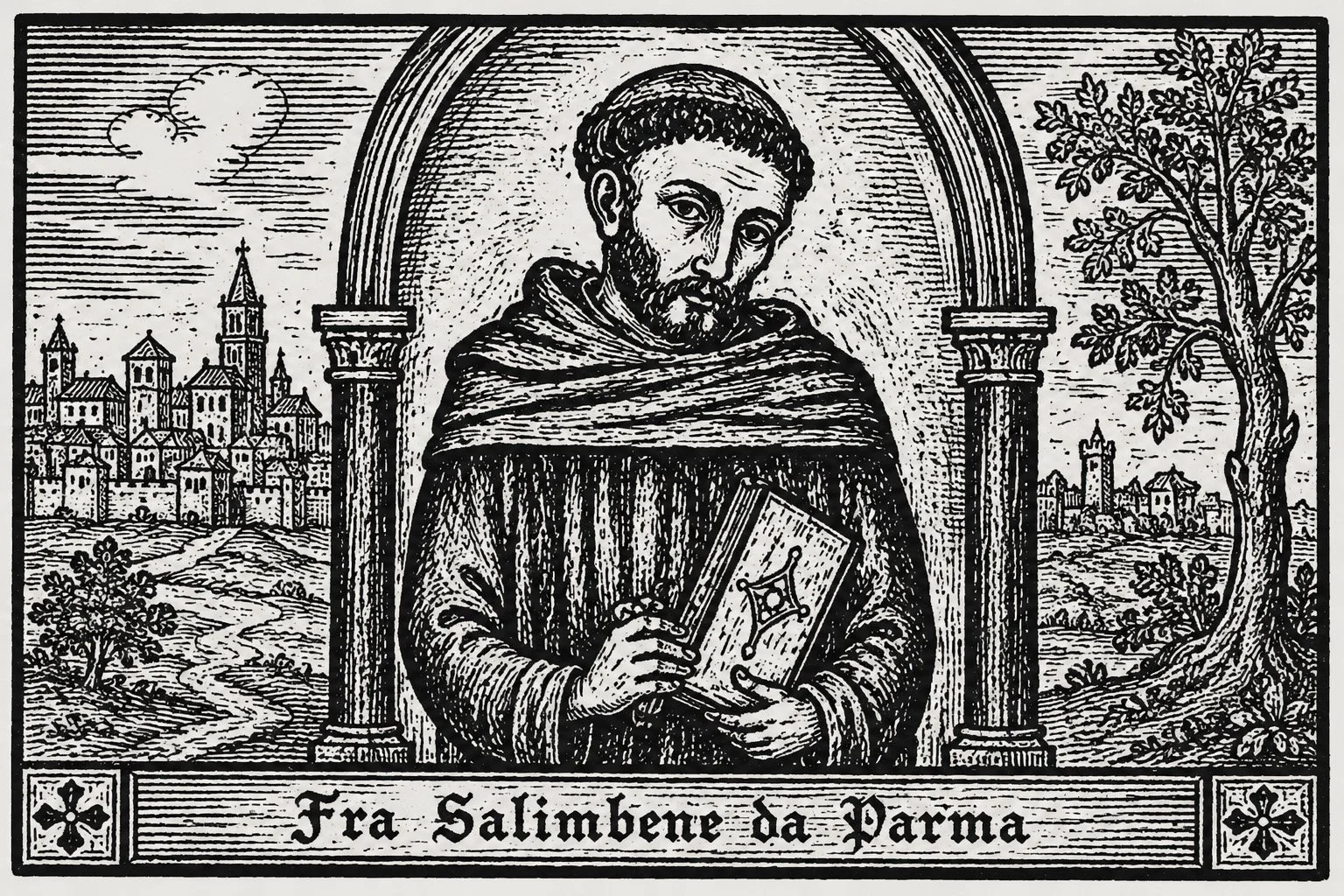
One of them was Salimbene de Adam (1221–c.1290), a Franciscan friar from Parma, Italy. During his lifetime he travelled extensively through Italy and France, recording the people, places and events he encountered. His lively Cronica is one of the most personal and engaging accounts of medieval Europe, offering a rare glimpse into life on the road nearly eight centuries ago.
A Europe Without Hotels
Unlike monks who spent their lives in a single monastery, Franciscans were expected to travel wherever they were needed.
Salimbene walked from city to city, visiting places such as Parma, Bologna, Lucca, Siena, Pisa, Genoa, Ferrara, Modena and Lyon (in France). Roads were often little more than muddy tracks. Rivers could become impassable after heavy rain, bridges were unreliable, and bandits were an ever-present danger.
Yet these journeys opened the door to an extraordinary world.
A Collector of Stories
Salimbene had a remarkable eye for people.
His chronicle introduces us to emperors, bishops and popes, but also to merchants, cooks, fellow friars, wandering preachers and ordinary townspeople. Some are wise, others vain or comical, but almost all are vividly portrayed.
Rather than listing dates and battles, Salimbene fills his pages with conversations, humorous anecdotes and memorable encounters. Reading his work often feels like travelling alongside a companion who never runs out of stories.
Living on the Kindness of Others
Franciscans embraced a life of poverty. They owned almost nothing and relied on the hospitality of the communities they visited.
Families offered meals, monasteries provided a bed for the night, and local people welcomed the friars because they preached, cared for the sick and supported the poor. Hospitality was not simply an act of kindness—it was an essential part of medieval society that allowed travellers, pilgrims and friars to cross Europe.
Carrying News Across Europe
Travelling friars did more than preach.
They also carried information.
As Salimbene moved from one town to another, he gathered news about wars, royal marriages, papal elections, miracles and disasters. He spoke with eyewitnesses, compared different accounts and passed these stories on during his next journey.
Long before newspapers existed, travelling friars formed part of Europe's living communication network.
Following Salimbene Today
Many of the places Salimbene visited have changed surprisingly little.
Walking through the historic centres of Parma, Bologna, Lucca or Siena, you can still imagine a weary Franciscan arriving at the city gate after days on foot. Before long, he would have found the local convent, shared a simple meal, exchanged news with fellow friars and set off again with fresh stories to tell.
Salimbene's Cronica reminds us that travel has always been about more than reaching a destination. It is about curiosity, meeting new people, and returning home with stories worth sharing.
Buried for Centuries: The Massacre of the Innocents Rediscovered in Santiago Cathedral
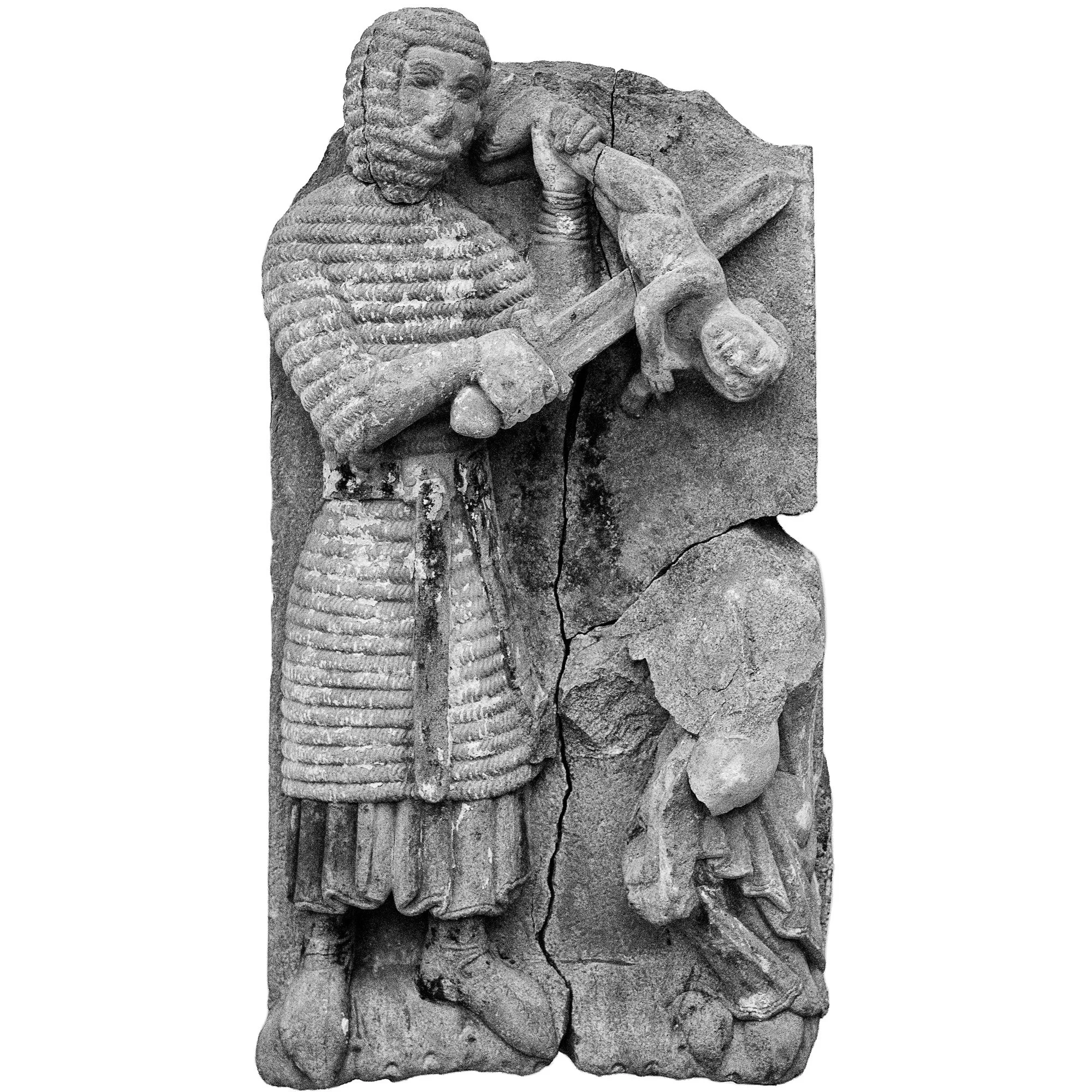
A rediscovered medieval sculpture of the Massacre of the Innocents from Cathedral of Santiago de Compostela, carved around 1250–1350 in the tradition of Master Mateo.
In 2021, archaeologists working beneath the Cathedral of Santiago de Compostela made a remarkable discovery. Hidden for centuries beneath the floor of the cathedral, they uncovered a series of medieval relief sculptures connected to one of the darkest episodes in the Bible: the Massacre of the Innocents.
Among the fragments was a dramatic sculpture of a soldier, carved in granite and still bearing traces of medieval paint. The sculpture originally formed part of a larger decorative cycle inside the cathedral, although its precise original location is no longer known. At some point in history, the artwork had lost its importance and was reused simply as building material in the crypt below the Pórtico da Gloria.
The scene comes from the Gospel of Matthew. After hearing from the Wise Men that a new “king of the Jews” had been born, King Herod reacted with fear and rage:
“Then Herod, when he saw that he had been tricked by the wise men, became furious, and he sent and killed all the male children in Bethlehem and in all that region who were two years old or under.” — Matthew 2:16
For medieval artists, the Massacre of the Innocents was one of the most emotionally powerful episodes from the childhood of Christ. It combined political fear, violence, innocence, and suffering — themes that resonated strongly in medieval religious culture.
The Santiago sculptures follow the visual traditions that had become common across medieval Spain. Artists emphasized movement, emotion, and brutality. Even though the rediscovered fragment is damaged, the aggressive posture of the soldier still carries enormous force. The work reflects the transition from the older Romanesque tradition associated with Master Mateo toward the more emotional and expressive Gothic style emerging during the thirteenth and fourteenth centuries.
What makes the discovery especially striking is the fate of the sculpture itself. Once part of the decoration of one of Europe’s greatest pilgrimage churches, it eventually disappeared from sight and survived only because it had been recycled into the cathedral’s construction. Sacred art became rubble.
And yet the sculpture survived.
Today, the fragment offers more than a glimpse into medieval religious art. It also reveals how medieval Europe understood power and violence. Herod’s massacre was not treated as a distant historical episode, but as a deeply human tragedy — one that artists believed should be remembered in stone.
There is something fitting in the fact that these forgotten sculptures have finally re-emerged into the light. A work of art about forgotten victims was itself forgotten for centuries beneath the cathedral floor.
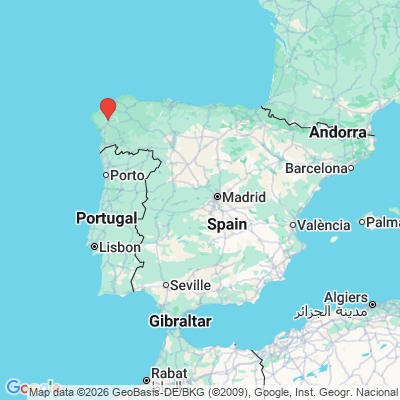
The Long Journey: How Homo sapiens Reached Europe
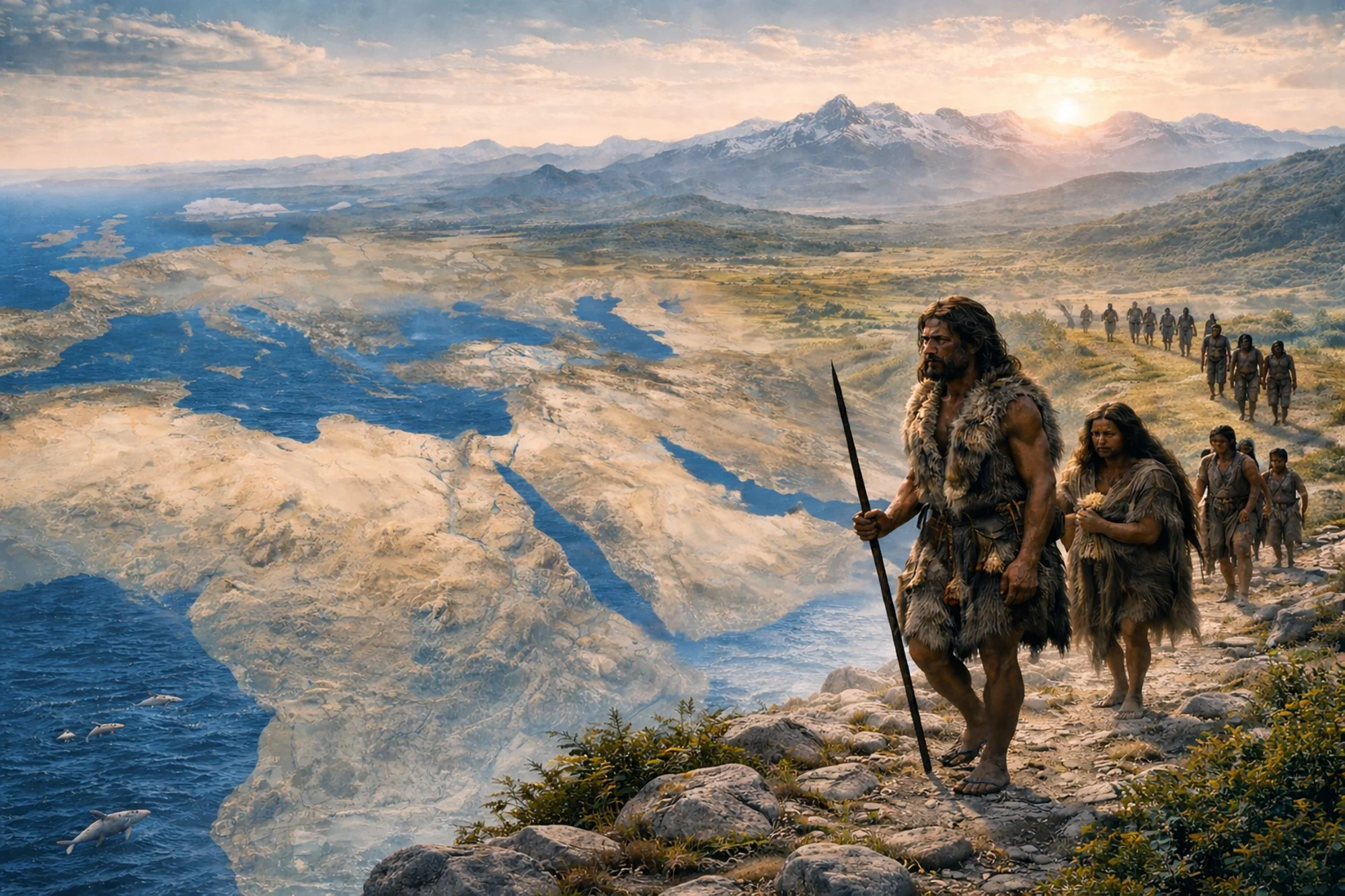
Image created with AI
If we could travel back in time far enough, we would discover that the story of Europe does not begin in Europe at all. It begins in Africa.
For hundreds of thousands of years, Africa was the homeland of the human family. There, our species — Homo sapiens — slowly emerged from earlier human relatives. Only much later did small groups begin to move beyond that continent. Their journeys would eventually bring them to Europe, shaping the deep prehistory of the continent.
The story is not a straight line. It is more like a branching river, with different human species appearing, spreading, and sometimes disappearing.
The Deep Roots of Humanity
The human story begins millions of years ago, when the ancestors of humans split from the lineage that would later become chimpanzees. Over time, several early human relatives appeared in Africa. Some walked upright, some used simple tools, and many lived in environments very different from those we know today.
Around two million years ago, members of the genus Homo began spreading out of Africa for the first time. One of the most successful of these early travellers was Homo erectus. These early humans expanded into the Middle East and Asia, and eventually reached parts of southern Europe.
But they were not yet Homo sapiens.
For a long time, Europe was inhabited by other human species — including the ancestors of Neanderthals — who adapted to the continent’s cold winters and highly seasonal environments.
The First Humans in Europe
Humans have been present in Europe for roughly one to one and a half million years, although these earliest Europeans were not modern humans. They belonged to earlier species such as Homo antecessor and Homo heidelbergensis.
Life in Europe was challenging. The climate fluctuated dramatically during the Ice Ages, with repeated cycles of glacial cold and warmer periods. Early humans had to adapt to short winters, migrating animals, changing vegetation, and unpredictable landscapes.
Survival required flexibility: hunting large animals, exploiting seasonal plant foods, and learning how to navigate complex environments. These early Europeans developed technologies such as stone handaxes and gradually learned to cope with cold climates.
The Arrival of Homo Sapiens
Modern humans evolved much later, probably in Africa around 300,000 years ago. For tens of thousands of years, Homo sapiens remained largely within Africa. Then something changed. Around 60,000–70,000 years ago, groups of modern humans began leaving Africa in larger numbers. These migrations followed several possible routes: along the coasts of the Arabian Peninsula, through the Near East, and eventually into Eurasia. Europe was one of the last major regions to be reached. Modern humans arrived there roughly 45,000 years ago.
But they did not arrive in an empty land. Europe was already home to Neanderthals, who had lived there for hundreds of thousands of years. For several millennia, both species shared the continent. Archaeological and genetic evidence shows that they even interbred. Today, many people outside Africa still carry small amounts of Neanderthal DNA.
A Continent of Encounters
The arrival of Homo sapiens changed Europe’s human landscape. Modern humans brought new cultural traditions — including sophisticated stone tools, symbolic art, ornaments, and eventually the famous cave paintings of places like Lascaux and Altamira. Over time, Neanderthals disappeared, around 39,000 years ago. The reasons are still debated. Climate change, competition for resources, small population sizes, and cultural differences may all have played a role.
After that moment, Europe belonged to a single human species.
Us.
A Much Older Europe than we Imagine
When we walk through European landscapes today — across the plains of France, the mountains of Spain, or the forests of Germany — we are moving through places that humans have inhabited for an astonishingly long time.
Long before cities, long before farming, long before written history, small groups of humans were already travelling through these landscapes. They followed migrating animals, searched for flint to make tools, and gathered around fires during long winter nights.
The arrival of Homo sapiens in Europe was not a sudden event. It was the final chapter of a journey that began hundreds of thousands of years earlier in Africa — a journey that eventually spread our species across the entire planet. And Europe was only one stop along the way.
Further Reading
Wil Roebroeks – The human colonisation of Europe: where are we?
José María Bermúdez de Castro et al. – The Early Pleistocene Human Occupation of Europe
Hosfield & Cole – Early hominins in north-west Europe: A punctuated long chronology?
Natural History Museum – Modern humans, Homo sapiens: When, where and how did we evolve?
Natural History Museum – The origin of our species
Robert Hosfield – The Earliest Europeans: A Year in the Life
Chris Stringer – The Origin of Our Species
Clive Gamble – The Palaeolithic Settlement of Europe
Europe Looking for Direction in a Changing World
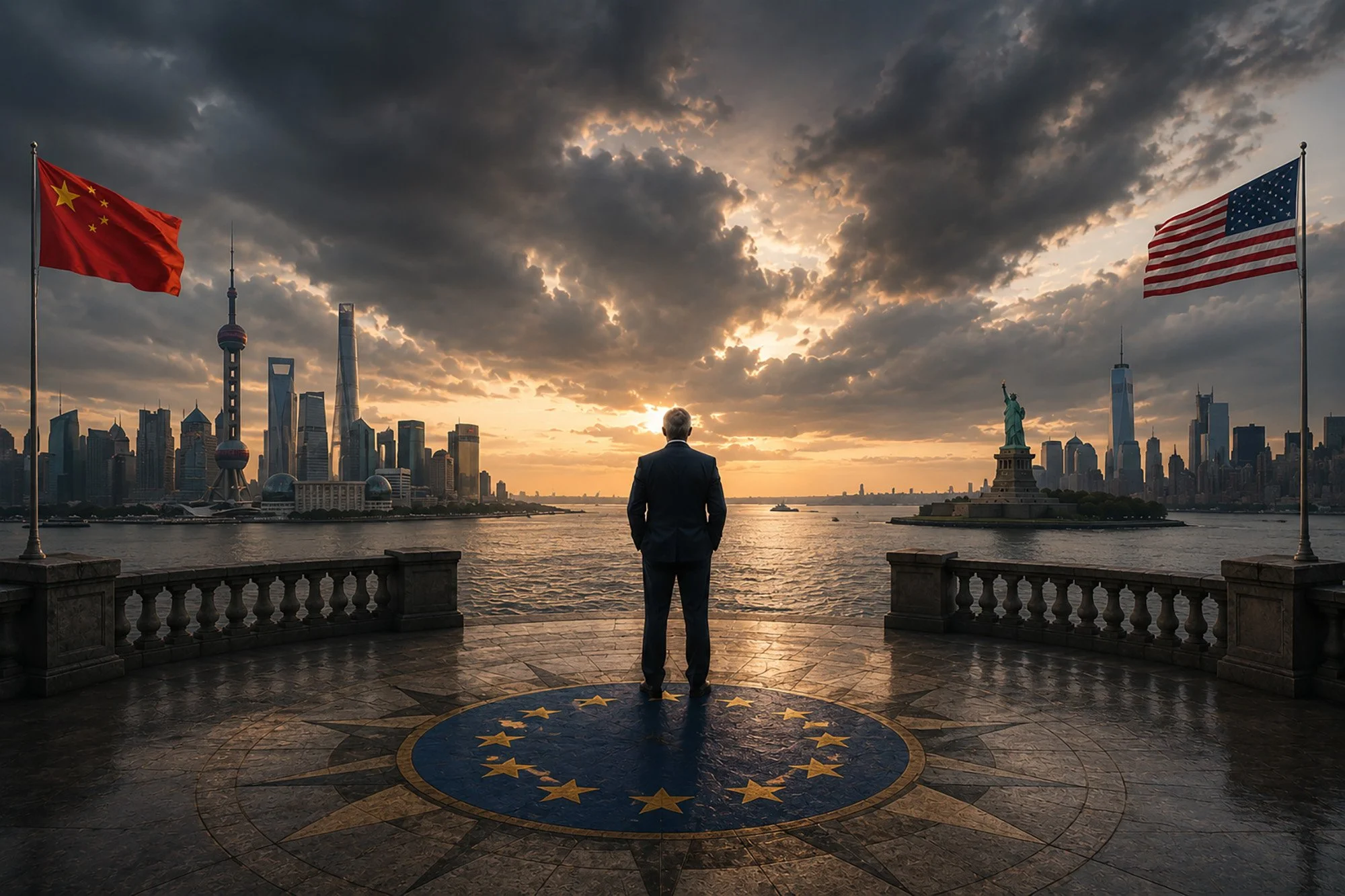
Image created with AI.
For centuries, Europe stood at the center of global power. Even after two world wars, the continent remained closely tied to American power and to a global economy shaped largely on Western terms. Globalization, free trade and technological progress seemed to confirm the idea that the future would gradually become more interconnected — and, in many ways, more Western.
That confidence is evaporating.
Europe now watches a world in which power is shifting rapidly toward Asia, while the rivalry between China and the United States grows more intense. China has moved from being the factory floor of globalization to becoming a technological and industrial power with its own long-term ambitions. The United States remains dominant in finance, software, military power and digital platforms, but increasingly acts according to its own strategic interests, even when those interests are not aligned with Europe’s.
The uncomfortable reality for Europe is that it depends heavily on both.
European industries rely on China for batteries, rare earths, solar panels and industrial supply chains. At the same time, Europe depends on American software, cloud infrastructure, digital platforms and military protection. What once looked like healthy interdependence increasingly feels like vulnerability.
Part of Europe’s problem is internal. While China invested aggressively in infrastructure, industrial ecosystems and strategic technologies, Europe focused heavily on regulation, market rules and financial stability. While American firms built globally dominant digital platforms, Europe often struggled to turn innovation into companies capable of scaling internationally.
The contrast is becoming painfully visible. German carmakers, long symbols of European industrial strength, now face fierce competition from Chinese electric vehicle manufacturers. Europe helped shape the modern environmental transition, yet much of the battery production and critical mineral processing behind that transition now lies elsewhere. In digital life, most Europeans depend daily on American operating systems, cloud services and online platforms.
This does not mean Europe is weak or irrelevant. The European economy remains one of the largest in the world, with advanced industries, strong universities and highly skilled populations. But Europe often appears fragmented in a world where scale matters more and more. Chinese companies benefit from enormous domestic markets and state coordination. American firms operate inside a unified financial and technological system. Europe still works through layers of national interests, regulations and political compromises.
The war in Ukraine accelerated Europe’s awakening. Cheap Russian gas disappeared almost overnight, supply chains proved fragile, and dependence itself became a geopolitical risk. As a result, Europe has started rediscovering industrial policy, investing more heavily in defense, energy infrastructure, semiconductors and AI.
At the same time, Europe risks misunderstanding China if it sees only threat and competition. China’s rise also reflects something the West long underestimated: the importance of long-term planning, infrastructure investment and industrial coordination. Entire Chinese cities have been transformed around advanced transport systems, AI integration, manufacturing and logistics at a scale difficult to imagine in much of Europe.
China, of course, has its own vulnerabilities — debt, demographic decline, overcapacity and political centralization among them. But the larger reality remains: the global balance of power is changing.
The world that shaped Europe’s prosperity after the Cold War is disappearing. Economic globalization is becoming geopolitical. Technology is becoming strategic. Supply chains are becoming instruments of power.
The United States still speaks like a superpower determined to preserve its dominance. China increasingly acts like a civilization-state convinced its historical moment has returned. Europe, meanwhile, is searching for direction in a world it no longer shapes as confidently as it once did.
Baelo Claudia: A Roman City Built on Fish and the Sea
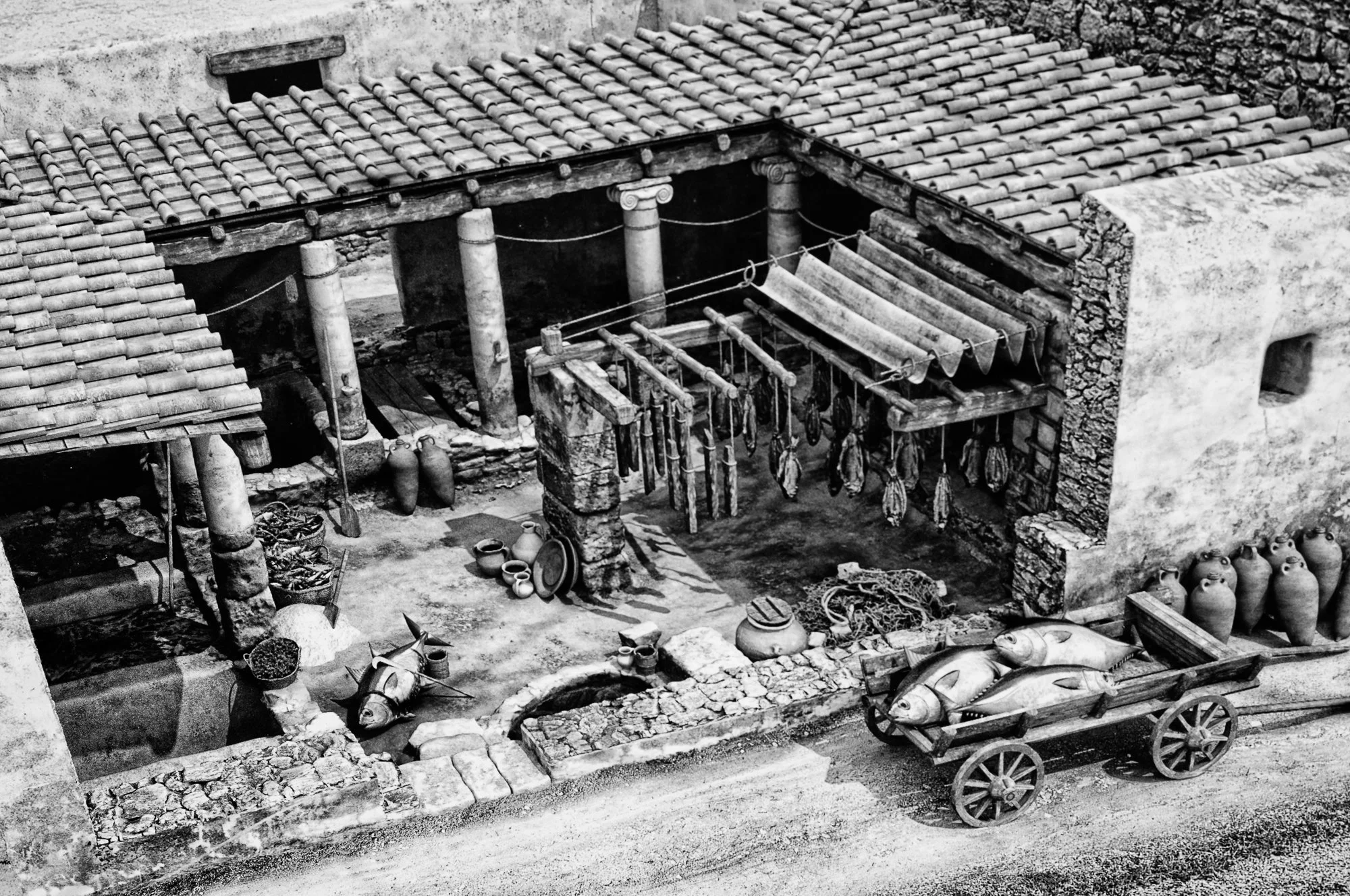
A reconstruction of a cetaria (fish-processing workshop) in Baelo Claudia reveals the industrial heart of this Roman coastal city. Built against the eastern city wall, the complex was designed for efficiency: fresh fish—sardines, anchovies, and tuna—arrived daily from nearby almadraba fisheries, were cleaned in small basins, then either salted in large vats or left to ferment in ceramic dolia to produce garum, the prized Roman fish sauce. Drying areas and shaded roofing helped control heat and preserve the catch. Far from being a quiet provincial town, Baelo Claudia emerges here as a carefully organized production hub, where maritime resources were transformed into goods traded across the Roman world.
Some ruins require imagination. Baelo Claudia does not. Walk through its streets, with the Atlantic wind coming in from the Strait of Gibraltar, and the structure of a Roman city is still clearly there — not as an abstract idea, but as something you can physically follow.
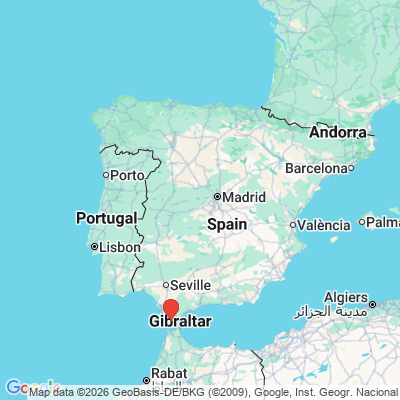
Set on the southern coast of Spain, Baelo Claudia was perfectly placed for trade between Europe and North Africa. Ships crossed these waters constantly, and the town grew into a small but well-connected hub. Its wealth came from an unlikely source: tuna. The seasonal catch fed a thriving industry of salted fish and garum, the fermented sauce that Romans exported across the empire.
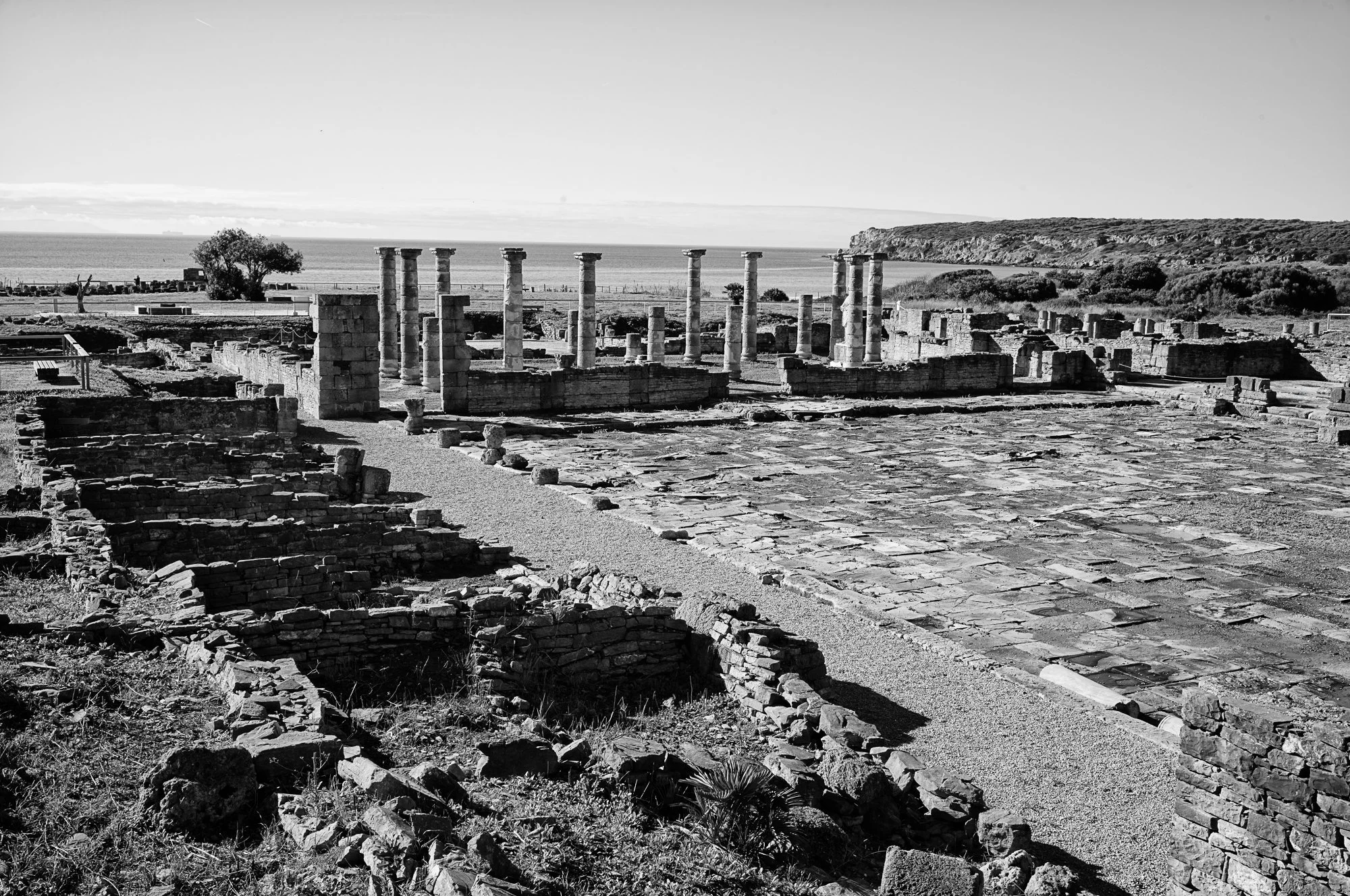
A view across the forum of Baelo Claudia, the civic heart of the Roman city. On the left, a row of tabernae—small stone shops—once opened directly onto the square, serving the town’s daily commercial life. Just beyond the forum stand the columns of the basilica, where legal and administrative affairs were conducted, with the Atlantic visible further in the distance. Together, they frame a space where trade, justice, and public life converged, illustrating the classic organization of a Roman forum.
By the 1st century AD, under Emperor Claudius, Baelo had become a municipium, fully integrated into the Roman system. The city took on a familiar layout — a forum surrounded by temples, a basilica for justice, a theatre, baths, and markets. Local elites stepped into public roles, governing the city in Rome’s name. Figures like Quintus Pupius Urbicus, known from a surviving inscription, belonged to this world: local leaders shaped by a global empire.
And yet Baelo Claudia was never just a copy of Rome. Its coastal position gave it a different rhythm, open to influences from across the strait. Even its religious life reflects this, with the presence of a temple to Isis alongside the traditional Roman gods.
The city’s success did not last. An earthquake in the 2nd century AD caused major damage, and over time trade declined. By the 6th century, Baelo Claudia was abandoned, left to the wind and sand.
What remains today is one of the most complete Roman townscapes in Spain — a place where trade, politics, and daily life still feel visible. Baelo Claudia is not just a ruin, but a reminder of how a small coastal settlement could briefly become part of something much larger: the economic and cultural network of the Roman world.
Europe’s Comfortable World Has Already Ended
Europe Woke Up in a Different World
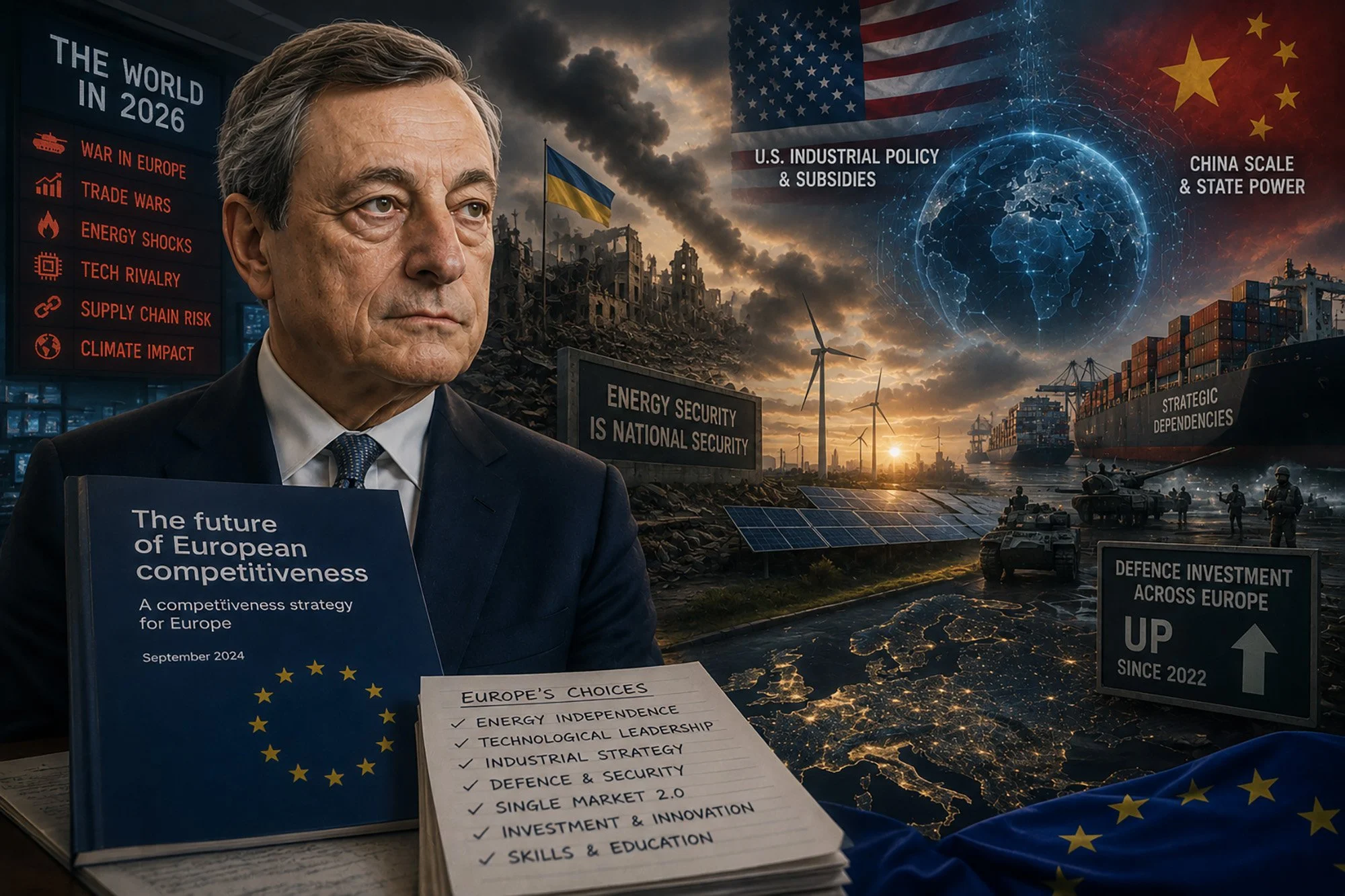
Image created with AI.
For decades, Europe lived in unusually favourable conditions.
Cheap Russian energy powered factories. Chinese manufacturing supplied affordable goods. American military protection guaranteed security. Global trade expanded steadily. European countries could focus on welfare, culture, healthcare and environmental goals while assuming the wider world would remain broadly stable.
By 2026, that world has already changed.
What once sounded like warnings in policy papers now shapes everyday political and economic reality. Energy shocks, wars, trade conflicts, sanctions, technological rivalry and military rearmament are no longer distant possibilities. They are becoming the defining structure of the new international order.
A major 2024 report on Europe’s future competitiveness, led by former Italian prime minister Mario Draghi, argued that Europe was entering a far more dangerous and competitive era. Only two years later, many of its concerns already look understated.
Russia’s invasion of Ukraine shattered Europe’s assumptions about security and economic interdependence. The conflict did not only disrupt energy supplies — it fundamentally changed how Europe thinks about dependence, infrastructure and strategic risk.
At the same time, tensions between the United States and China have intensified further. Trade restrictions, technological sanctions and industrial subsidies are reshaping global supply chains. Artificial intelligence has become a geopolitical race. Governments increasingly view semiconductors, cloud systems, rare earth materials, ports and energy grids as instruments of national power.
The consequences are now visible across Europe.
Factories face structurally higher energy prices than competitors in the US and parts of Asia. Industrial electricity prices remain far above American levels, while gas prices continue to weigh heavily on European manufacturing. German industry — long the engine of Europe’s economy — is under visible pressure. Chemical production, heavy industry and parts of manufacturing are shrinking or relocating investment abroad.
At the same time, defence spending is rapidly increasing across Europe. Governments that once prioritised efficiency and austerity are now investing in ammunition production, cybersecurity, critical infrastructure and military coordination. The continent is slowly rediscovering something many Europeans hoped belonged to the past: geopolitical hard power.
The Age of Cheap Globalisation Is Over
The deeper shift is psychological as much as economic.
For much of the post-Cold War era, Europe believed that economic integration would gradually make the world more peaceful and interdependent. Trade was seen as a stabilising force. Dependencies were considered efficient rather than dangerous.
That assumption has weakened dramatically.
Europe now finds itself squeezed between two superpowers pursuing increasingly strategic economic policies. The United States is using massive industrial subsidies to attract investment and strengthen domestic production. China combines industrial scale, state planning and technological ambition on a level Europe struggles to match.
The world is no longer organised primarily around low-cost efficiency. It is increasingly organised around resilience, control and strategic autonomy.
That creates difficult choices for Europe.
European countries still want open trade and international cooperation. Europe remains deeply dependent on global commerce. But recent crises have exposed how vulnerable excessive dependence can become — especially in energy, semiconductors, digital infrastructure, batteries and critical raw materials.
The Draghi report argues that Europe’s greatest weakness is not a lack of talent or wealth, but fragmentation. Europe often struggles to act quickly and collectively at the scale modern geopolitics requires.
And yet Europe is not collapsing or powerless.
The continent still possesses enormous strengths: world-class universities, advanced infrastructure, strong scientific research, major industrial capabilities and highly educated populations. Nordic countries remain highly innovative. France is pushing for greater strategic autonomy. Southern Europe is investing heavily in renewable energy. Eastern Europe has become increasingly important for security and manufacturing.
The challenge is not whether Europe still matters.
The challenge is whether Europe can adapt quickly enough to remain strategically independent in a world becoming harsher, faster and more competitive.
Europe’s Next Decade May Define Its Future
By 2026, Europe has already begun changing course.
The EU is investing more heavily in semiconductors, battery production, defence cooperation, renewable energy infrastructure and critical raw materials. Dependence on Russian gas has been sharply reduced. Industrial policy — once viewed almost suspiciously in Brussels — has returned.
But the pace of events may be moving faster than Europe’s political structures.
Permitting remains slow. Capital markets remain fragmented. Defence industries remain divided nationally. European startups still often struggle to scale compared to American or Chinese competitors. Major infrastructure projects frequently take years longer than geopolitical reality comfortably allows.
The danger for Europe is therefore not sudden collapse. It is gradual strategic weakening — becoming increasingly dependent on technologies, platforms, energy systems and geopolitical decisions controlled elsewhere.
That is why the Draghi report feels more urgent today than when it appeared.
Its real message is not panic, but adaptation.
Europe does not need to abandon openness, democracy or social protection. In fact, those remain among its greatest strengths. But preserving them now requires something Europeans have often been reluctant to embrace: long-term strategic thinking, large-scale investment and collective political action.
The coming decade may determine whether Europe remains one of the world’s shaping powers — or slowly becomes a prosperous but dependent peninsula on the edge of geopolitical blocs dominated by others.
The transition has already begun.
The only remaining question is whether Europe fully understands how profoundly the world around it has already changed.
The Iron Countess of Italy
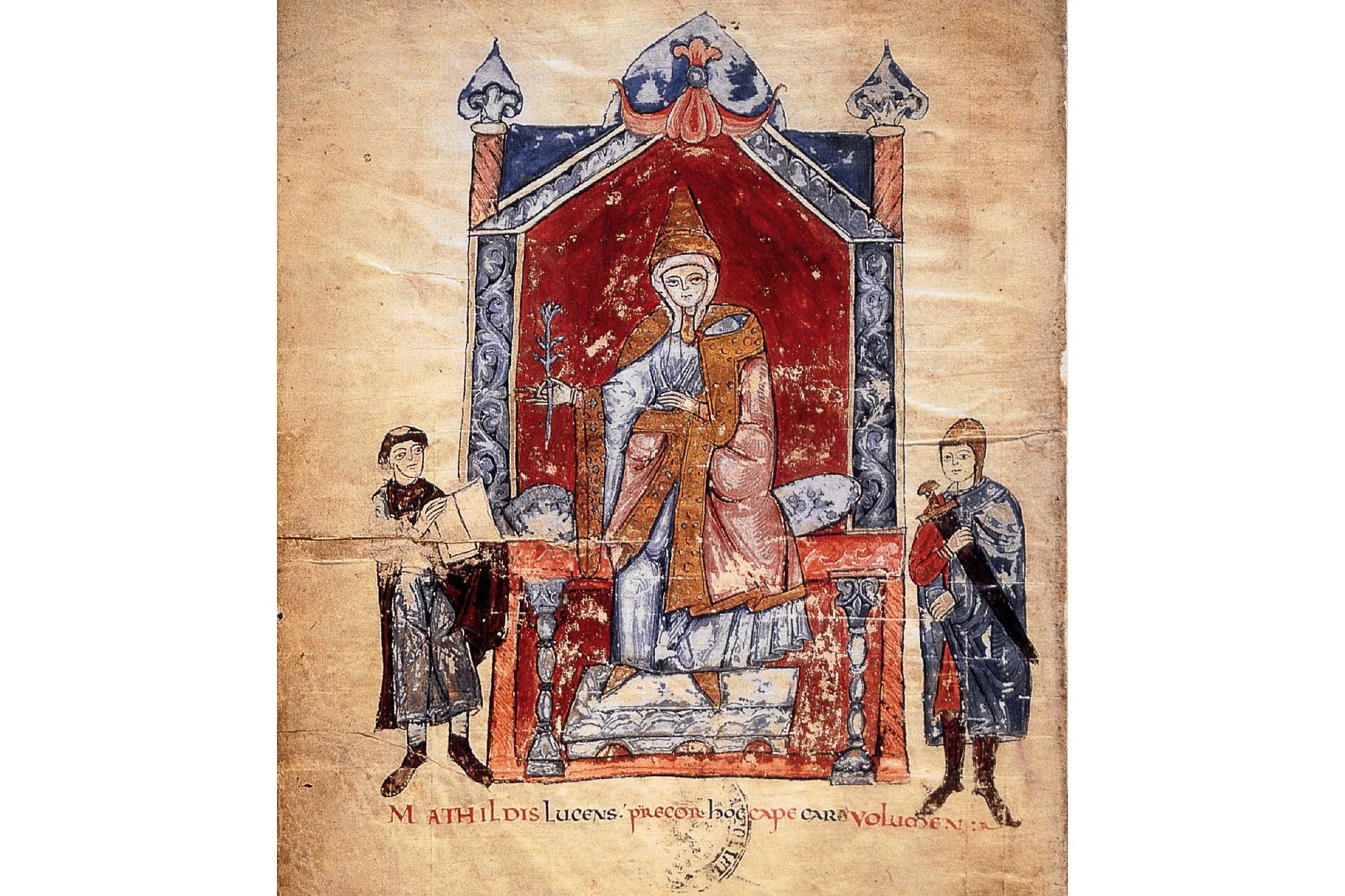
Matilda of Canossa in the Vita Mathildis of the monk Donizo, written around 1115. The image presents her as both ruler and protector at the height of her power (Vatican Library).
The Castle in the Mountains
In the winter of 1077, the most powerful ruler in Europe stood barefoot outside a mountain fortress in northern Italy, waiting in the snow for forgiveness.
The castle was Canossa. The ruler was the Holy Roman Emperor Henry IV. And at the centre of the drama stood a woman: Matilda of Canossa.
Today the ruined fortress still rises above the Apennines, surrounded by forests and deep valleys. In the Middle Ages, however, Canossa guarded some of the most important routes between Germany and Rome. Whoever controlled these mountain passes held enormous political power.
Matilda inherited that power. Born around 1046 into the powerful House of Canossa, she grew up in a dangerous world of assassinations, shifting alliances, and rival emperors and popes. Her father was murdered when she was still a child, and within a few years her brother and sister had also died.
Raised by her politically gifted mother, Beatrice of Lorraine, Matilda received an education unusual for a medieval noblewoman. She learned languages, administration, diplomacy, and military strategy. By the time she reached adulthood, she was already one of the most influential rulers in Italy.
Between Pope and Emperor
Matilda lived during one of the great political struggles of the Middle Ages. The pope and the emperor were fighting over who had the right to appoint bishops and control the Church. Behind the religious arguments stood a larger question: who truly ruled Christian Europe?
Matilda chose the side of Pope Gregory VII.
She became one of the strongest supporters of the reform movement within the Church, providing troops, castles, money, and political protection. Chroniclers describe her constantly travelling through her territories on horseback, directing armies and negotiating with nobles and bishops.
The conflict reached its most famous moment at Canossa. Excommunicated and threatened by rebellion, Henry IV crossed the Alps in winter to seek forgiveness from the pope, who was staying under Matilda’s protection. According to later tradition, the emperor waited outside the castle for three days as a penitent before being admitted.
The scene became legendary: an emperor humbled in the snow while a countess helped shape the fate of Europe.
The Legacy of the Great Countess
War did not end at Canossa. Henry later invaded Italy again, and Matilda spent years defending her territories against imperial forces. She lost castles, rebuilt alliances, and continued resisting powerful enemies long after many rulers would have surrendered.
But Matilda was more than a military leader. She was also one of the great patrons of Romanesque architecture in Italy. Churches, monasteries, cathedrals, and bridges across Tuscany and Emilia-Romagna still preserve traces of her influence. Her support helped strengthen cities such as Modena and Florence during the centuries that eventually gave rise to the Italian Renaissance.
When she died in 1115, Matilda left behind more than lands and castles. She had helped reshape the balance between church and empire, and she proved that political and military leadership in the Middle Ages was not reserved for men alone.
Nearly a thousand years later, Italy still remembers her as La Gran Contessa — the Great Countess.
Further Reading
Tuscan Countess: The Life and Extraordinary Times of Matilda of Canossa — Michele K. Spike (2004)
Matilda of Tuscany — Nora Duff (1909)
The Civilization of the Middle Ages — Norman F. Cantor (1993)
The Investiture Controversy: Church and Monarchy from the Ninth to the Twelfth Century — Uta-Renate Blumenthal (1988)
“Let Them Talk”: The Catchy Ancient Poem Found from Spain to Iraq
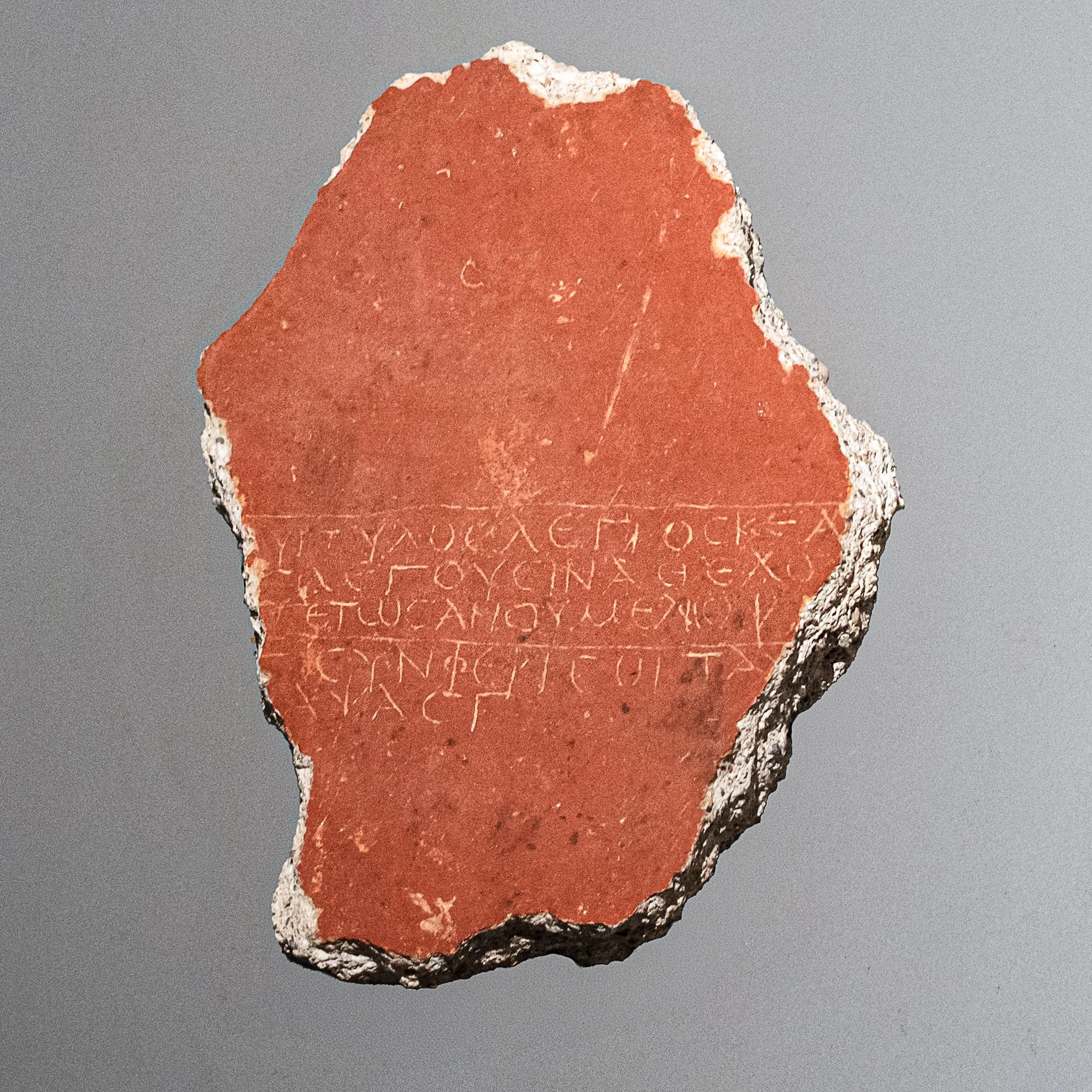
Greek graffiti scratched into painted plaster in Roman Cartagena. The inscription reads: “λέγουσιν ἃ θέλουσιν· λεγέτωσαν· οὐ μέλι μοι· σὺ φίλι με, συνφέρει σοι” — “They say what they want; let them say it; I don’t care; love me instead.” Versions of this catchy little poem have been found across the Roman world, from Spain to Iraq.
Long before social media, the Roman Empire may already have had its own viral memes and pop-song lyrics.
One remarkable example survives as graffiti scratched into a painted wall in Cartagena, the Roman city of Carthago Nova. Written in Greek, the short poem says:
“They say what they want.
Let them say it.
I don’t care.
Love me instead.”
The lines sound surprisingly modern — playful, rebellious, and easy to remember.
What makes the story extraordinary is that versions of the same little poem have been found across the Roman world: in Spain, Egypt, modern Hungary, Syria, and Iraq.
Usually the text appeared engraved on cheap gemstones or amulets carried by ordinary people. But in Cartagena someone simply scratched it onto a wall — proof that this was not elite literature, but part of everyday popular culture.
Classicist Tim Whitmarsh believes the poem may even preserve the sound of ordinary speech in the Roman Empire. Its rhythm works less like formal classical poetry and more like modern song lyrics or chants.
In other words: nearly 2,000 years ago, people across the Roman Empire may already have been sharing the ancient equivalent of memes, catchphrases, and pop songs.
Sanlúcar and El Rocío: messages on a fence
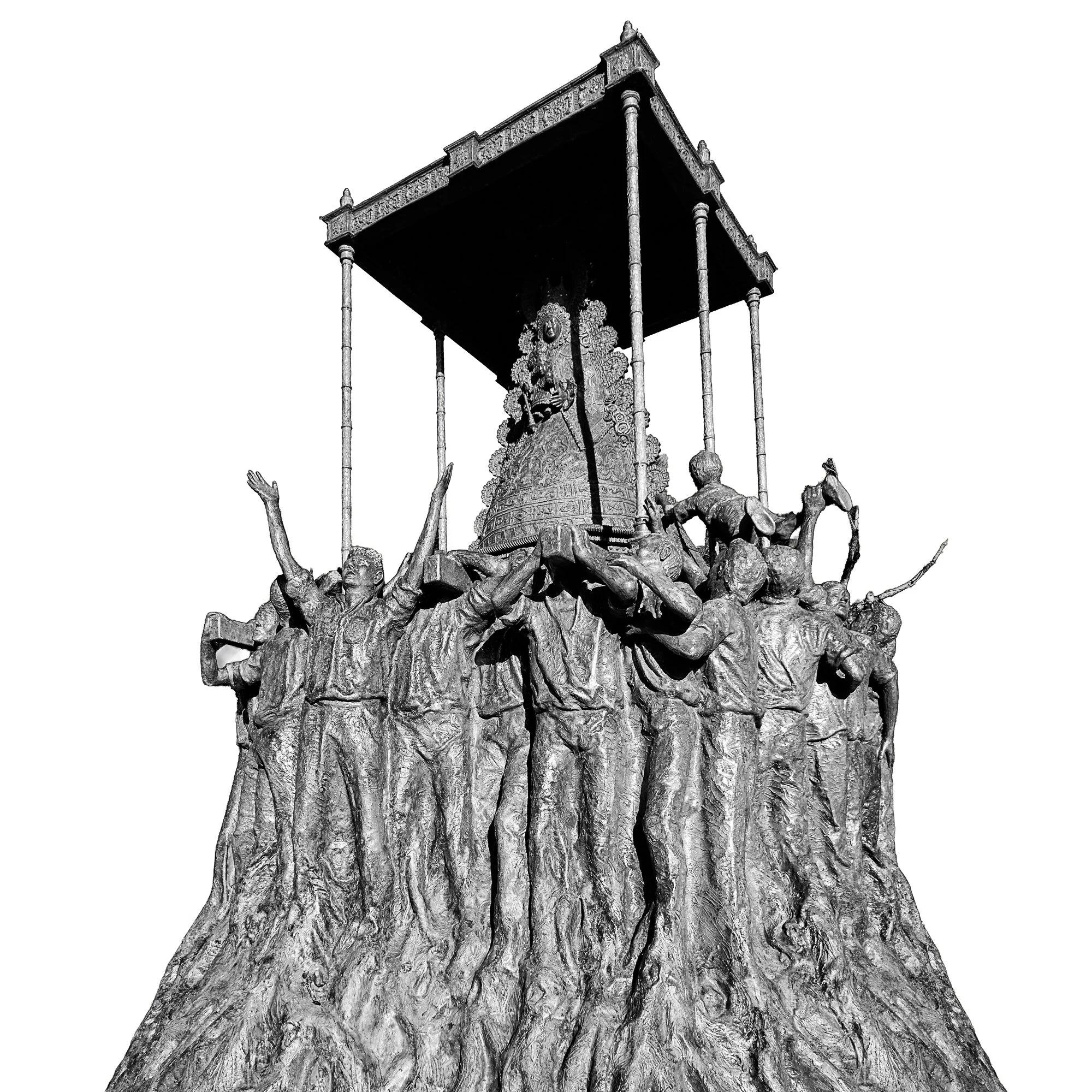
The Monumento a la Virgen del Rocío in Sanlúcar de Barrameda (Spain).
In Sanlúcar de Barrameda, not far from the river and the routes pilgrims have followed for centuries, stands the Monumento a la Virgen del Rocío. At first glance it is a familiar Andalusian sight: a statue of the Virgin, enclosed by an elegant iron fence. But look more closely, and the fence becomes the real focus. Small cards, ribbons, photographs and holy images are tied to it—quiet traces left behind by people who stopped here for a moment.
To understand this place, you have to look beyond Sanlúcar to El Rocío, one of Spain’s most powerful centres of Marian devotion. Each year, during the great pilgrimage, thousands travel there on foot, on horseback, or in decorated wagons. Many come as part of religious brotherhoods—hermandades—that link towns across Andalusia to the shrine. Sanlúcar has long been part of this network. Its own brotherhood has, for generations, joined the journey, carrying with it the traditions and emotions of the city.
The monument is a local expression of that wider world. It brings a trace of El Rocío into the everyday life of Sanlúcar—a reminder that devotion is not limited to the pilgrimage itself. Yet what makes this place distinctive is not only the statue, but what gathers around it.
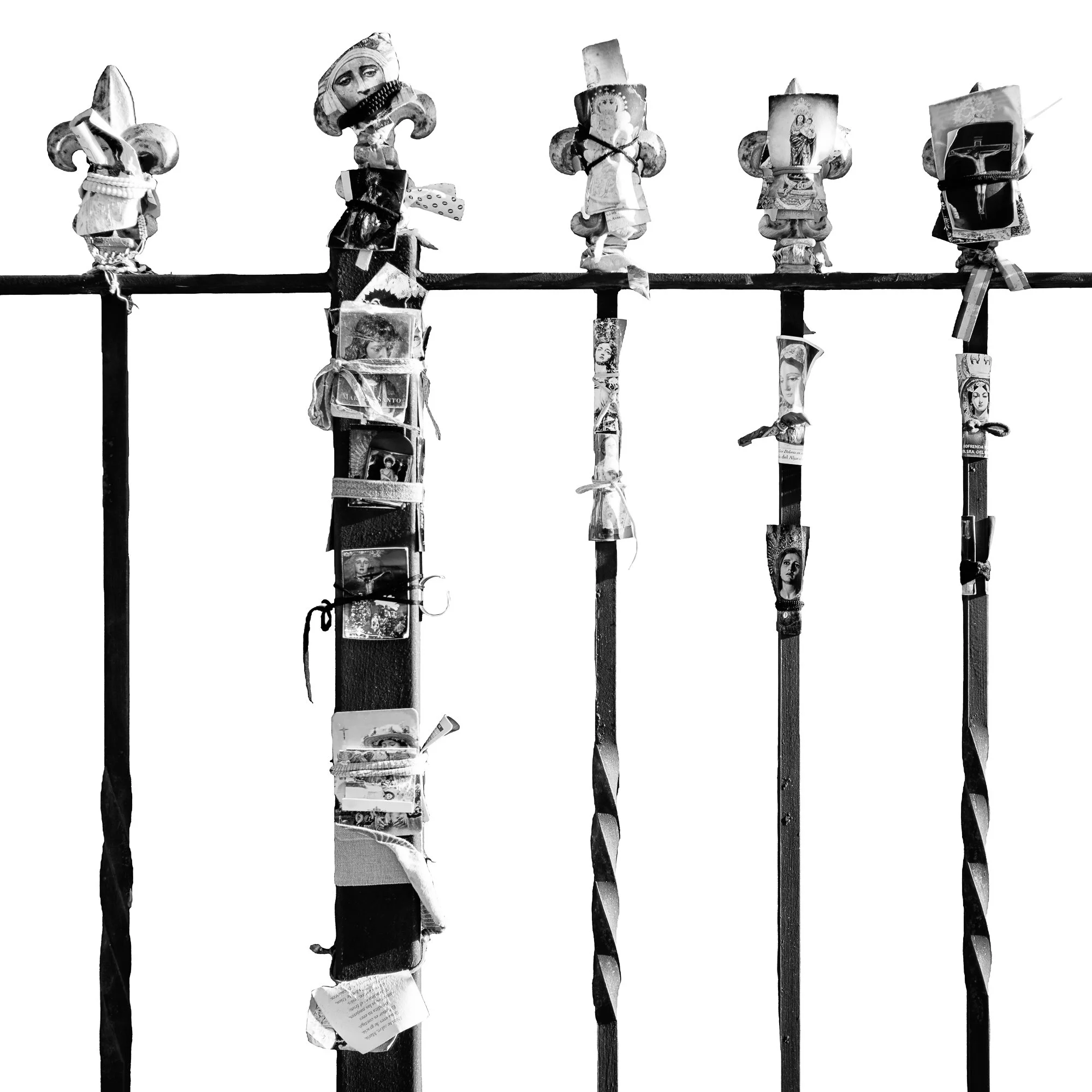
The fence with ex-voto’s around the Monumento a la Virgen del Rocío in Sanlúcar de Barrameda (Spain).
In Andalusia, iron grilles—rejas—often mark the boundary of a sacred space. They separate, but also invite. Here, that boundary becomes a point of contact. People tie small objects to the fence: a photograph, a ribbon, a prayer card, sometimes just a handwritten note. These are a form of ex-voto, offerings made in hope or gratitude. Unlike the traditional silver objects or painted panels found in churches, these are simple, temporary, and deeply personal. As they accumulate, fade, and are replaced, they give the monument a quiet, changing life of its own.
Standing by the fence, you sense that connection. The great pilgrimage to El Rocío is collective, almost overwhelming in scale. Here in Sanlúcar, it is reduced to a quieter gesture: a ribbon tied, a card left behind. And in that small act, the distance between the city and El Rocío seems to shrink.