spain

The Punic Wars: How Carthage Rebuilt Its Power in Iberia

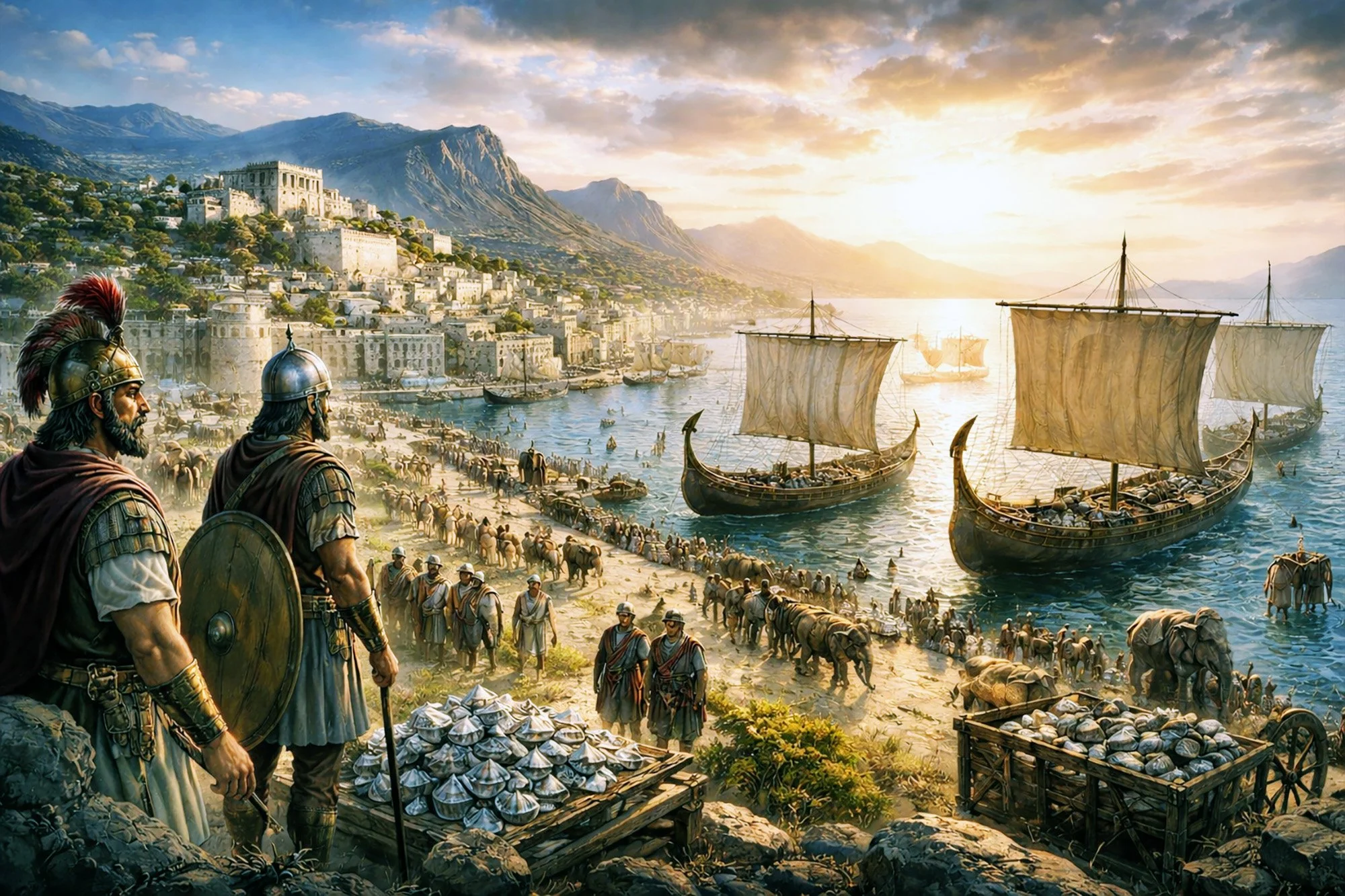
Image created with AI

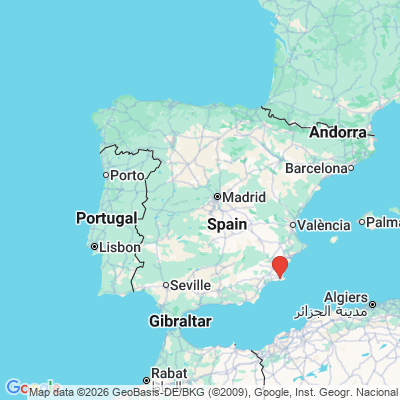
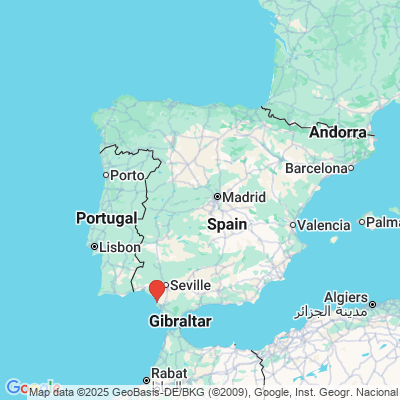
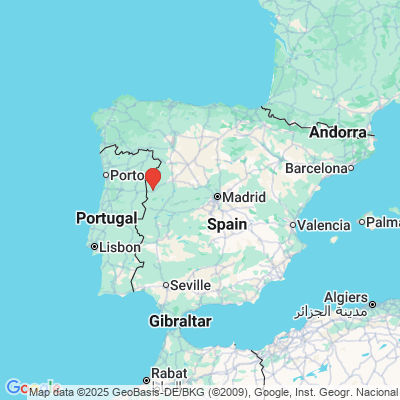
Travel today through southern and eastern Spain—from Cádiz to Cartagena, and along the coast near Alicante—and you are moving through landscapes that once played a central role in one of the greatest conflicts of the ancient Mediterranean.

Between 264 and 146 BC, Rome and Carthage fought three major conflicts known as the Punic Wars. These wars determined who would dominate the Mediterranean world for centuries. Yet one of the most important chapters of this story unfolded not in Italy or North Africa, but in Iberia, along the coasts and mining regions of what is now Spain.

The First Punic War

The rivalry began in 264 BC on the island of Sicily. Rome intervened in a local dispute and soon found itself at war with Carthage, the dominant maritime power of the western Mediterranean.

The conflict lasted 23 years. Rome, originally a land power, even built massive fleets to challenge Carthage at sea. In 241 BC, Rome finally won, forcing Carthage to surrender Sicily and pay a heavy indemnity. Soon afterwards Rome seized Sardinia, leaving Carthage weakened and humiliated. The First Punic War

But Carthage was not finished.

Turning to Iberia

After the war the city nearly collapsed during a rebellion of unpaid mercenaries. The general who saved it was Hamilcar Barca, a commander who had fought Rome in Sicily.

Hamilcar understood that if Carthage ever wanted to challenge Rome again, it needed new resources—especially money and soldiers. He found both in Iberia.

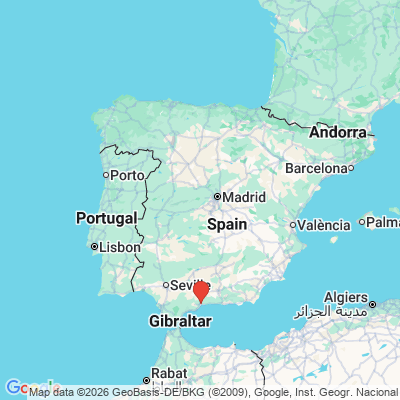
Phoenician traders had long been active along the Iberian coast. One of their oldest settlements was Gadir, modern Cádiz, founded centuries earlier as a trading port linking the Atlantic and Mediterranean. But in the 230s BC, Hamilcar began transforming Carthaginian influence in Spain into a real territorial power.

The region’s silver mines filled Carthage’s treasury, and Iberian warriors joined its armies.

Carthaginian Cities in Spain

Hamilcar’s successors continued this expansion. His son-in-law Hasdrubal the Fair founded a new Carthaginian capital in Iberia: Carthago Nova, today’s Cartagena.

The city had an exceptional natural harbor and lay close to the mining districts that financed Carthage’s growing power.

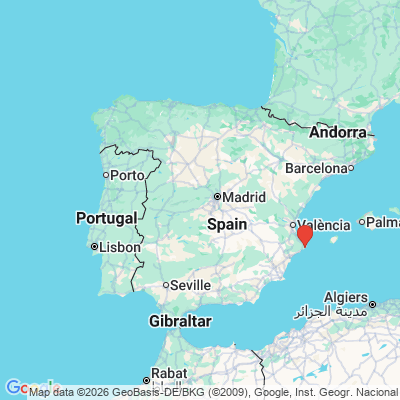
Further north along the coast lay Akra Leuke, usually identified with the area around modern Alicante. According to ancient sources, Hamilcar himself established a Carthaginian base here during his early campaigns in Iberia.

Together with Cádiz and Cartagena, these cities formed the backbone of Carthage’s Spanish power.

Among the young men growing up in this frontier world was Hamilcar’s son: Hannibal.

Hannibal’s Iberian War Machine

Hannibal spent much of his youth in Iberia, surrounded by soldiers and tribal allies from across the peninsula. The armies he would later command included large numbers of Iberian warriors, and Spain’s silver financed his campaigns.

In 218 BC, at the start of the Second Punic War, Hannibal marched from Carthaginian Spain across the Pyrenees and eventually over the Alps into Italy — accompanied, according to ancient accounts, by African forest elephants.

For years he defeated Roman armies, winning famous victories such as Cannae in 216 BC.

Yet even Hannibal could not destroy Rome.

Why Rome Survived

Rome’s strength lay in its political and military system. Roman commanders rotated regularly, creating a steady supply of competent leaders rather than relying on a single genius.

Even more important was Rome’s network of allies across Italy. These communities supplied vast numbers of soldiers, allowing Rome to rebuild its armies again and again.

Over time this system wore Hannibal down. Rome eventually defeated Carthage in 202 BC, and in 146 BC the city itself was destroyed.

Iberia’s Forgotten Role

Today the Punic Wars are often remembered for Hannibal’s dramatic march across the Alps.

But the deeper story runs through Spain.

From the ancient Phoenician port of Cádiz, to the Carthaginian stronghold of Cartagena, and the early military base near Alicante, Iberia became the place where Carthage rebuilt its power after defeat.

It was here that the silver, soldiers, and strategy emerged that allowed Hannibal to challenge Rome—and nearly change the course of Mediterranean history.
Stone Sentinels of the Pirate Coast (Costa Blanca, Spain)

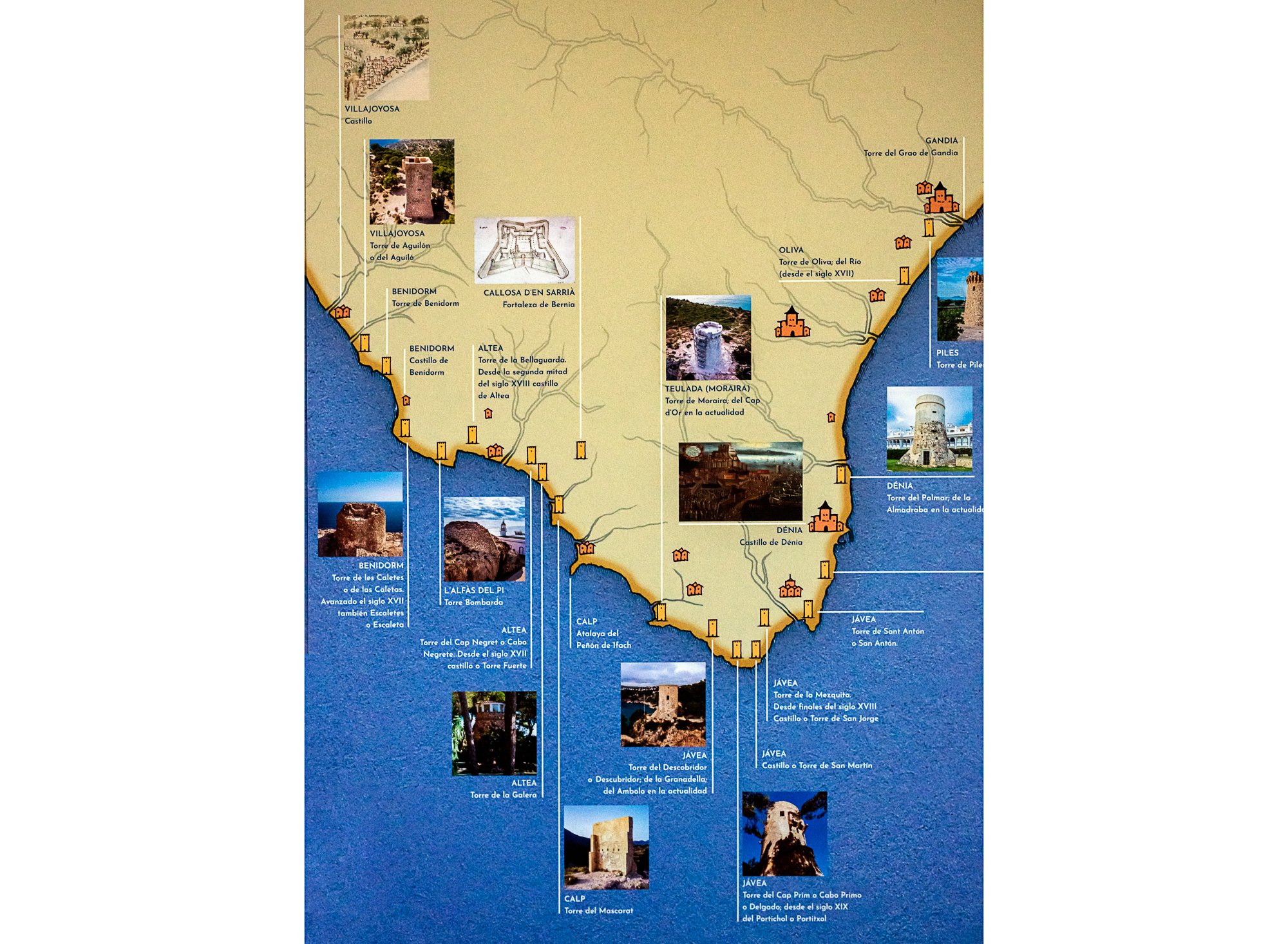
Part of a map showing the coastline of the Costa Blanca with its watchtowers. (Seen at the Museu de la Mar in Denia.)

Standing on the cliffs of the Costa Blanca today, the old stone watchtowers look quiet and almost decorative. Many hikers pass them without realizing that they once formed part of a carefully designed defensive network. In the sixteenth century the Valencian coast was not a holiday destination. It was a frontier.

Across the Mediterranean lay the ports of North Africa where Barbary corsairs operated. Their ships appeared suddenly on the horizon, raiding coastal towns, looting houses and carrying captives away to slave markets. Communities along the Spanish Mediterranean lived with the constant fear that the next sail might bring disaster.

This fear was based on repeated attacks.

One of the most dramatic occurred in 1550, when the Ottoman corsair Turgut Reis (Dragut) attacked Cullera, south of Valencia. Corsair ships landed suddenly, overwhelmed the town’s defenses, and looted the settlement. Many inhabitants were captured and taken across the Mediterranean to be sold as slaves. The attack shocked the region and reinforced the urgency of improving coastal defenses.

Further south, Villajoyosa faced a similar threat in 1538, when Barbary corsairs attempted to land and plunder the town. The inhabitants managed to resist the attack, but the event revealed how vulnerable the coast was to sudden amphibious raids. It is still remembered today in the town’s Moros y Cristianos festival.

These raids were part of a wider Mediterranean conflict. Corsair fleets connected to the Ottoman world — commanded by figures such as Hayreddin Barbarossa and his lieutenants — regularly attacked Christian coasts. Their goal was often not conquest but profit: prisoners, livestock, goods and ransom.

Spain’s response was both practical and surprisingly modern.

In 1554, the Italian military engineer Giovanni Battista Antonelli travelled more than 500 kilometers along the Valencian coast with the viceroy of the kingdom. After inspecting the shoreline he proposed a coordinated defensive system built around roughly fifty watchtowers positioned on cliffs and strategic headlands.

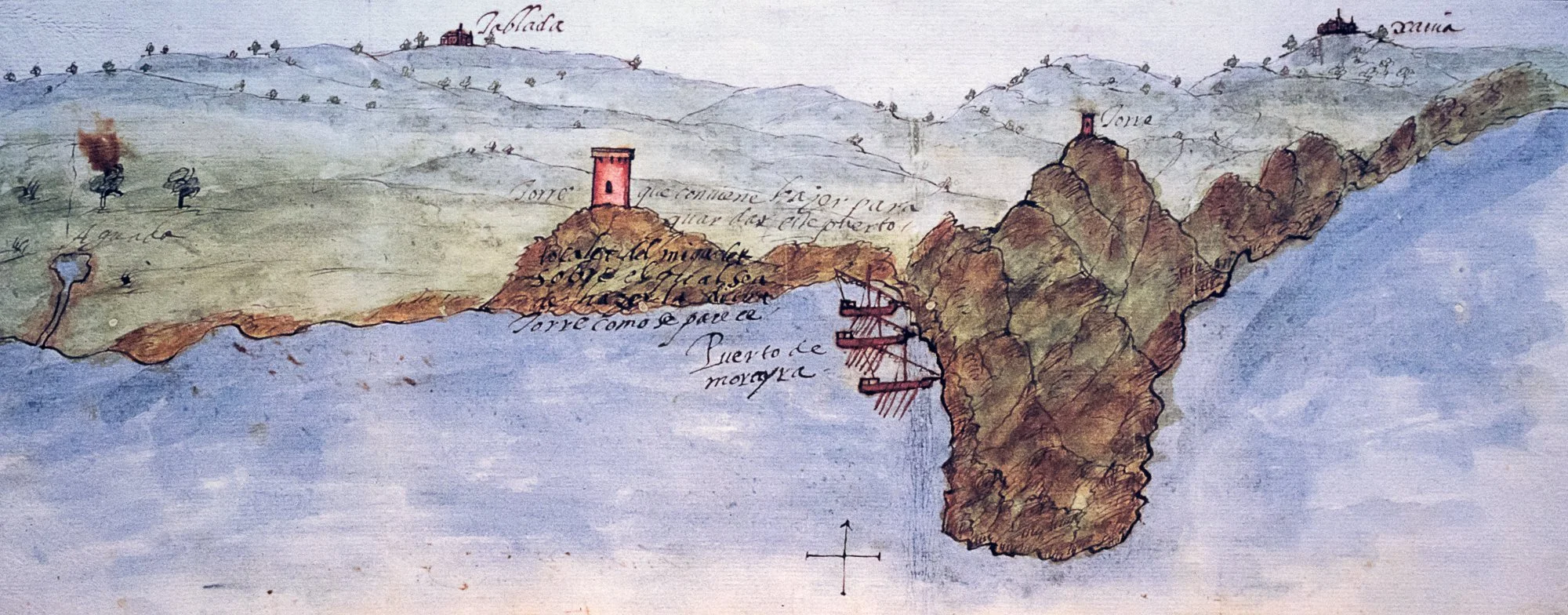
Drawing of the port of Moraira and a proposed watchtower for Moraira and the island of Benidorm Island, created in 1596 by the military engineer Cristóbal Antonelli. The document illustrates the planning of the coastal watchtower network built to defend the Kingdom of Valencia against Mediterranean corsair raids.

The concept was simple but effective.

Each tower had a clear line of sight to the next. When lookouts spotted suspicious ships, they lit signal fires or raised smoke signals. The warning travelled rapidly along the coast, alerting inland towns and castles. Within minutes an entire stretch of coastline could prepare for an attack.

What appear today as isolated ruins were once parts of a coastal communication network.

The project reflected the ambitions of Philip II, who invested heavily in mapping and documenting his territories. Engineers, surveyors and cartographers worked together to understand the landscape and strengthen its defenses. One of the first maps to show the system was produced in 1584 by the Flemish cartographer Abraham Ortelius, depicting the Kingdom of Valencia and its chain of coastal towers.

The towers themselves varied in shape. Some had circular bases with sloping walls designed to deflect cannon fire, while others were square. Most housed a small garrison and a signal platform from which guards scanned the horizon.

Financing such a system required substantial resources. The Crown coordinated the project, but much of the funding came from regional revenues and local communities. In Valencia, part of the money came from taxes linked to the thriving silk industry, whose trade enriched the region during the same period.

Over time the chain extended along much of the Valencian shoreline. Later maps from the seventeenth and eighteenth centuries still show more than fifty towers, demonstrating how long the system remained important.

Today many of these towers survive, scattered between modern resorts, pine forests and rocky headlands. Some have been restored, others stand as weathered fragments above the sea.

Seen from the cliffs today they may look like lonely monuments. In reality they were once the eyes and ears of an entire coastline — silent sentinels guarding a Mediterranean that was, for centuries, a pirate frontier.

The Giant Clay Jars of Valdepeñas (Spain)

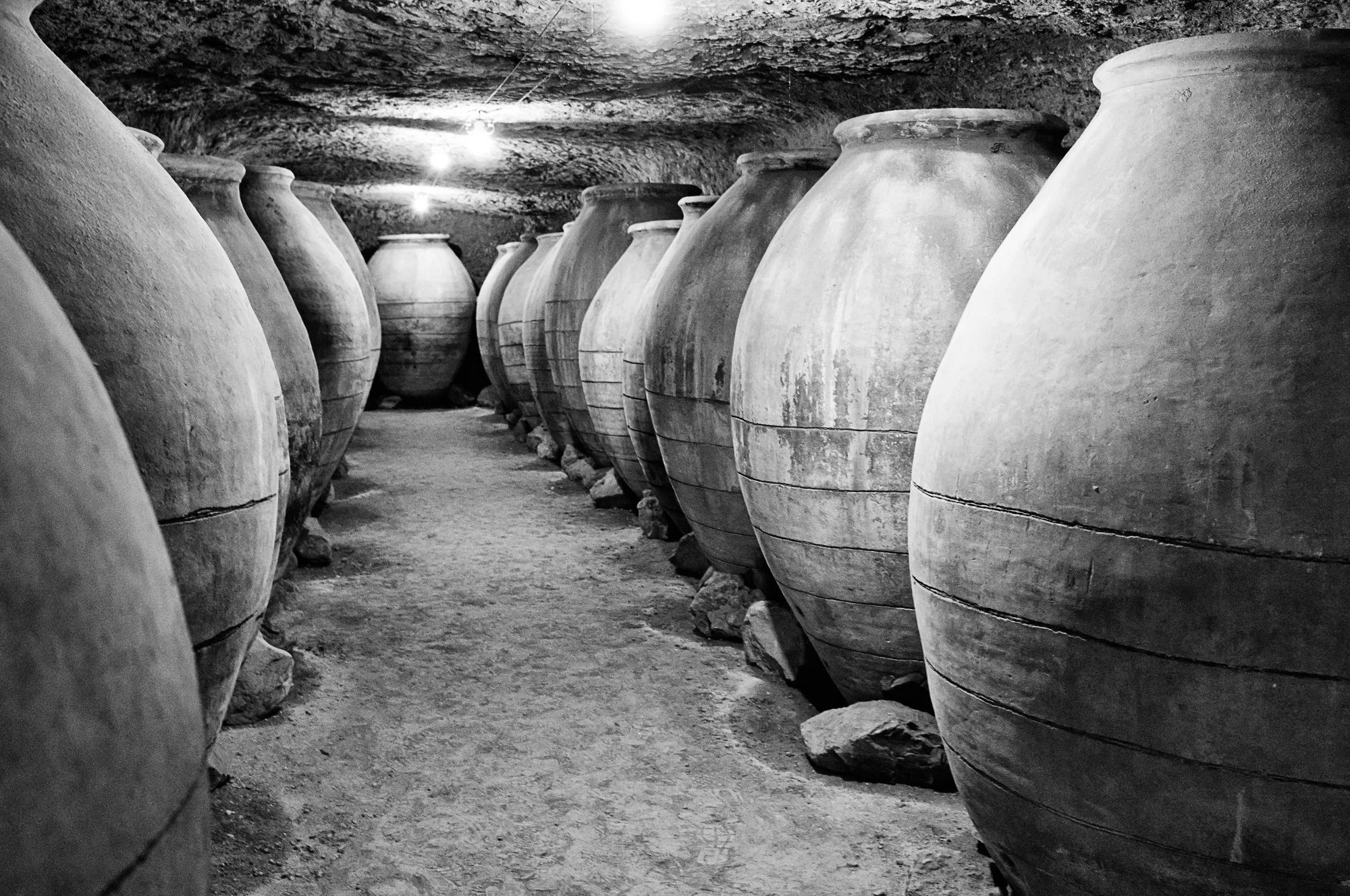
Rows of traditional clay tinajas in an underground cellar in Valdepeñas.

If you descend into one of the old wine cellars of Valdepeñas, you may find yourself walking through a silent forest of giant clay vessels. These monumental jars, called tinajas, once formed the heart of the region’s winemaking tradition. Some are taller than a person and can hold thousands of litres of wine.

Wine has been produced in this part of La Mancha for a very long time. Archaeological evidence suggests that vines were already cultivated here by Iberian peoples and later by the Romans. The written history of the town itself begins in 1243, when several small settlements in the “Valley of Stones” were united under the name Valdepeñas—a place already known for its wine culture.

By the early modern period, the region had become one of the major wine suppliers of central Spain. When Madrid became the royal capital in the 16th century, demand for wine increased dramatically, and the vineyards around Valdepeñas expanded to meet the needs of the growing city.

In those centuries, the wine was not stored in small oak barrels as we often imagine today. Instead, it was kept in enormous earthenware vats like the tinajas seen in the photo. Some traditional vessels held more than a thousand litres and were sometimes partly buried in the ground to keep the temperature stable during fermentation and storage.

The cellars themselves were often carved into the soft limestone beneath the town. In the cool darkness, rows of these giant jars stored the harvest of the surrounding vineyards. Wine could ferment slowly, settle naturally, and remain stable for long periods before being transported to other cities.

In the 19th century Valdepeñas entered a new phase. Railways connected the town to the rest of Spain, and large quantities of wine were shipped across the country and even overseas. The town became one of Spain’s best-known wine centres, a reputation that continues today with its protected designation of origin (D.O. Valdepeñas).

Modern wineries now rely mostly on stainless-steel tanks and smaller oak barrels. Yet many historic bodegas still preserve their old tinajas. Walking between them is like stepping back into an earlier chapter of European wine history—when wine was produced and stored on a monumental scale beneath the streets of Valdepeñas.

When Farming Reached Iberia - the Neolithic transition

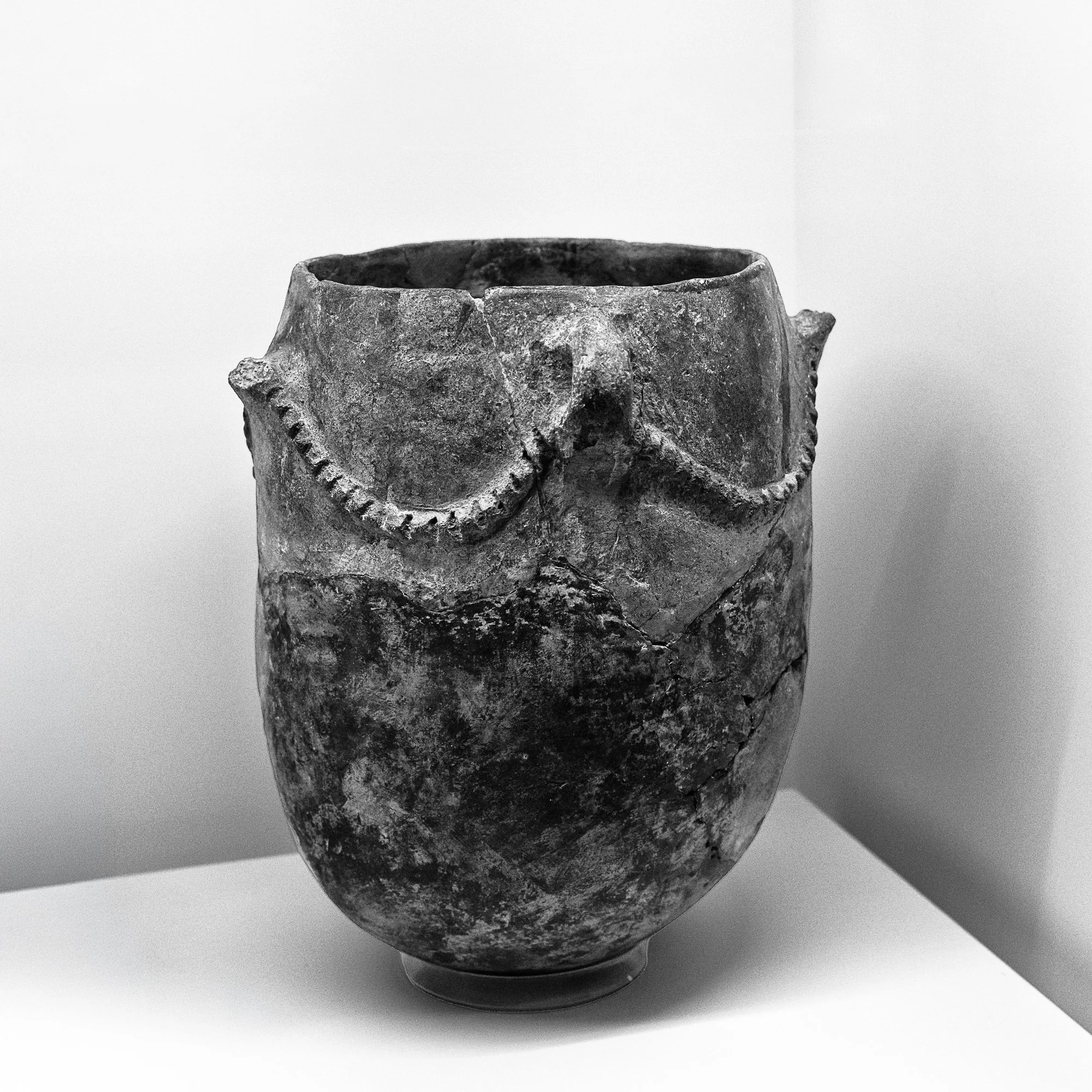
Neolithic decorated clay vessel (c. 5500–3500 BC) from the Cueva del Higuerón near Rincón de la Victoria (Málaga), now displayed in the Museo de Málaga. Hand-made and decorated with impressed patterns, pots like this belong to the earliest farming communities of the Iberian Peninsula.

Around 7,500–5,500 years ago, life on the Iberian Peninsula began to change in a profound way. For thousands of years people had lived as hunter-gatherers, moving through landscapes rich in animals, plants and marine resources. But during the sixth millennium BC, new communities appeared along the Mediterranean coast bringing something revolutionary: farming and herding.

Archaeologists call this moment the Neolithic transition.

The Arrival of the First Farmers

The first Neolithic communities of Iberia cultivated crops such as wheat and barley and kept sheep and goats. They used polished stone tools, flint sickles for harvesting, and—perhaps most visibly—ceramic vessels. These early farming groups did not appear everywhere at once. The earliest sites are often found along the Mediterranean coast, especially in caves and rock shelters. From these coastal footholds, farming gradually spread inland.

Archaeologists believe these communities likely arrived by sea from other parts of the western Mediterranean, possibly from the Italian or Ligurian coasts. Another possibility, still debated, is that some groups reached southern Iberia from North Africa across the Strait of Gibraltar. Wherever they came from, their arrival created one of the most important cultural encounters in European prehistory: the meeting between incoming farmers and local hunter-gatherers.

A Landscape of Caves and Coasts

Southern Iberia—especially the coast of Málaga and Granada—is rich in caves that preserve traces of this transition. These caves were often occupied repeatedly for thousands of years.

At sites along the Andalusian coast, archaeological layers show the gradual shift from Mesolithic hunter-gatherers to Early Neolithic farmers, including pottery fragments, stone tools, shell ornaments, and remains of domesticated animals.

Even after farming arrived, people continued to exploit the sea. Shellfish, fish, and other marine resources remained important in daily life along the Mediterranean coast.

In other words, the Neolithic did not replace earlier traditions overnight—it blended with them.

A Pot from the Beginning of Farming

A quiet witness to this transformation can be seen today in the Museo de Málaga. The clay vessel shown here was found in the Cueva del Higuerón, a cave near Rincón de la Victoria, just east of Málaga. It dates to the Neolithic period between about 7,500 and 5,500 years ago. At first glance it may look simple: a hand-made clay pot with decorative impressions along its rim. But this object tells an important story. Pottery like this is one of the clearest signs that a community had entered the Neolithic world. Clay vessels allowed people to store grain, cook food, and transport liquids, making them closely connected to farming life.

Unlike modern ceramics, Neolithic pots were made without a potter’s wheel. The clay was shaped by hand, decorated with simple impressions or incised patterns, and fired in basic kilns or open hearths. Each pot was therefore unique. The decorative band around the rim of this vessel—made by pressing tools or cords into the wet clay—was not strictly necessary. It was a human touch: a moment where utility became design.

A Quiet Revolution

When we look at objects like this pot, we are seeing the material traces of one of the biggest revolutions in human history.
The introduction of farming meant:

  • more permanent settlements

  • new technologies such as pottery

  • domesticated animals and crops

  • new social structures and ways of organizing land.

Within a few centuries, these early farmers transformed landscapes across the Iberian Peninsula.

Yet the people who made this vessel were still close to older traditions. They lived in caves near the sea, gathered shellfish, hunted animals, and moved through familiar territories that had been used by hunter-gatherers long before them.

This clay pot, now resting in a museum display case, therefore stands at the meeting point of two worlds: the last hunter-gatherers and the first farmers of Iberia.

The Four Troublesome Heads by Georges Méliès

While visiting the Museo Picasso Málaga, we unexpectedly encountered a small piece of film history: Un Homme de Tête (1898) by the French filmmaker and magician Georges Méliès.

The film lasts barely a minute. Méliès sits at a table, removes his own head, places it on the table, and then calmly grows a new one. Soon several identical heads are singing and moving next to each other like a strange little choir.

For audiences in 1898, this must have looked like pure magic. In reality Méliès used simple but ingenious techniques such as multiple exposures and stop-camera editing—methods that made the camera itself a magician’s tool.

Seeing this playful experiment in the Picasso Museum makes sense in an unexpected way. Artists of the early twentieth century were fascinated by new ways of showing reality. Just as Méliès multiplied his own head on screen, Pablo Picasso would later fragment faces and perspectives in his paintings.

Different media, but the same spirit: curiosity, experimentation, and the joy of discovering what images can do.

And all of it captured in a film that lasts barely a minute.

Cancho Roano: A Sacred Complex in Iron Age Spain

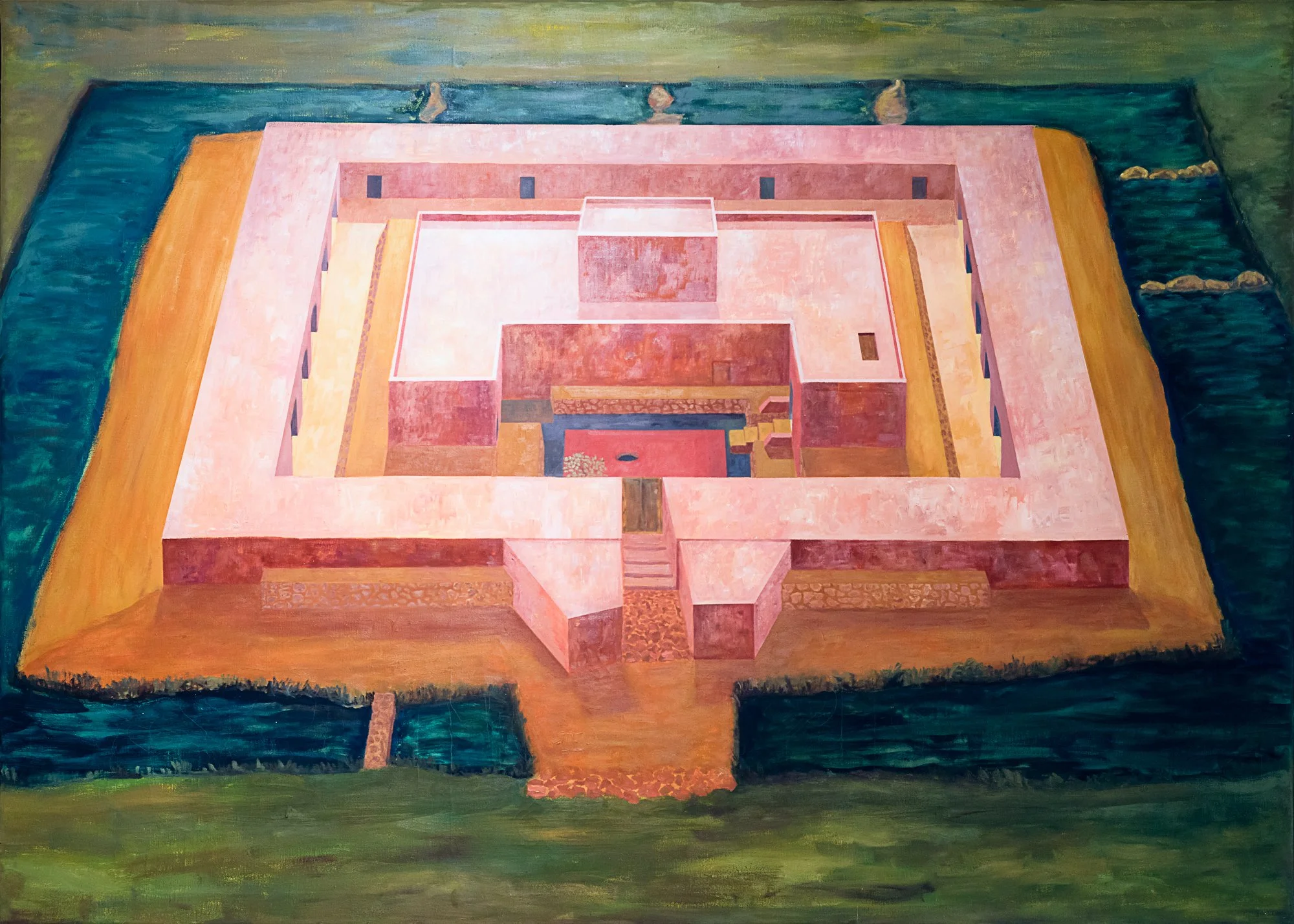
An artist impression of Cancho Roano.

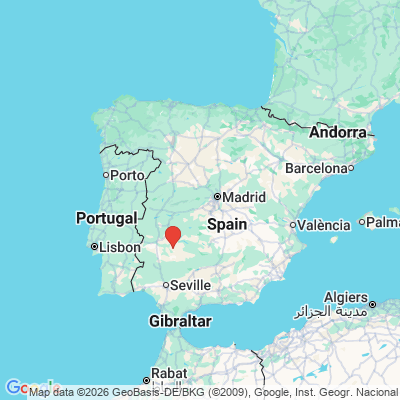
In the quiet countryside of Extremadura, far from Spain’s main tourist routes, lies one of the most intriguing archaeological sites of the Iberian Peninsula: Cancho Roano.

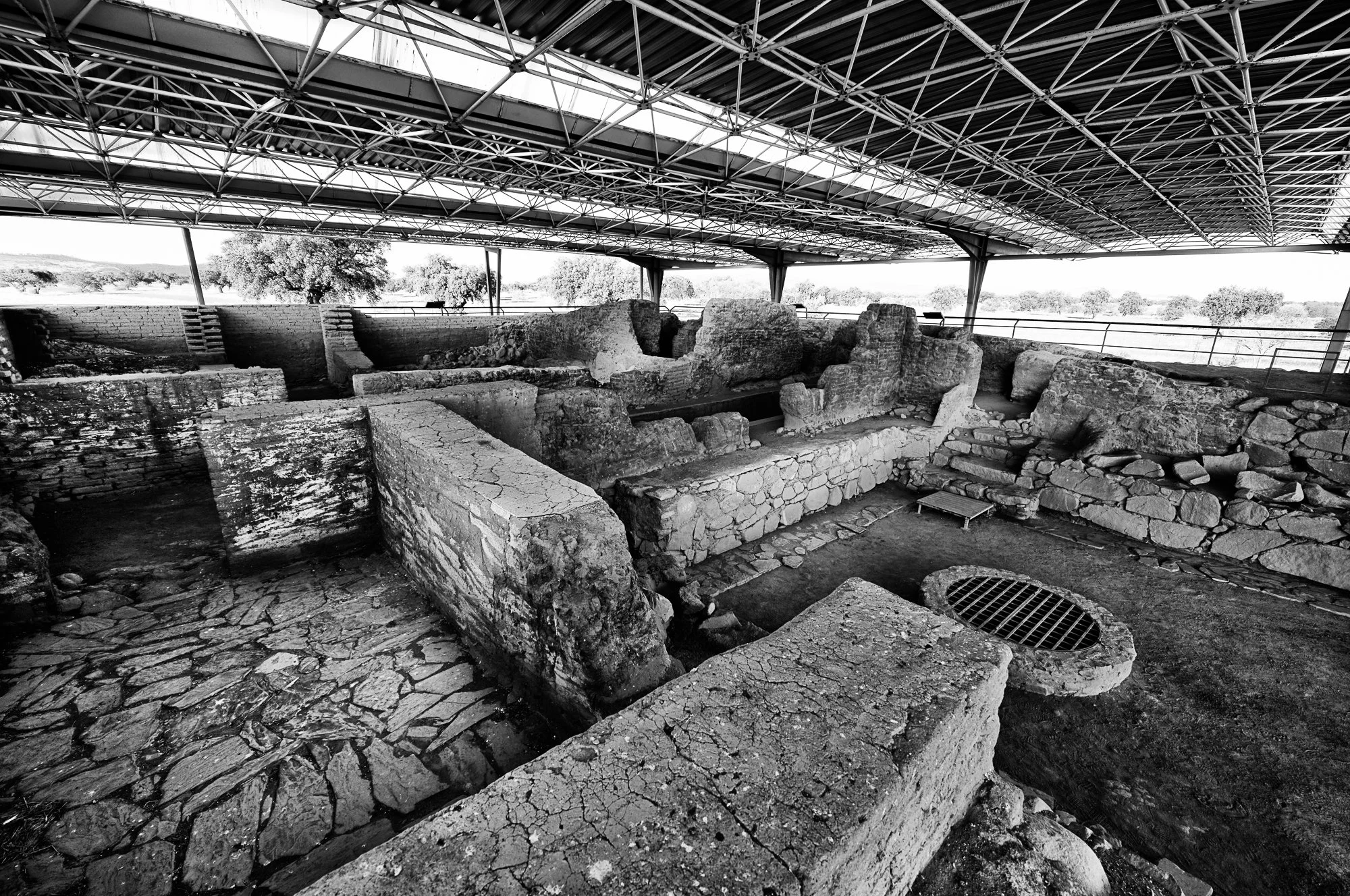
At first glance the place looks modest—low walls, foundations, and a protective structure over the excavation. Yet beneath this calm landscape lies the story of a sophisticated Iron Age society that was deeply connected to the wider Mediterranean world.

Cancho Roano is not just an archaeological site. It is one of the most fascinating puzzles of prehistoric Spain.

An Accidental Discovery

The site came to light almost by accident.

For a long time a low mound near the town of Zalamea de la Serena was believed to be nothing more than the remains of an old agricultural structure. In the 1970s, when the landowner tried to level the mound for farming, workers encountered thick walls of adobe and stone, together with ancient objects.

Archaeologists quickly realized that the mound concealed something extraordinary. Excavations began in 1978 and soon revealed a large and carefully planned building hidden inside the hill.

A Monument from the Iron Age

The complex dates roughly between the 6th and 4th centuries BCE, during the Iron Age, centuries before the Romans arrived in Spain.

At that time the Iberian Peninsula was home to many different cultures. Communities in the southwest were linked through trade to Phoenician merchants from the eastern Mediterranean and later to Greek traders. Through these contacts luxury goods, new technologies, and religious ideas spread far inland.

Cancho Roano seems to belong to this world of exchange and cultural mixing.

The archeological site of Cancho Roana.

Palace, Sanctuary, or Both?

The building itself is surprisingly sophisticated.

Constructed on a stone platform and surrounded by a wide moat, the complex is organized around a central courtyard. Rows of small rooms line the sides of the building. Archaeologists found storage spaces, working areas, and rooms that appear to have had ritual functions.

The objects discovered there are remarkable: bronze vessels, imported Greek pottery, ivory pieces, jewelry, and tools related to textile production.

Because of this mixture of finds, archaeologists still debate the exact function of the site. Some see it as a sanctuary, a sacred place where rituals and offerings were made. Others interpret it as the residence of a local elite, a rural center of power that controlled agricultural production and trade.

Many scholars today think it may have been both: a palace-sanctuary, where political authority and religious practice were closely linked.

A Mediterranean World in Western Spain

One of the most fascinating aspects of Cancho Roano is how strongly it reflects connections with the wider Mediterranean.

The architecture shows similarities with sacred buildings found in places such as Etruria in Italy or Phoenician sites around the Mediterranean. Imported ceramics and luxury goods confirm that the community living here was not isolated. Instead, it was part of a network of exchange stretching across the ancient world.

Even in this rural corner of Extremadura, people were connected to distant cultures and ideas.

A Deliberate End

The story of Cancho Roano ends in a mysterious way.

Around the late 5th century BCE the building was deliberately destroyed. Before abandoning the site, its occupants carefully burned parts of the complex and then sealed the structure beneath layers of earth.

This does not appear to have been the result of war or accident. Instead, archaeologists believe it was a ritual closure—a symbolic act marking the end of the sanctuary’s life.

Why this happened remains unknown.

Why Cancho Roano Matters

Cancho Roano is unique in western Europe. Few places offer such a clear glimpse into the complex societies that existed in Iberia before the Roman conquest.

The site shows that these communities built monumental architecture, accumulated wealth, and maintained connections with the Mediterranean world. It reveals a society where religion, politics, and trade were closely intertwined.

Standing among the quiet ruins today, it is easy to forget how vibrant this place once was. Yet Cancho Roano reminds us that long before Rome arrived, southwestern Spain was already part of a dynamic and interconnected ancient world.

Further Reading

Sebastián Celestino Pérez & Javier Jiménez Ávila — El Palacio-Santuario de Cancho Roano
José María Blázquez Martínez — El Santuario de Cancho Roano
Javier Jiménez Ávila — Cancho Roano y la Protohistoria de Extremadura
Manuel Bendala Galán — Protohistoria de la Península Ibérica

A Necklace from 5000 Years Ago

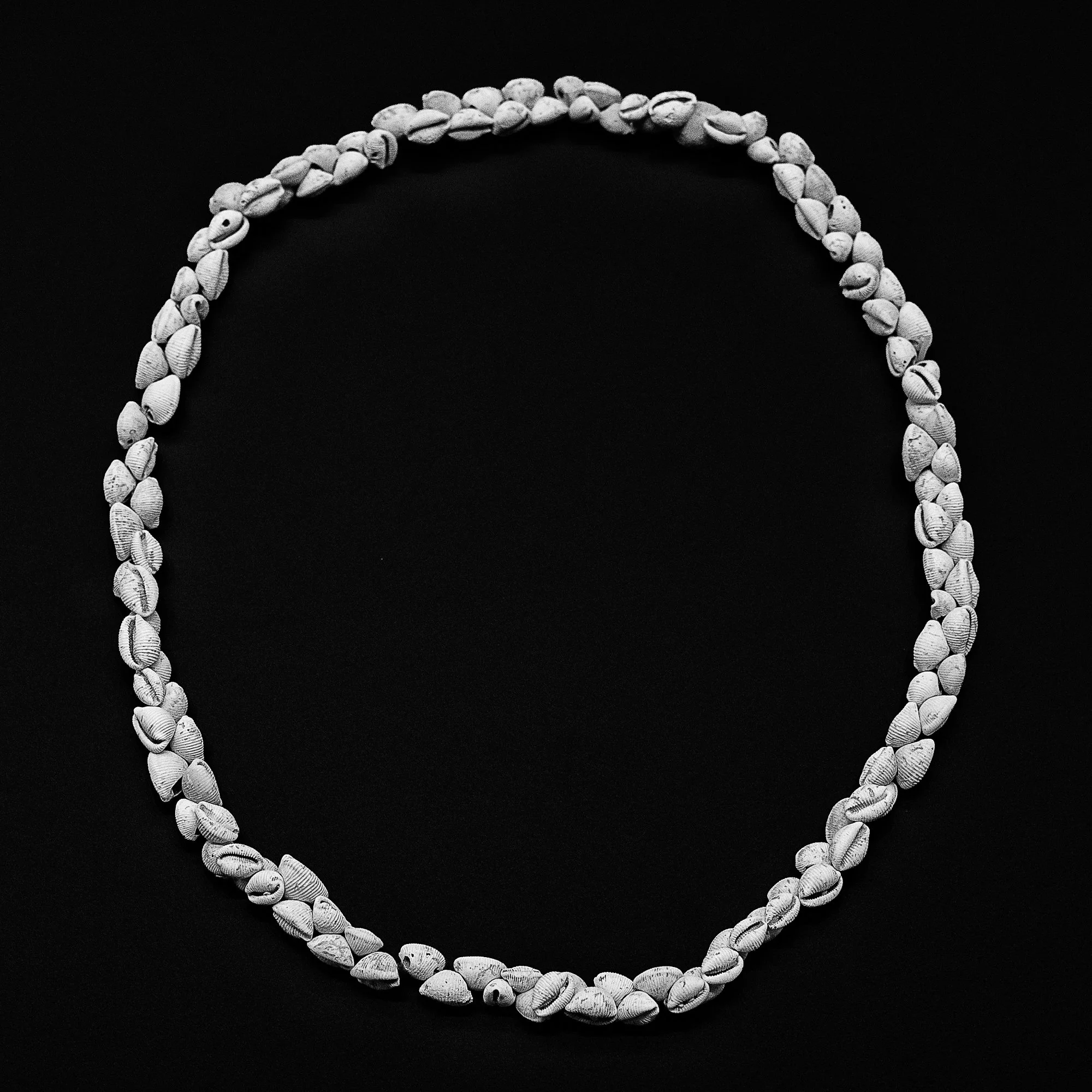
Shell necklace from the Early Copper Age (c. 3000 BC), made from pierced seashells and discovered in the dolmen of Cuesta de los Almendrillos near Alozaina (Málaga). Now displayed in the Museo de Málaga.

In a quiet display case in the Museo de Málaga lies something unexpectedly familiar: a necklace made entirely of small seashells. At first glance it looks almost modern — the kind of necklace you might see today in a seaside market.

Yet this one is about 5,000 years old.

The necklace was found in the dolmen of Cuesta de los Almendrillos, near Alozaina, and dates to the Early Copper Age. Each shell was carefully pierced and strung together into a long loop. Some are smooth, some still show their fine natural ridges, but together they form something unmistakable: jewelry.

And that is the first surprise.

When we look at this necklace, we are not looking at something strange from a distant prehistoric world. We are looking at something that would not feel out of place today. Walk through a coastal market anywhere around the Mediterranean and you will find shell necklaces that look remarkably similar.

Five thousand years have passed — yet the idea is exactly the same.

A Necklace Worn in Life

Objects like this often come from megalithic tombs, collective burial monuments built by early farming communities across Iberia. The dolmen at Cuesta de los Almendrillos was one such place. People were buried there together with objects that mattered to them: tools, pottery, and sometimes personal ornaments.

But a necklace like this was almost certainly not made for the tomb. It was worn in life.

Someone once gathered these shells, pierced them one by one, and threaded them onto a cord. Someone wore this around their neck — perhaps daily, perhaps on special occasions. Shells also hint at connections: they come from the sea, and inland communities often valued them precisely because they traveled from elsewhere.

The Familiarity of the Past

Standing in front of the display in the Museo de Málaga, the realization slowly settles in.

Humans still collect beautiful things from the sea.
We still pierce them.
We still string them together.
We still wear them.

Materials change — gold, silver, glass, plastic — but the impulse is identical. Jewelry is one of the most persistent human habits, appearing in cultures across the world and deep in the archaeological record.

This simple necklace reminds us that the people of the Copper Age were not so different from us.

Five thousand years ago, somewhere in southern Iberia, someone held a handful of shells and had the same simple thought many people have had since:

These would make a beautiful necklace.

Streets that made a city: the Decumanus Maximus and Cardo Salvius of Roman Cartagena

When we think of Roman cities, we tend to think in monuments. But Rome was built first on streets.

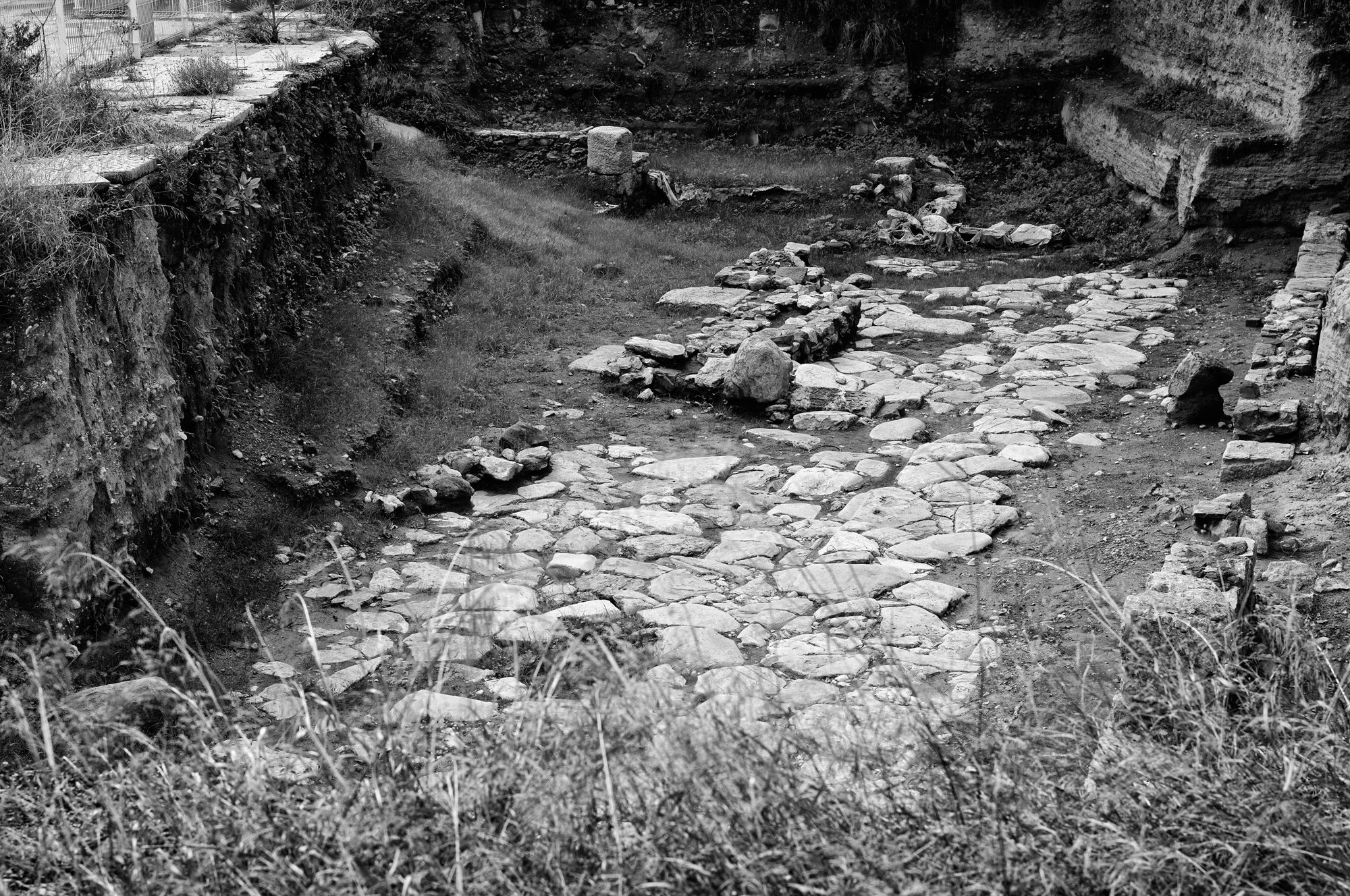
In ancient Carthago Nova — today’s Cartagena — two main axes shaped the city: the Decumanus Maximus, running east to west, and the Cardo Salvius, running north to south. Together, they organised movement, power and daily life. Before entering a theatre or a forum, you were already inside Rome simply by walking these roads.

The Decumanus Maxima: an urban spine

The Decumanus Maximus in Cartagena.

The Decumanus Maximus was Cartagena’s main east–west artery. Adapted to a hilly landscape and a busy harbour, it was not a ceremonial boulevard but a working street. Shops opened onto it, carts passed through it, conversations and transactions filled it. This was Rome as routine rather than spectacle.

The Cardo Salvius: life at street level

The Cardo Salvius in Cartagena.

Crossing the decumanus was the Cardo Salvius, the city’s principal north–south street. Its name hints at importance and local pride. Lined with houses, workshops and public buildings, it connected residential areas with the civic and economic heart of the city. This was a street designed for presence, not speed.

Roman Cartagena (Carthago Nova) you can still walk today

What makes Cartagena special is that these streets are still visible. Near Parque de El Lago, sections of both the decumanus and the Cardo Salvius lie exposed at their original level. Wheel ruts, paving stones and drainage lines remain clearly readable. Here, Rome is not imagined — it is encountered underfoot.

Where streets became a city

The intersection of decumanus and cardo was the core of Roman Cartagena. From this logic flowed the forum, the theatre and other monuments. Streets came first; buildings followed.

Rome did not rule only through emperors and armies. It ruled through infrastructure, repetition and familiarity. In Cartagena, that logic is still written in stone.

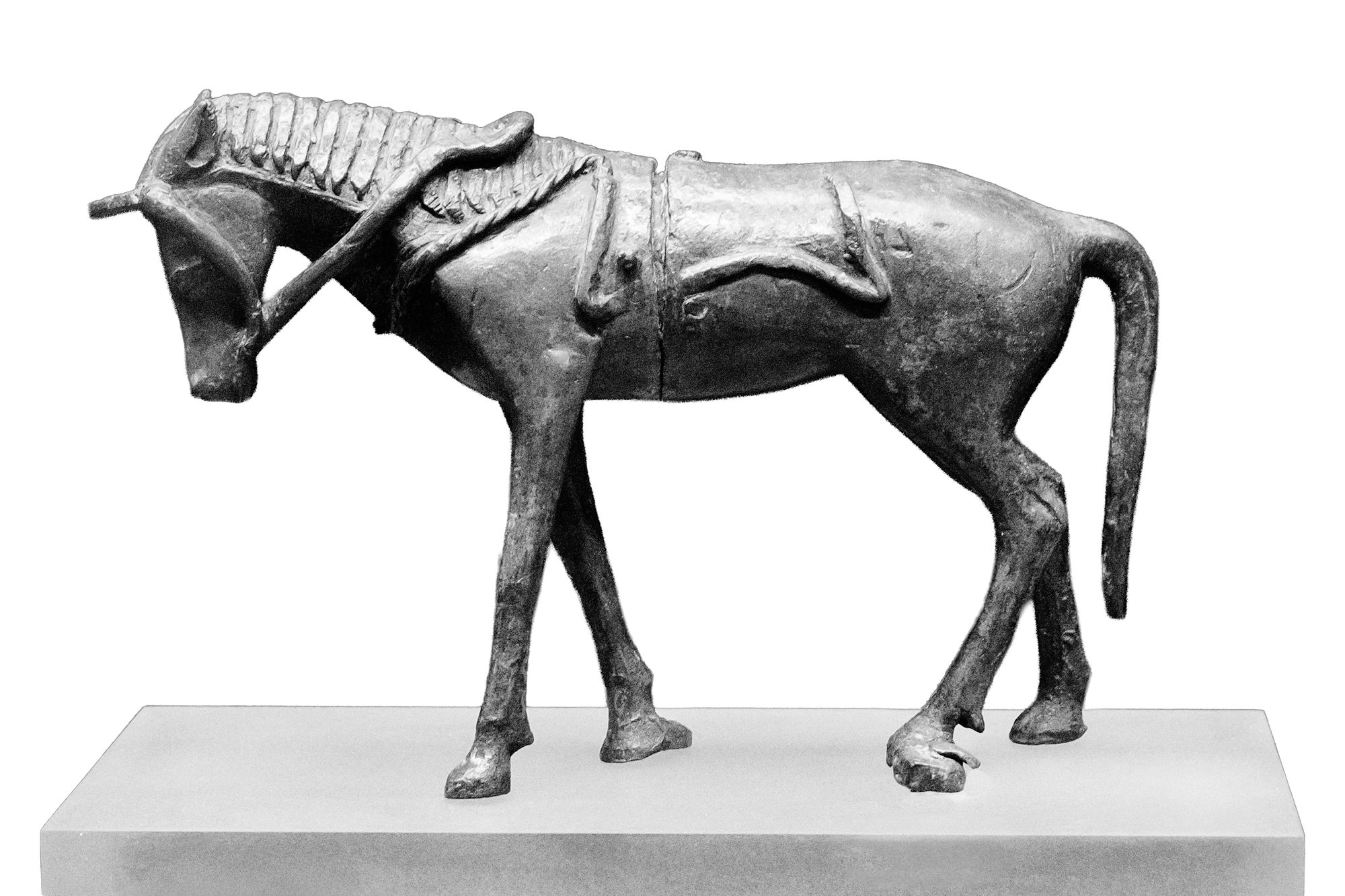
The Bronze Horse of Cancho Roano (Spain)

The Bronze Horse of Cancho Roano (6th–5th century BCE, Archaeological Museum of Badajoz).

In the Archaeological Museum of Badajoz, a small bronze horse quietly carries a big story. This horse sculpture from Cancho Roano, found near Zalamea de la Serena, dates to the 6th–5th century BCE, a period of profound transformation on the Iberian Peninsula.

Cast in bronze and depicted with clear elements of harness and tack, the sculpture immediately signals that this is not just an animal portrait. Horses in Iron Age Iberia were markers of power, mobility, and status, deeply embedded in both social and ritual life. Their presence in art and votive objects points to a symbolic role that went far beyond transport or warfare.

Cancho Roano itself is one of the most enigmatic archaeological sites in western Europe. Often described as a sanctuary-palace, it was constructed, modified, and ultimately destroyed in a carefully staged ritual process. Before its final abandonment, the complex was deliberately burned and sealed, preserving an extraordinary assemblage of objects beneath its floors—among them metalwork related to horses, chariots, and elite display.

The bronze horse fits seamlessly into this context. It suggests a world in which ritual, power, and belief were closely intertwined. Whether offered as a votive object, used in ceremonial display, or associated with elite identity, the sculpture reflects a society where the horse occupied a central symbolic position. Seen today, it is both an artwork and a fragment of a belief system that is only partly understood.

Further Reading

  • Sebastián Celestino Pérez, Cancho Roano: Un santuario orientalizante en el valle medio del Guadiana

  • Almagro-Gorbea & Torres Ortiz, La Edad del Hierro en la Península Ibérica

  • Barry Cunliffe, Iron Age Communities in Britain and Beyond

  • María Cruz Fernández Castro, Protohistoria de la Península Ibérica

  • Museo Arqueológico Provincial de Badajoz – exhibition catalogues and research publications

A Flemish Passion in Castile

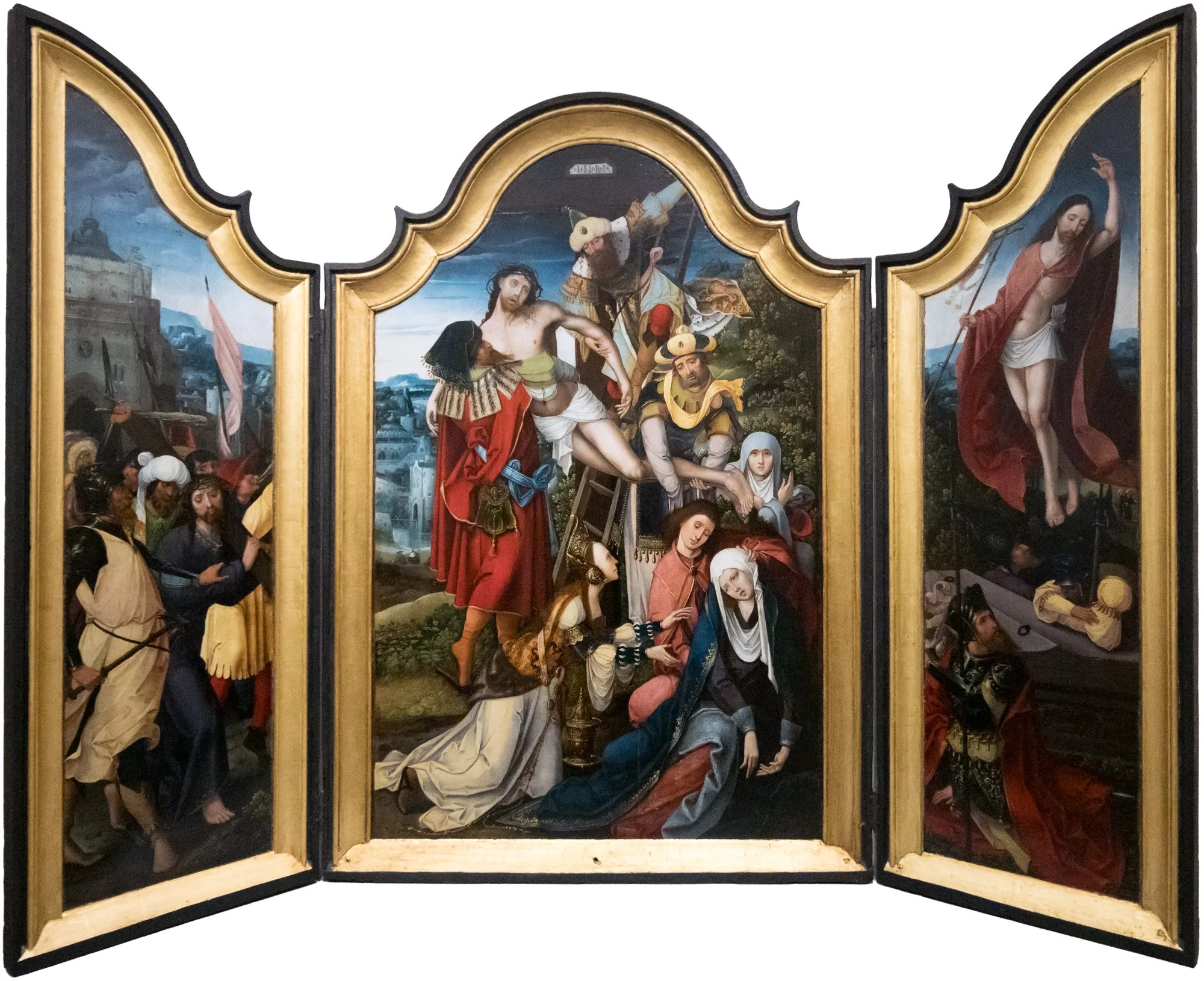
The Passion Triptych in the Royal Abbey of Las Huelgas, Burgos

Passion Triptych, attributed to Jan de Beer, early 16th century, Monasterio de las Huelgas Reales (Burgos, Spain).

Displayed within the austere yet regal setting of the Monasterio de las Huelgas Reales in Burgos, the Tríptico de la Pasión quietly tells a far larger European story than its scale might suggest. Dated to the first quarter of the sixteenth century and attributed to Jan de Beer, the triptych is not only a devotional image of Christ’s suffering, death, and resurrection. It is also a tangible trace of the intense artistic, commercial, and dynastic ties between Flanders and Castile.

The Triptych Itself

The composition unfolds across three panels in a familiar but carefully calibrated sequence. On the left, Christ carries the cross, surrounded by a dense crowd that presses the drama into the viewer’s space. The central panel shows the Descent from the Cross: Christ’s lifeless body is lowered with solemn care, while Mary collapses in grief, her posture echoing that of her son. On the right, the Resurrection introduces a note of transcendence—Christ rises, serene and victorious, as the guards remain earthbound, asleep or bewildered.

Stylistically, the triptych belongs to the world of early-sixteenth-century Antwerp painting. The figures are elegant, sometimes slightly elongated, their gestures expressive without becoming theatrical. Draperies fall in elaborate, decorative folds; colours are rich but controlled. This balance between emotional intensity and visual refinement is characteristic of Jan de Beer and his circle, poised between late medieval devotion and the emerging tastes of the Renaissance.

Made to Travel

Works like this were never meant to stay close to home. Around 1500, Antwerp—the great commercial hub of northern Europe—had become a centre for the production of painted panels destined for export. Workshops supplied both bespoke commissions and high-quality “stock” images, especially Passion scenes and Marian subjects, which appealed to a broad international clientele. Castile, and Burgos in particular, was one of the prime destinations.

The reason was not purely aesthetic. Burgos was deeply embedded in the wool trade linking Castile to the Low Countries, and its merchants, clerics, and royal foundations had direct access to Flemish markets. Paintings travelled alongside textiles, books, and luxury goods, carried by the same commercial networks that enriched both regions.

Dynastic Ties and Royal Taste

Trade alone, however, does not explain why Flemish art found such fertile ground in royal and monastic settings. Dynastic politics played an equally decisive role. The marriage of Joanna of Castile (Juana la Loca) to Philip the Handsome, heir to the Burgundian-Habsburg realms, symbolised a profound alignment between Castile and the Burgundian Netherlands. Through this union, courtly tastes, devotional preferences, and artistic models circulated with unprecedented intensity.

Royal foundations such as Las Huelgas—closely linked to the Castilian crown and used as a dynastic mausoleum—were natural recipients of this cultural exchange. Flemish paintings, admired for their technical mastery and emotional depth, suited both the spiritual ideals of monastic life and the representational ambitions of a monarchy that now looked north as well as south.

A Quiet Witness to European Exchange

Seen today, the Tríptico de la Pasión does not shout its international pedigree. It invites close, quiet looking rather than spectacle. Yet it stands as a witness to a moment when Europe was knitted together by marriage alliances, merchant fleets, and shared religious culture. In the stillness of Las Huelgas, a Flemish Passion continues to speak—of devotion, of trade, and of a royal world that once stretched seamlessly from Antwerp to Castile.

Columbus Before the Crossing

Preparation, Power, and the Ships at Muelle de las Carabelas

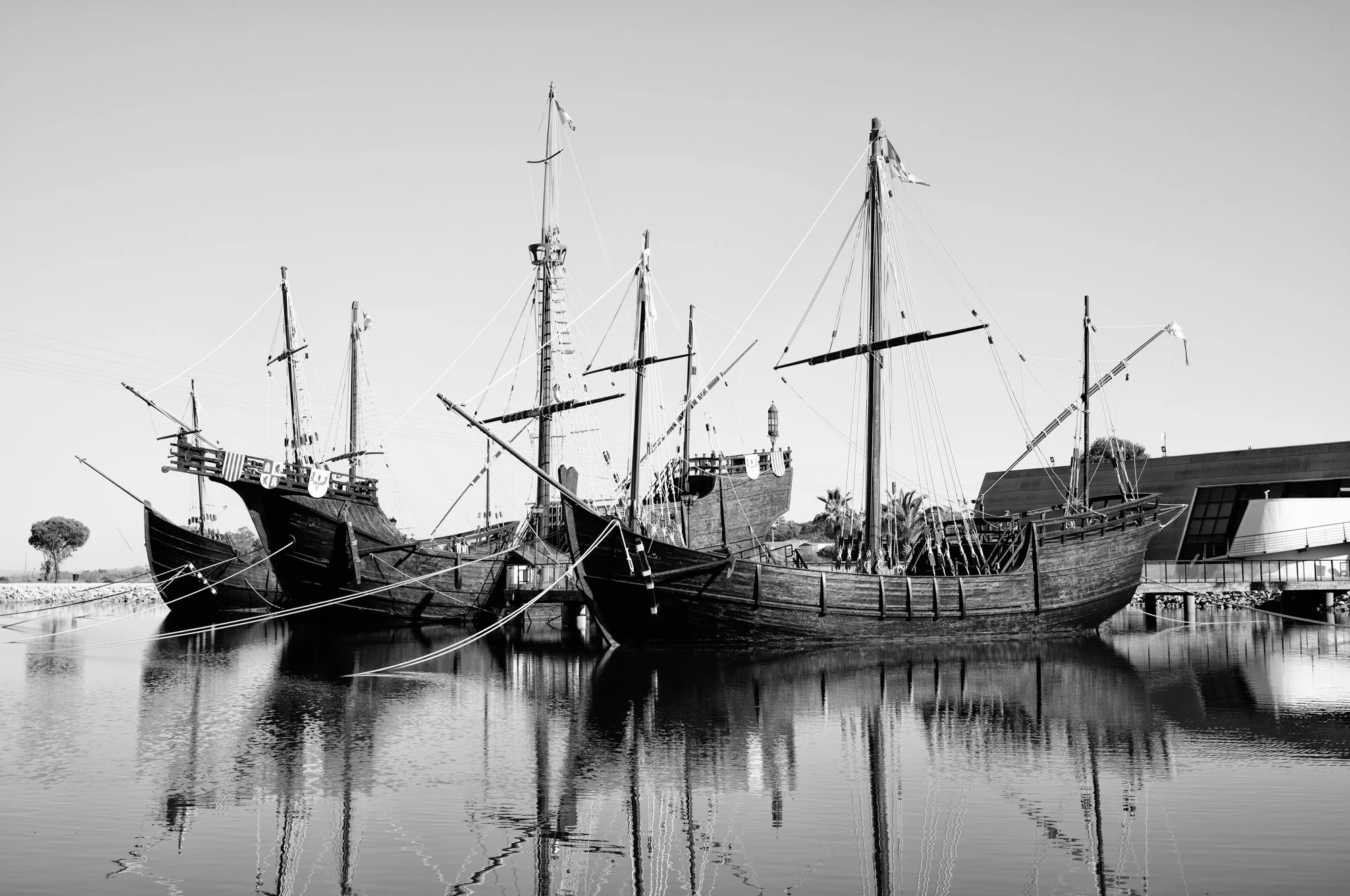
The replica’s of the “La Pinta”, the “Santa Maria”, and the “La Niñaat Muelle de las Carabelas; the three ships with which Columbus departed to the New World.

The story of Christopher Columbus does not begin with the open Atlantic, but with months of waiting, negotiation, and preparation along the rivers and monasteries of southern Spain. The Muelle de las Carabelas marks the physical end point of that long prelude: the place where plans, promises, and royal backing finally took shape as ships and crews.

Royal Backing at Last

Before arriving in Palos, Columbus had spent years trying to convince Europe’s rulers of his westward route to Asia. He was repeatedly rejected, until the decisive intervention of the Reyes Católicos—Isabella I of Castile and Ferdinand II of Aragon. Fresh from the conquest of Granada in early 1492, the Catholic Monarchs were consolidating power, expanding influence, and looking outward. Columbus’s proposal aligned with their ambitions: trade routes beyond Portuguese control, prestige, and the spread of Christianity.

The agreement reached in the Capitulations of Santa Fe granted Columbus titles, status, and a share of future profits. What remained was turning paper promises into seaworthy reality.

Waiting and Preparing in Palos

Columbus arrived in Palos de la Frontera in the spring of 1492 and remained there for several months. This was not idle time. Ships had to be found, repaired, and outfitted; provisions loaded; crews recruited—often reluctantly. Royal orders compelled the town to provide vessels, a sign that local enthusiasm was limited. Experienced sailors such as the Pinzón brothers proved crucial in making the expedition viable, lending both nautical expertise and local credibility.

This period of preparation is essential to understanding the voyage. Columbus was not simply a visionary setting sail; he was a man dependent on networks of power, coercion, negotiation, and practical maritime knowledge. The river port of Palos, modest and workmanlike, became a temporary hub of imperial ambition.

The Ships as Historical Evidence

Walking among the replicas at the Muelle de las Carabelas makes this preparatory phase tangible. The Santa María, larger and heavier, reflects royal expectations of command and control. The Niña and Pinta, agile caravels familiar to Atlantic sailors, reveal the practical compromises behind the expedition. These were not ideal vessels for a grand vision of Asia, but the best available tools for an uncertain gamble.

Their cramped interiors and exposed decks underline another truth: months of planning could not eliminate risk. Once these ships left the river mouth, royal authority, contracts, and titles meant little against wind, currents, and human endurance.

"The First Voyage", chromolithograph by L. Prang & Co., published by The Prang Educational Co., Boston, 1893.
An imaginary scene of Christopher Columbus bidding farewell to the Queen of Spain on his departure for the New World, August 3, 1492.

From Local River to Global Rupture

The Muelle de las Carabelas therefore represents more than a departure point. It is the place where royal policy, local obligation, and individual ambition converged. From here, in August 1492, three small ships carried not only Columbus westward, but Europe into a new Atlantic era—one marked by exchange, conquest, and profound violence.

Seen in this light, the ships are not merely symbols of discovery. They are the final material expression of months spent waiting, persuading, preparing, and assembling power on shore. Standing beside them today, it becomes clear that the so-called “voyage of discovery” was already deeply shaped by politics, monarchy, and negotiation long before the sails ever caught the wind.

See also: Columbus and the Catholic Monarchs: A Meeting That Changed History

St. Dominic at the Convento de San Esteban

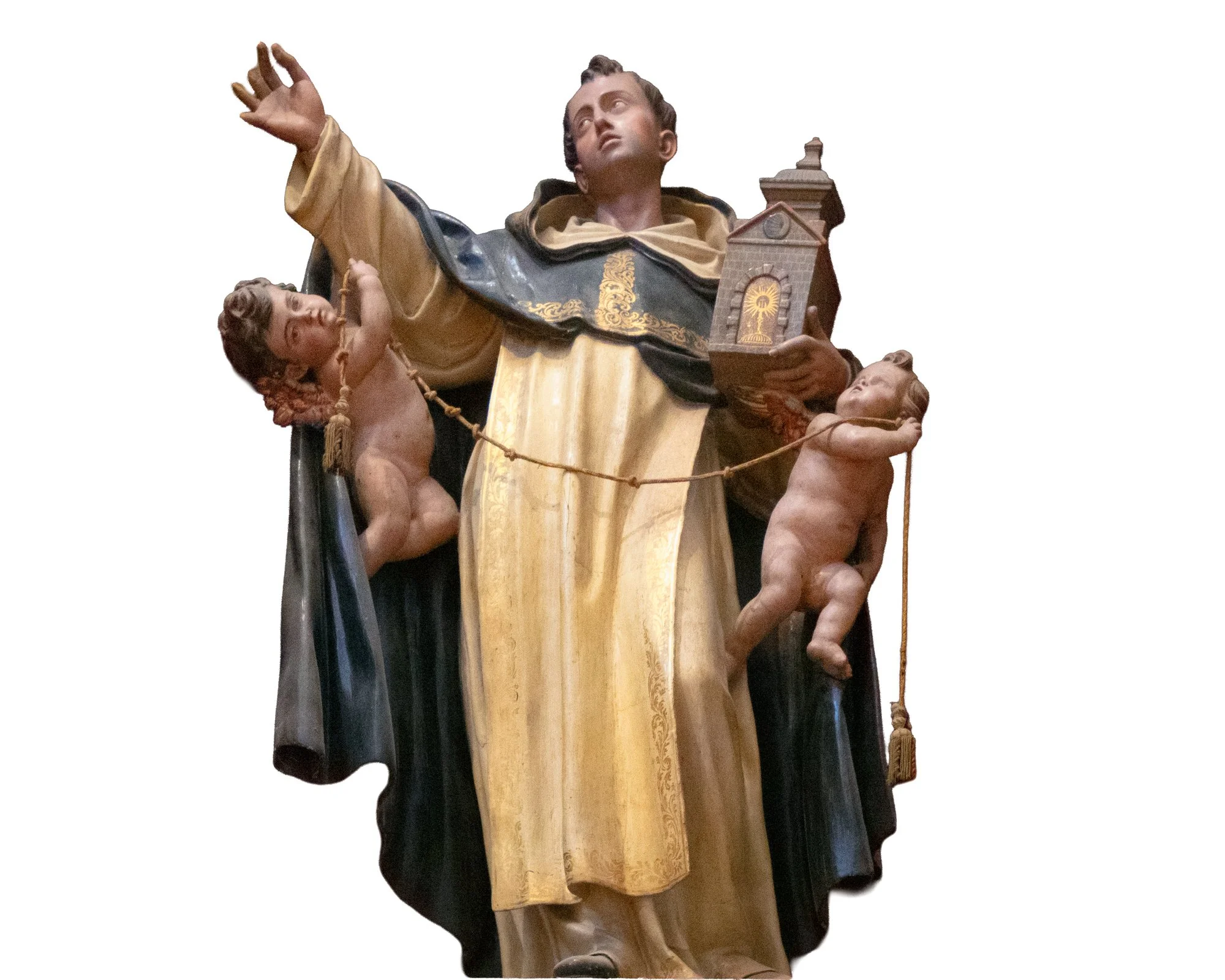
St. Dominic, Convento de San Esteban, Salamanca. With cherubs at his side and a church in his hand, the saint recalls the Dominican Order’s role in guiding Columbus and shaping Spain’s Golden Age of faith and discovery.

In Salamanca’s Convento de San Esteban, a radiant statue of St. Dominic commands attention. Clad in the white and black habit of his Order, he lifts one hand in a sweeping gesture while the other holds a model of a church — the house of faith and learning he founded. Two cherubs cling to his cloak, playfully bound by a cord, a tender reminder of the ties between heaven and earth.

This image captures more than devotion: it anchors the story of a convent that shaped history. Within these walls, Dominican friars once guided Christopher Columbus as he sought support for his daring voyage west. San Esteban became a hub of preaching, study, and counsel, its influence stretching far beyond Salamanca.

Seen today, the statue embodies that same spirit. St. Dominic appears alive, luminous, and close at hand — a founder whose mission to spread truth reached all the way to the New World.

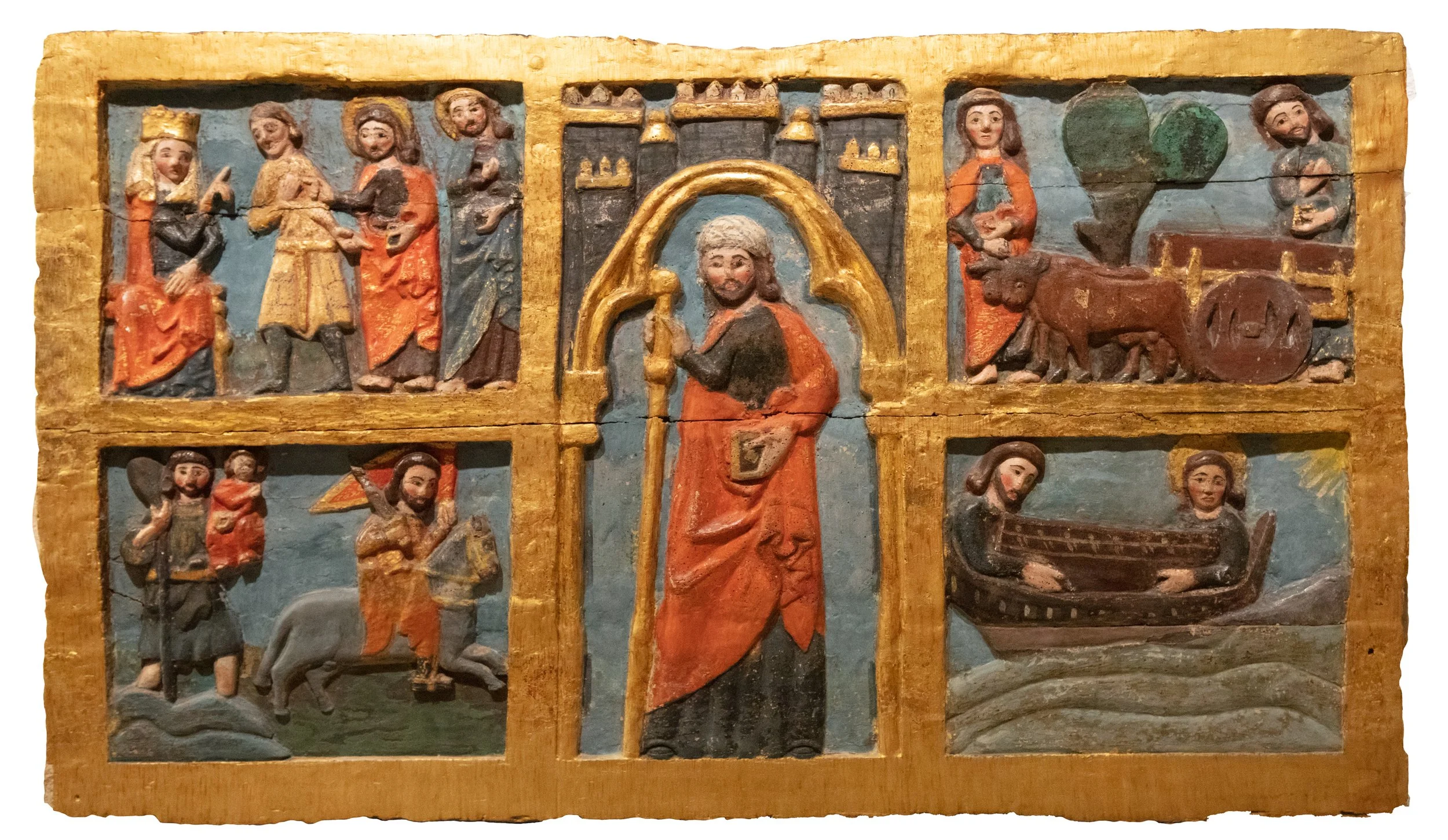
A Romanesque Altar Frontal of the León Cathedral: A Window into Pilgrimage and Legend

In the grandeur of León Cathedral, a striking frontal de altar from the 14th century tells a vivid story of faith, legend, and the enduring power of the pilgrimage to Santiago de Compostela. This polychrome masterpiece, painted on wood and richly adorned with gold leaf, weaves together key episodes from the legend of Saint James (Santiago), alongside the figure of Saint Christopher, protector of travelers.

The altar frontal is structured in five narrative panels, each depicting a crucial episode of the legendary transfer of Saint James' body to Galicia.

Top Left: Queen Lupa and the Disciples of Santiago
According to legend, after Saint James' martyrdom in Jerusalem, his disciples carried his body to Hispania. Seeking a burial place, they approached Queen Lupa in Flavia (modern-day Padrón). Initially resistant, she subjected them to trials before she ultimately converted to Christianity. The scene captures the moment of their plea before the queen, her regal posture contrasting with their humble gestures.

Lower Left: Saint Christopher and Saint James as the Warrior Pilgrim
A striking image shows a bearded figure wading through water with a child on his shoulder—Saint Christopher, the patron saint of travelers, who carried Christ across a river. Beside him, a knightly figure on horseback with a flag is likely Saint James in his Matamoros guise, a vision that was said to have inspired Christian forces in battle. This juxtaposition reinforces the protection of travelers and the role of Santiago as a spiritual and military guide.

Top Right: The Oxen and the Coffin
One of the trials Queen Lupa imposed on Saint James’ disciples was to give them a cart with wild, untamed oxen to transport his remains, hoping they would fail. However, through divine intervention, the animals were miraculously tamed, allowing the disciples to complete their mission. This scene captures the sacred nature of their journey, emphasizing the role of faith and divine guidance in overcoming obstacles.

Lower Right: The Boat Carrying Saint James
A small vessel with two figures—one possibly a disciple, the other haloed—holds what is likely the coffin of Saint James. This recalls the legend of his miraculous sea voyage from Jerusalem to Galicia, carried by divine will. The scene is rendered with simple, powerful forms, reinforcing the mystical nature of the tale.

Central Panel: A Pilgrim or a King?
The most enigmatic figure stands beneath an arched structure crowned with castle towers. Could this be a representation of King Alfonso II of Asturias, the first known pilgrim to Santiago de Compostela, paying homage to the saint’s newly discovered tomb? Or is it an anonymous pilgrim, embodying the devotion of countless travelers? The ambiguity invites contemplation, drawing the viewer into the world of medieval belief.

A Testament to Pilgrimage Culture

This altar frontal is not just an artwork; it is a testimony to the deep cultural and religious currents of medieval Spain. The Camino de Santiago was one of Europe’s most significant pilgrimage routes, and artifacts like this offered both instruction and inspiration to the faithful.

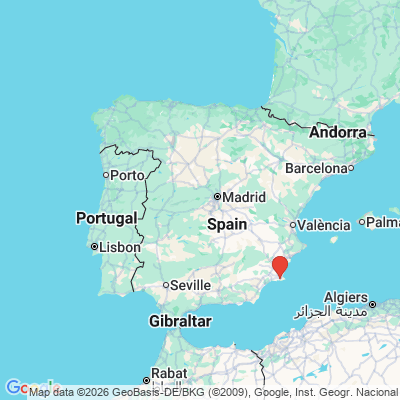
Cartagena — A City That Doesn’t Reveal Itself at First Glance

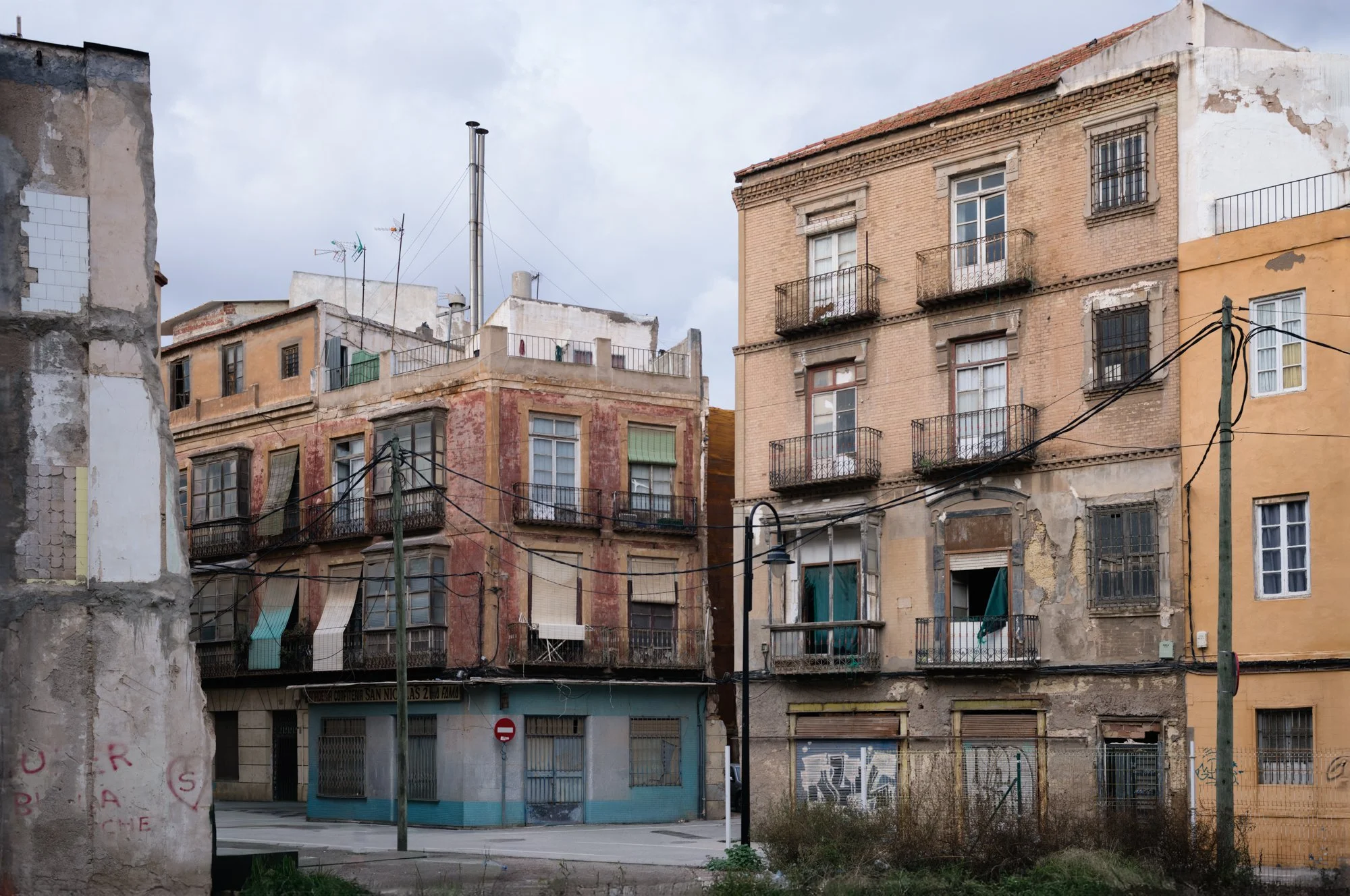
Cartagena (Spain).

Cartagena is not a city that flatters you on arrival. You don’t walk into a polished museum town. You arrive in a working port — with container ships, naval docks, faded façades and whole neighbourhoods that seem forgotten by time. Peeling paint, shuttered balconies and crumbling walls sit next to grand buildings that hint at former wealth. The history is everywhere, but it hides behind neglect, dust and industry.

And yet, few cities in Spain carry a deeper past.

Founded by the Carthaginians as Qart Hadasht and later reborn as Roman Carthago Nova, Cartagena became one of the great cities of Hispania, enriched by silver mines and protected by a perfect natural harbour. Romans built theatres, temples and forums — much of which still lies beneath today’s streets.

After Rome came Byzantines, Visigoths and Moors. In the 18th century, the city rose again as Spain’s main Mediterranean naval base. Warships, fortresses and arsenals reshaped the harbour. Cartagena became a military city — and remains one.

Mining brought another boom in the 19th century, followed by decline. When industry faded, whole districts slipped into decay. Only recently has restoration begun, slowly uncovering the buried layers.

Cartagena does not hand you its story. You have to walk its hills, descend into its Roman ruins, explore its civil-war shelters and stand on its harbour quays to understand its power.

It is not pretty in a postcard way. It is raw, complex and monumental.

A city that doesn’t seduce — but rewards.

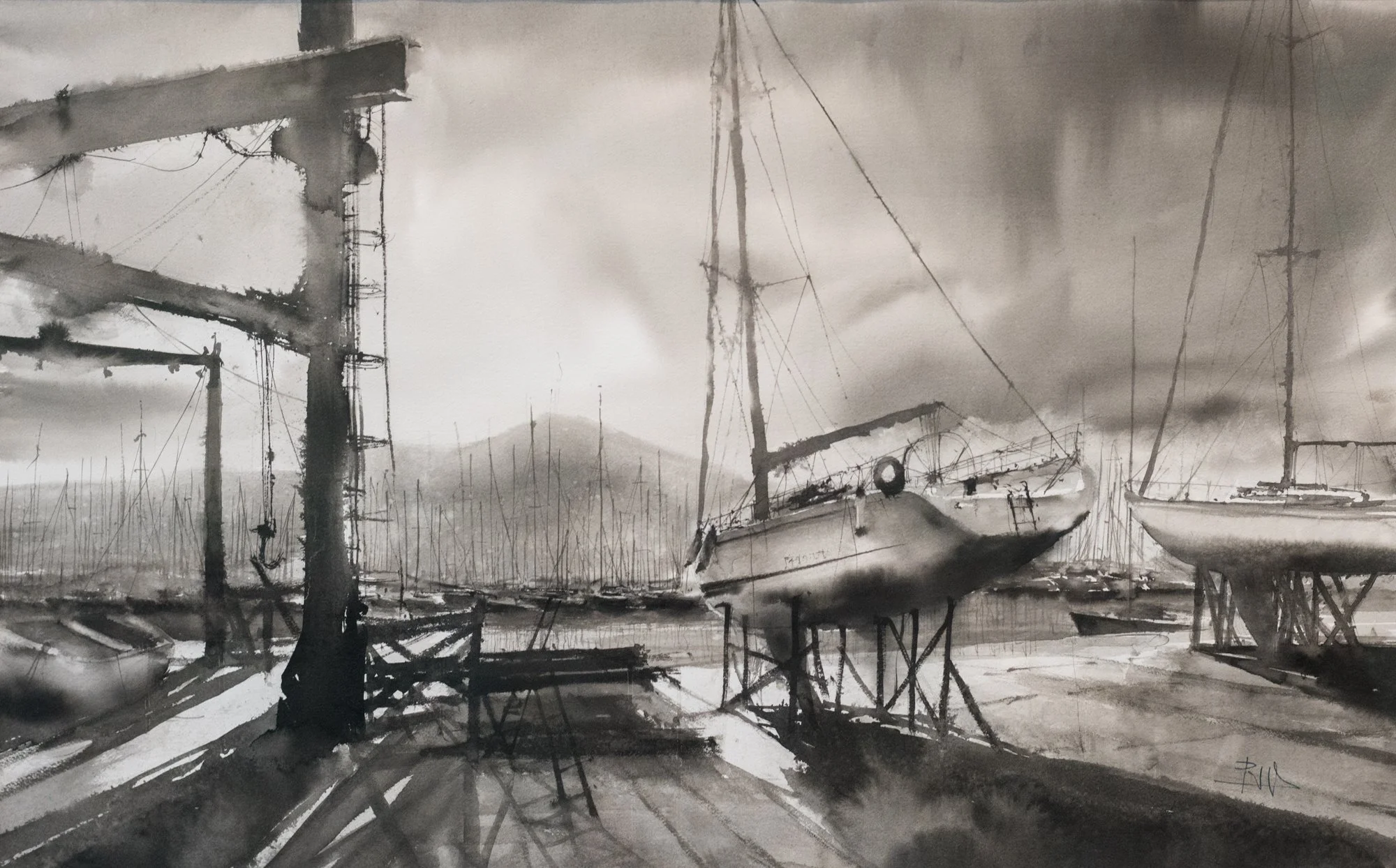
Sailboats captured against the backlight of the sun, by Pedro Jimenez Vicario. Seen at the Roman Theatre Museum of Cartagena.

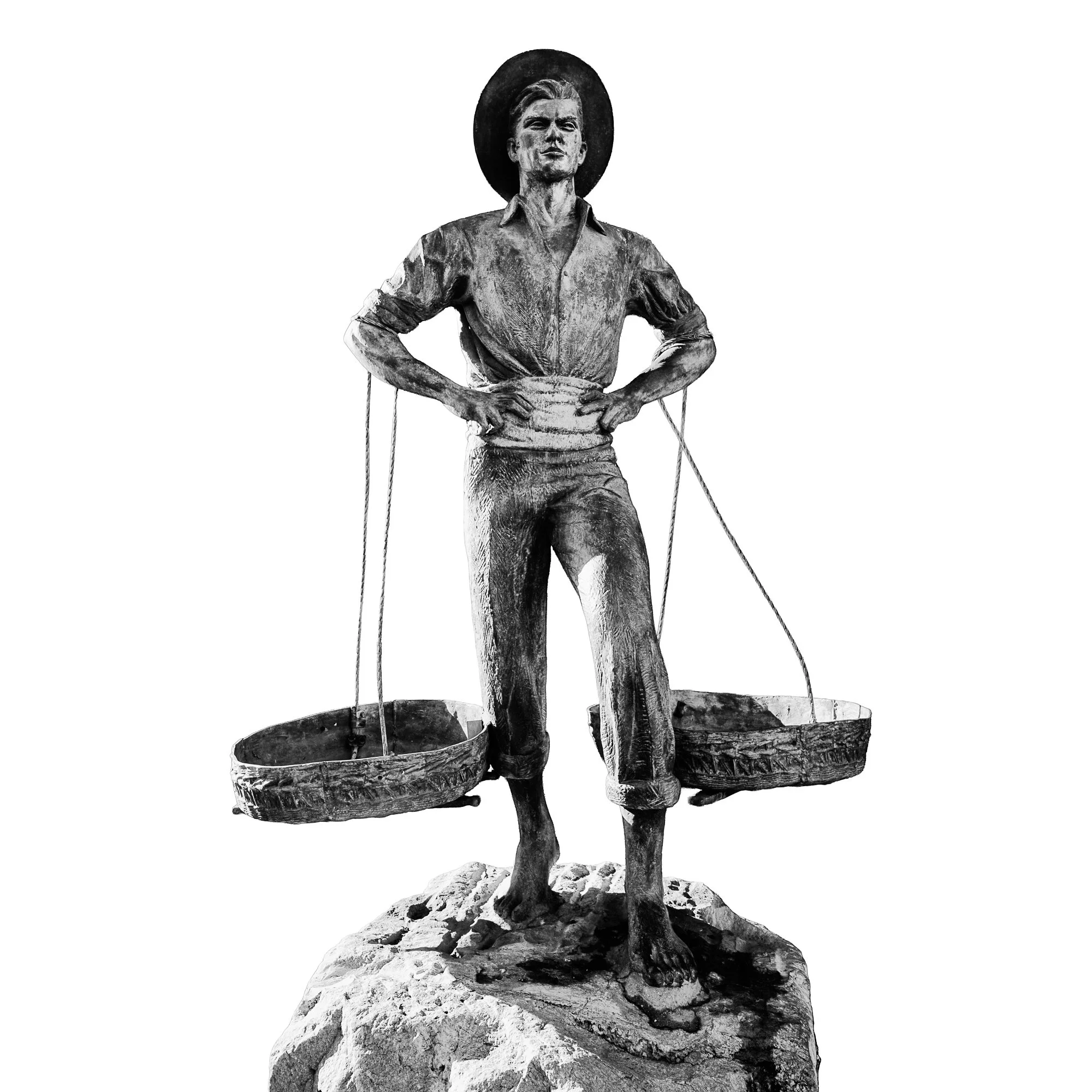
El Cenachero — The Man Who Carried the Sea into Málaga (Spain)

El Cenachero (Malaga, Spain).

At the edge of Málaga’s harbour, where cruise ships now glide in and out and tourists sip cocktails in the sun, stands a bronze figure with bare chest, strong shoulders and two baskets of fish hanging from a wooden yoke. His name is El Cenachero — and he is one of the most recognisable symbols of the city.

Long before Málaga became a destination of beach clubs and boutique hotels, it was a working port. Every morning, fishing boats landed their catch on the sand. From there, men known as cenacheros carried the fish into the city, balancing two wicker baskets (cenachos) on their shoulders and walking from street to street selling the day’s harvest.

They were not merchants in shops. They were moving markets.

With loud voices they announced their arrival:
“Boquerones frescos!”
“Sardinas vivas!”

The cenachero walked barefoot or in worn sandals through the heat, his skin darkened by the sun and the sea. His work was hard, his pay modest, but his role essential. Without him, Málaga did not eat.

The statue near the port is not a monument to a general or a king. It is a tribute to labour. To the men who turned the sea into daily bread. To a city that once lived by nets and boats, not by hotels and terraces.

In the 1960s, when tourism began to transform Málaga forever, El Cenachero became a reminder of the old city — a link to the fishermen, the beaches where boats were pulled ashore, and the voices that once echoed through the narrow streets.

Today, visitors photograph him before boarding cruise ships or strolling along Muelle Uno. Few realise they are standing next to a worker who once fed an entire city.

El Cenachero is Málaga in bronze: salt, sun, sweat — and dignity.

Alfonso VIII and Leonor of England — A Royal Marriage Carved in Stone

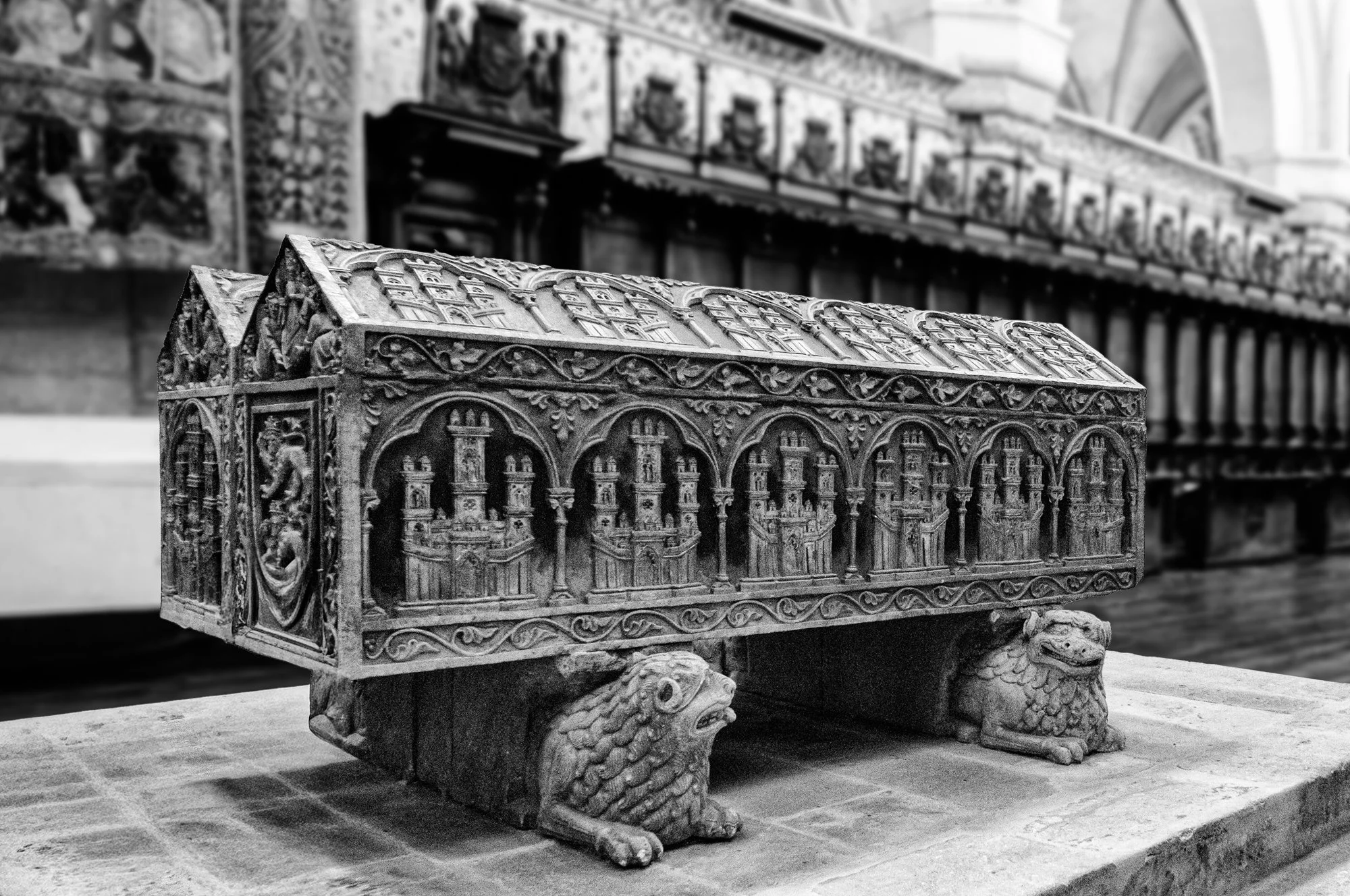
The painted limestone tombs of a Alfonso VIII and Leonor of England who shaped medieval Spain (Abbey of Las Huelgas in Burgos).

Among the many remarkable royal tombs in the abbey of Las Huelgas in Burgos, two stand out for both their artistry and their story: those of King Alfonso VIII of Castile and his wife Leonor Plantagenet, daughter of Henry II of England and Eleanor of Aquitaine. Their monumental sarcophagi, carved from polychrome limestone, still retain traces of medieval colour — a rare survival that adds warmth and humanity to these otherwise austere royal monuments.

Alfonso VIII (1155–1214) became king as a child after his father Sancho III died when he was only three. His early reign was marked by civil war and rival noble families fighting for control of Castile. Only in his late teens did Alfonso truly assume power, ruling with determination and political vision.

In 1170 he married Leonor of England, a princess raised in one of the most sophisticated courts of medieval Europe. Through her mother, Eleanor of Aquitaine, Leonor brought the cultural refinement of southern France and England into the Castilian court. Their marriage was both a political alliance and, by medieval standards, an unusually stable and effective partnership.

Together they ruled for more than forty years. Alfonso became one of the central figures of the Reconquista, culminating in the decisive Christian victory over the Almohads at the Battle of Las Navas de Tolosa (1212) — a turning point in Iberian history.
Leonor played an active role as queen. She founded monasteries, supported learning, and acted as a diplomatic bridge between Castile, England and France. Under their patronage, Las Huelgas grew into one of the most powerful abbeys in medieval Europe, closely bound to the royal dynasty.

They had eleven children, many of whom married into the royal houses of Europe, weaving Castile into a vast international network of alliances.

Alfonso died in 1214, Leonor only weeks later. They were laid to rest side by side beneath their painted limestone tombs — not just funerary monuments, but enduring witnesses to a reign that shaped the political and cultural future of medieval Spain.

In the cool silence of Las Huelgas, their story still rests in stone — coloured, carved, and quietly magnificent.

Five Classic Geysers in a Spanish Window

Five classic geysers (León, Spain).

Somewhere in León, I stop before a small shop window. Behind the glass hang five classic geysers, displayed like relics from another age — white, rounded, solid, and strangely human. They look as if they still belong to a world where things were built to last and gas was simply there.

I think of home — of how in The Netherlands we talk of little else but transition. No more gas, no more burning, no more delay. Every boiler, every flame, every old system has become a symbol of guilt.

Here, though, no one seems in a hurry to erase the past. These quiet machines just wait for someone who still buys them, still needs them, is still dependent on them.

I catch my reflection in the glass: the street behind me, cars passing, the faint trace of my own doubt. Maybe progress isn’t only about moving forward. Maybe it’s also about remembering the warmth we’re trying so hard to replace.

A City Woven Around a Theatre: Roman Cartagena Revealed

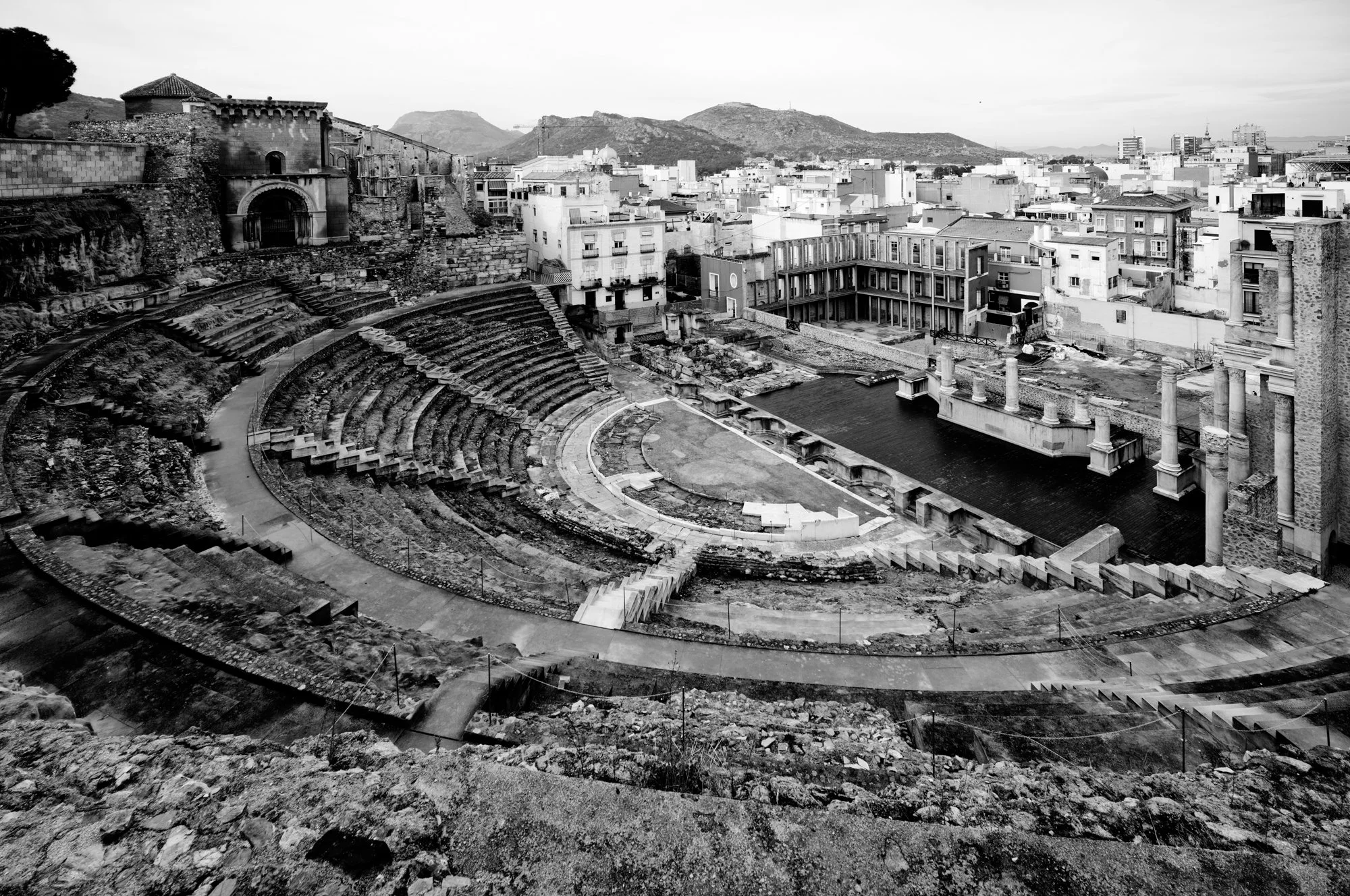
The Roman Theatre of Cartagena (Spain).

At first glance, Cartagena doesn’t give much away. Traffic, shops, everyday life — and then a doorway draws you inside a modern building that quietly functions as a museum. What begins as an exhibition visit slowly turns into something else.

You move upward first, not down. On the upper floor, a long, enclosed passage opens — a tunnel that leads you forward in time as much as in space. And then, almost without warning, the Roman theatre appears.

You emerge halfway into the structure, suspended between the highest rows of seats and the orchestra below. It is an unusual entrance, and a deliberate one. Rather than discovering the theatre under the city, you enter it within the city — inserted into its surviving geometry.

A Stage for a Rising Empire

The theatre was built at the very beginning of the Roman Empire, during the age of Augustus. Its scale alone tells a clear story. This was not a peripheral town. Carthago Nova was prosperous, strategically located, and confident enough to claim a monumental public building at its core.

Roman theatres were never just places for entertainment. They were instruments of civic identity. To build one was to declare that this city belonged to the Roman world — culturally, politically and socially.

Politics Carved into Space

In antiquity, visitors passed beneath inscriptions honouring the imperial family before taking their seats. The message was subtle but constant: Rome was present here, watching, legitimising, ordering the city’s public life.

Inside, society was arranged in stone. The best seats lay closest to the orchestra, reserved for those whose status mattered. Architecture reinforced hierarchy long before a word was spoken on stage. Even today, standing among the tiers, that logic remains visible and instinctively readable.

Architecture that Directs Attention

Roman theatres are machines for focus. The rising cavea pulls your gaze downward, towards the orchestra and the stage. Movement, sightlines and sound were carefully controlled. Cartagena’s theatre still demonstrates this with remarkable clarity.

Behind the stage once stood a richly decorated architectural façade, filled with columns and statues. Performances unfolded within a setting designed to communicate order, authority and permanence — values Rome was eager to project.

Rediscovered, not Reconstructed

For centuries, the theatre disappeared beneath later construction. Houses, streets and churches reused its stone and obscured its form. It was not dramatically destroyed, but slowly absorbed by the city that grew on top of it.

Its rediscovery in the late twentieth century returned a missing chapter to Cartagena’s story. Today, the museum route does not try to recreate the illusion of a buried ruin. Instead, it guides you carefully into the structure itself, allowing the theatre to reveal its scale and logic gradually.

A City that Faces the Sea

Carthago Nova is a Mediterranean harbour city, outward-looking and well connected. Trade, administration and wealth passes through its port. The theatre belongs to that identity: public, ambitious, confident.

What makes the visit especially powerful is the contrast. Modern buildings press close around the ancient structure. The theatre is not isolated; it coexists with the present. You do not step back into a distant past — you step into a layer of the city that still shapes it.

Rome here is not a postcard ruin. It is architecture that still commands space, attention and meaning.

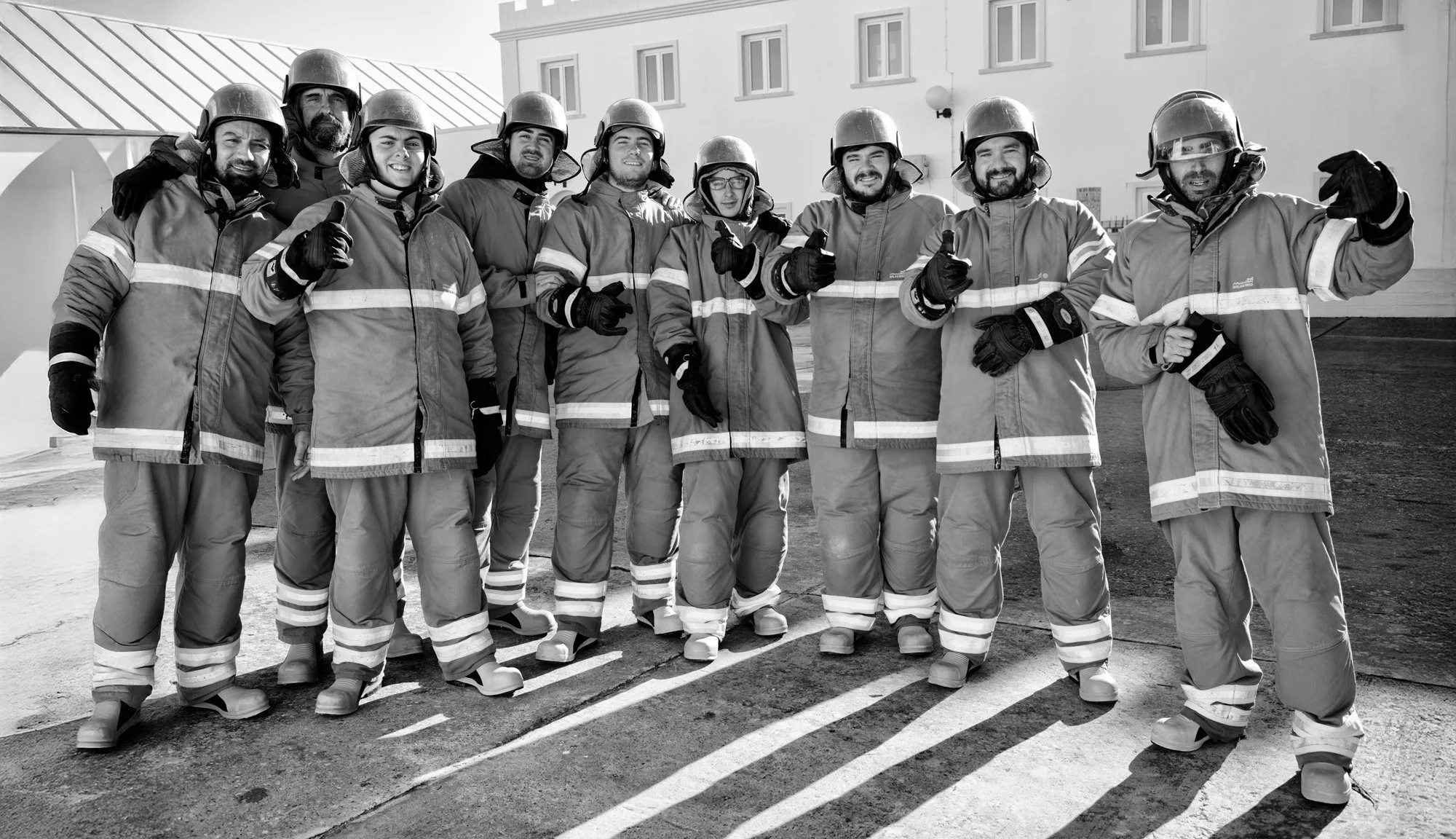
The Next Generation of Bomberos of Sanlúcar de Barrameda (Spain)

The Next Generation of Bomberos of Sanlúcar de Barrameda (Spain).

They stand there in the bright Andalusian light—Sanlúcar’s newest firefighters in training, a mix of nerves, pride, and that unmistakable spark of people who’ve chosen a life of stepping forward when others step back. These trainees aren’t just learning how to fight fires; they’re learning how to read a crisis, trust each other, and serve a community that depends on them.

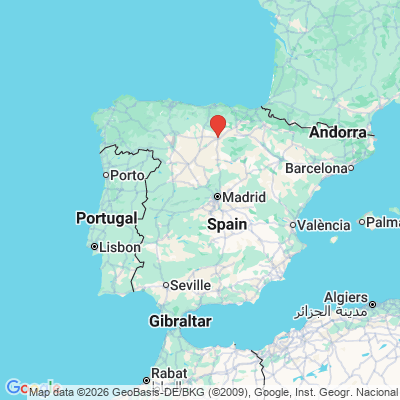
The Silent Prophets Above the Gate of Chains (Santa María de Ciudad Rodrigo, Spain)

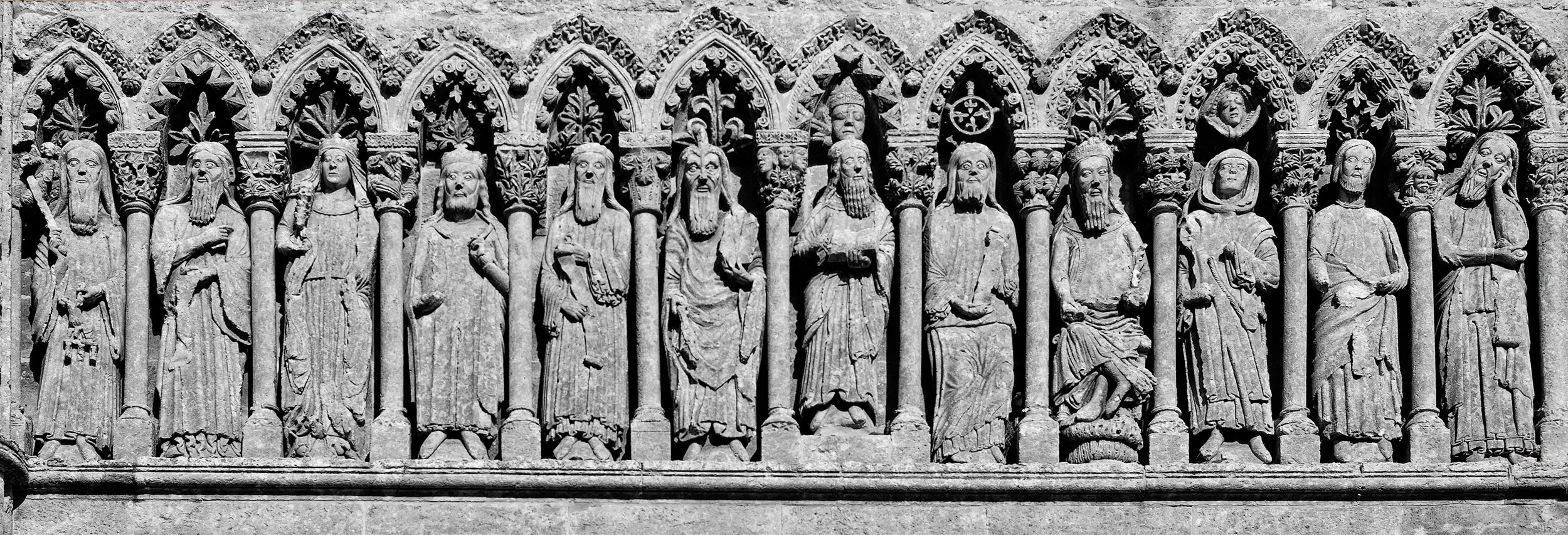
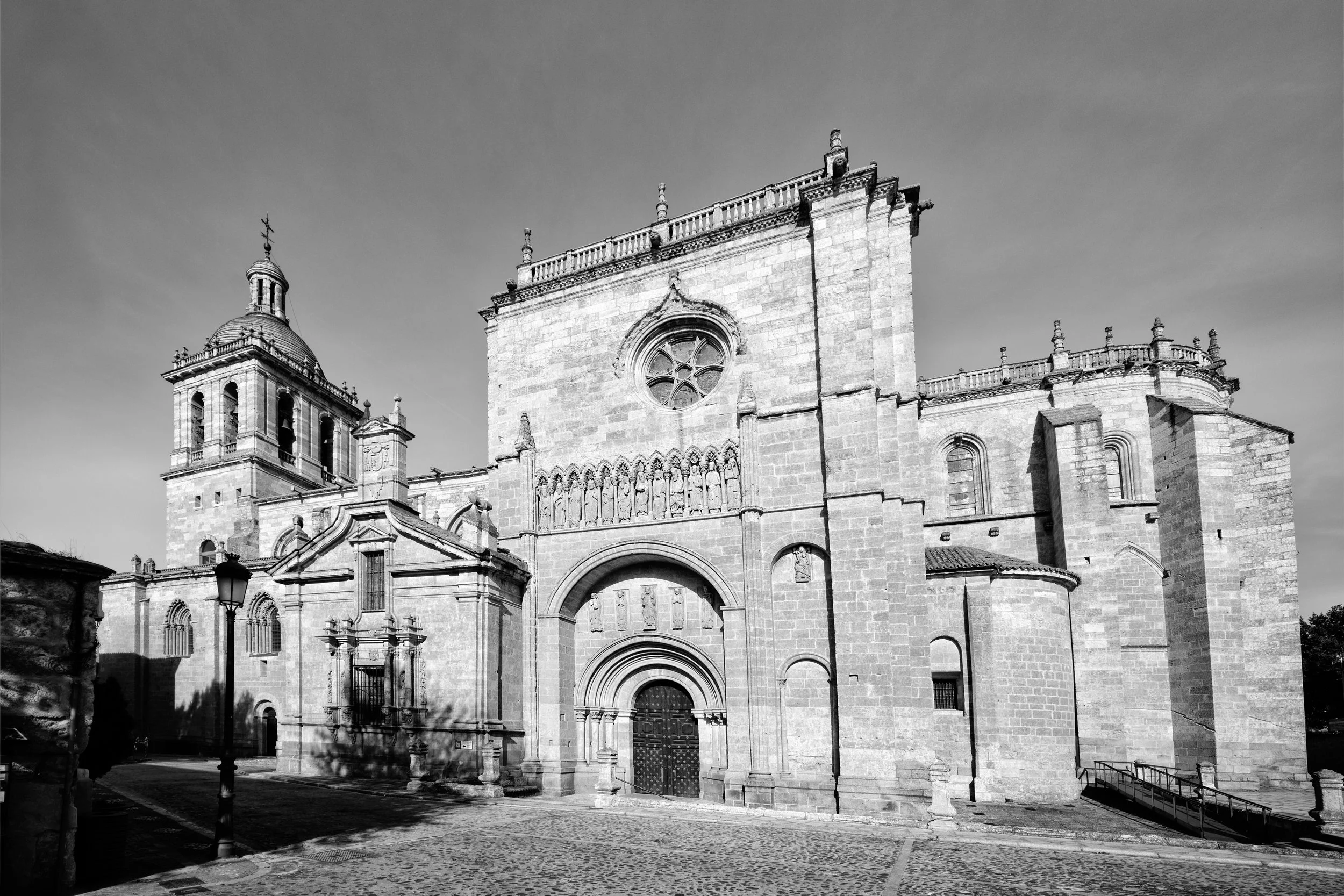
The silent guardians of the Puerta de las Cadenas of the Cathedral of Ciudad Rodrigo (13th century).

Above the Puerta de las Cadenas of the Cathedral of Ciudad Rodrigo stretches a striking frieze of Old Testament figures, carved in stone like a solemn assembly presiding over the cathedral’s northern entrance. According to Sendín, the sculptor gathered Abraham, Isaiah, the Queen of Sheba, Solomon, Ezekiel, Moses, Melchizedek, Balaam, David, Elijah, Saint John the Baptist, and Jeremiah—twelve figures who together trace the long arc of biblical history.
At the beginning stands Abraham, the patriarch of faith, followed by Isaiah holding the scroll of prophecy. The Queen of Sheba, crowned and elegant, brings a rare feminine presence, representing the nations recognizing divine wisdom; beside her, Solomon embodies that wisdom in royal calm. Ezekiel appears with the intensity of a visionary, while Moses—marked by his staff or the tablets of the Law—represents the covenant and its commandments.

Melchizedek, the mysterious priest-king who offered bread and wine, stands close to Balaam, the foreign prophet compelled to bless Israel. Their inclusion highlights the ways God’s voice, in medieval understanding, could emerge from unexpected places. David, with his crown and poetic bearing, re-establishes royal lineage before the frieze turns to Elijah, the fiery prophet taken to heaven in a whirlwind.

Only one figure belongs to the New Testament: Saint John the Baptist, the final herald before Christ, the bridge between old and new. The cycle closes with Jeremiah, carved in a gesture of lament, embodying the sorrow and longing that permeate Israel’s story.
Why place this assembly above a cathedral door? In the Middle Ages, façades were meant to teach. These prophets form a visual overture to the Gospel proclaimed inside, affirming that Christianity rises not in isolation but from a long, unfolding tradition. Together they create a threshold of memory and meaning: a carved chorus of voices preparing the visitor to step from the world into the sacred story beyond the gate.
The Cathedral of Ciudad Rodrigo (13th century) with the Puerta de las Cadenas.